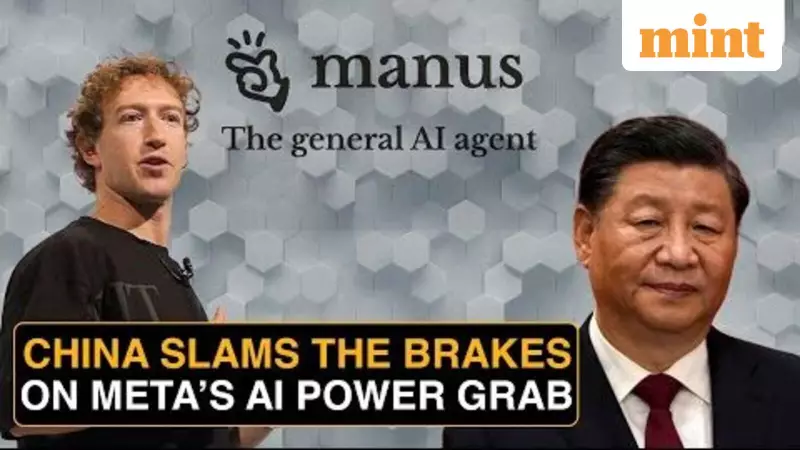
In a significant move impacting global technology mergers, China has officially intervened to halt Meta Platforms Inc.'s proposed acquisition of artificial intelligence startup Manus. The Chinese Commerce Ministry announced on January 10, 2026, that it has initiated a formal review of the deal, placing the high-profile transaction under intense regulatory scrutiny.
Why China Stepped In: The Regulatory Framework
The ministry's decision brings the acquisition under China's stringent framework governing technology export controls, data transfer regulations, and foreign merger reviews. This is notable because Manus, the AI startup in question, is now headquartered in Singapore. However, the origins or significant operations linked to China have triggered the jurisdiction of Beijing's regulators.
This development is not occurring in a vacuum. It comes at a time when both the United States and China are aggressively tightening their policies surrounding advanced technologies. The focus areas include artificial intelligence, semiconductor chips, and other assets deemed strategically vital for national security and economic dominance.

The Broader Context: A Global Tech Cold War
The probe into Meta's deal with Manus is a clear indicator of how cross-border technology transactions are becoming geopolitical events. As nations vie for supremacy in critical tech sectors, mega-acquisitions by foreign giants are increasingly viewed through the lens of data sovereignty and technological independence.
China's action reflects a broader pattern of using regulatory tools to oversee and, when necessary, obstruct deals that could transfer sensitive AI capabilities or data outside its sphere of influence. This mirrors similar heightened scrutiny from regulators in the US, EU, and India on deals involving core technologies.
Implications for Future Tech Mergers
The formal investigation into the Meta-Manus deal sets a crucial precedent. It signals to the global tech industry that even companies based outside China may face hurdles if their operations, intellectual property, or data flows have connections to the Chinese market. For startups like Manus, this regulatory landscape adds a complex layer to potential exit strategies or funding rounds involving international players.
The outcome of this review will be closely watched by:
- Global Tech Giants: Planning mergers and acquisitions in the AI and data space.
- Venture Capitalists & Startups: Particularly those with cross-border operations or ambitions.
- Policy Makers Worldwide: Observing how China enforces its tech control regimes.
This event underscores the new reality where technology deals are no longer just business decisions but are also strategic regulatory battlegrounds. The final decision by China's Commerce Ministry will reveal much about the permissible boundaries for foreign investment in sensitive tech sectors moving forward.