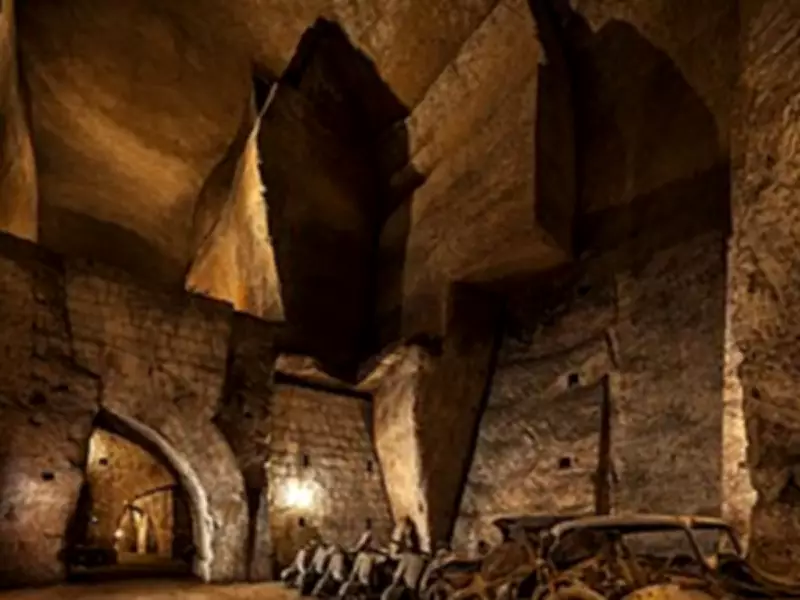
Deep beneath the bustling, traffic-choked streets of Naples, a physics-based technique has revealed a feature not previously detected by conventional archaeological methods. Scientists have discovered a secret burial chamber located about ten meters below the surface using an advanced imaging technique based on cosmic rays. This incredible find adds new detail to what experts know about the layout of the ancient city.
The Discovery Beneath Neapolis
The find was made beneath the Hellenistic necropolis of Neapolis, an ancient burial area. After centuries of building, burial, and urban development, modern Naples is literally built on top of its ancient past. Random excavation is slow, expensive, and risky. Researchers used a non-invasive method to image dense volcanic rock and soil without excavation.
How Muography Works
The breakthrough occurred when a research team applied a technique called muography. Instead of digging trenches, they used special detectors to track muons, energetic subatomic particles produced when cosmic rays strike Earth's atmosphere. These particles constantly rain down and can pass through solid objects but slow down or get blocked when they hit dense materials like heavy stone. However, if they pass through a void or hollow room, more muons reach the detector from that direction.

In work reported in the journal Scientific Reports, the researchers found an unexpected excess signal in their muon data. An unexpected excess in detected muons indicated a low-density void within the surrounding volcanic rock. The team had charted a previously unknown underground chamber, proving that the chamber was not stumbled upon by chance or a random shovel hit, but by following particles from space.
Re-Drawing the Old Map
Finding new archaeological spaces beneath Naples is difficult due to the city's complex underground geology. The land is built of volcanic deposits, ancient water channels, and old cavities recycled for thousands of years. To confirm the unexpected signal was a real room, and not a glitch or random patch of loose stone, the scientists created a detailed 3D digital reconstruction. They compared the actual number of particles counted with computer models of what the ground looked like. The anomaly remained consistent after comparison with 3D models and simulations, providing a repeatable, reliable way to distinguish a true ancient find from random background noise or measurement error.
Why This Matters for Archaeology
For historians and archaeologists, this secret room is a huge wake-up call. If one large, undiscovered burial area could stay hidden for centuries right under a major European city, then there are likely many more waiting to be discovered. This does not mean every hollow signal indicates a valuable or monumental tomb, but it does mean that archaeologists should treat current maps as incomplete working records rather than final records. Instead, the map has turned into a flexible working theory.
What this cosmic-ray technology is really good for is providing a non-invasive guide. In a dense, historic city where digging into the ground can damage delicate ancient ruins or compromise the foundations of modern buildings, muography is a safe alternative. It won't replace the traditional spade and brush entirely, but it does tell experts exactly where to focus their energy, and perhaps more importantly, where to avoid digging altogether.