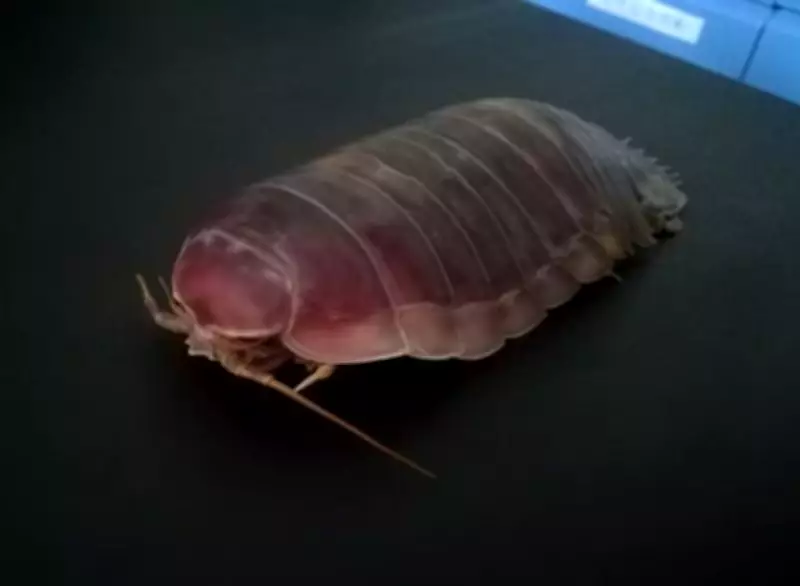
Deep-sea isopods, distant relatives of pill bugs, have developed a remarkable biological strategy to survive extreme food scarcity in the ocean depths, according to new research published in the journal Cell.
Survival in a Food Desert
These crustaceans inhabit a cold, dark environment far below the ocean surface, where food arrives only rarely as falling organic matter. Crustacean biologist Jianhai Xiang of the Institute of Oceanology, Chinese Academy of Sciences, described it as a world of perpetual night and crushing pressure, yet life finds a way.
The study reveals that deep-sea isopods can endure more than five years without a meal. Their solution combines anatomical and genetic adaptations: a large stomach, extremely low metabolism, and a gene that helps regulate energy production.

Anatomical and Genetic Adaptations
These bottom-dwelling scavengers have 14 jointed legs and a hard exoskeleton, and some species exceed half a meter in length. The research focused on two species: Bathynomus doederleini, found at about 300 meters depth, and Bathynomus jamesi, found at about 900 meters. In the deeper species, the stomach occupies about two-thirds of the body cavity, acting as a food warehouse.
Lead author Jianbo Yuan compared the strategy to earning more and spending less. The isopod stores a large meal and then runs on standby mode with drastically reduced metabolism, slow digestion, and efficient nutrient use, making one meal last for years.
Stomach microbes may also play a role. In the deeper species, Chlamydiae bacteria, typically associated with disease, are linked to fat storage, providing slow-release energy in a mutually beneficial arrangement.
Horizontal Gene Transfer
A key finding is the role of the ND1 gene, which originated from a symbiotic bacterium and was incorporated into the isopod genome through horizontal gene transfer. This process, where DNA moves between distantly related organisms, is extremely rare. The ND1 gene acts as a metabolic switch, increasing metabolism at normal temperatures but conserving energy under cold conditions, extending starvation survival.
Study co-author Kahou Chu noted that horizontal gene transfer provides a faster route to new traits than inheritance alone, helping organisms compete in extreme environments.
Implications for Science and Conservation
Xiang emphasized that the deep sea is Earth's largest living space, and understanding such adaptations can inspire advances in medicine, robotics, and conservation. Studying how animals cope with extreme food scarcity also sheds light on resilience in a changing planet, including food-web disruptions and climate change.