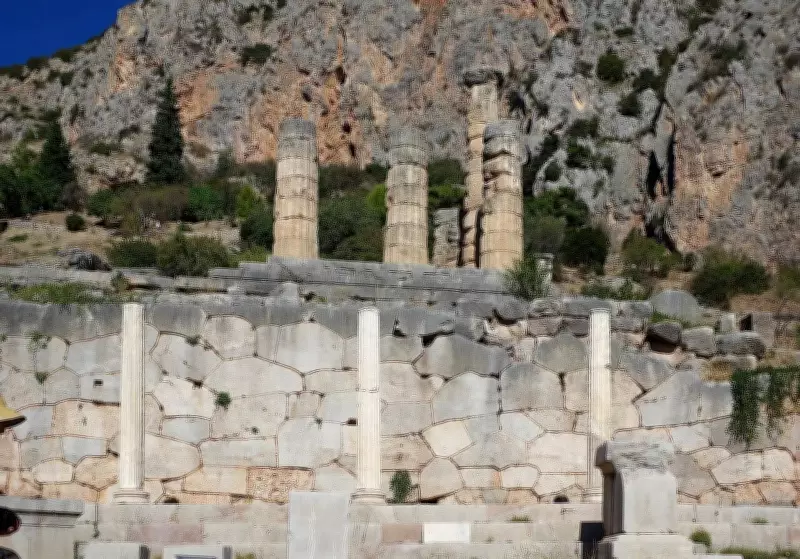
Delphi's Temple of Apollo has long stood as the ultimate symbol of ancient Greek spirituality, perched on the steep slopes of Mount Parnassus. This sacred site was home to the Pythia, a priestess whose prophecies could determine the fate of kings and wars. While tourists marvel at its marble structures and panoramic views, recent scientific discoveries suggest that the true power of Delphi lies not in its above-ground architecture but in the highly unstable geological composition beneath it.
The Duality of the Oracle's History
Historically, the story of the oracle has two interpretations. To the ancients, it was a divine truth where gods communicated through a human medium. Later skeptics dismissed it as political theater or a mere religious ritual lacking scientific basis. However, the discovery of an extensive network of intersecting fault lines beneath the temple has reshaped this perspective. Rather than being merely a backdrop for religious activity, the geography and geology of Greece may have played an active role in the oracle's phenomenon.
Fault Lines of Prophecy
Research published in the Journal of the Geological Society has reignited interest in what transpired within the temple's sacred chamber. The sanctuary was built precisely where two major fault lines—the Delphi and Kernia faults—cross. This deliberate positioning likely facilitated the flow of water and gas to the surface. The study, titled Scent of a Myth: Tectonics, Geochemistry and Geomythology at Delphi, suggests that friction in this area heated underlying limestone, releasing light hydrocarbons like ethylene. This gas has a sweet scent and can induce a trance-like state when inhaled in an enclosed space. This discovery aligns with ancient accounts, such as those by Plutarch, describing a 'sweet-smelling pneuma' emerging from a fissure in the temple floor. This fusion of earth science and ancient belief demonstrates how natural phenomena shaped profound spiritual experiences, making Delphi a place where geology and faith intertwined.

Myth and Geology: A Dynamic Relationship
The 'gas theory' has gained traction for logical reasons. Early 20th-century excavations found no trace of the supposed chasm, leading many to dismiss the 'vapors' as mythical. However, advances in modern geochemistry have shown that gas releases can occur sporadically due to tectonic activity or groundwater changes. This overlap between earth science and history highlights how environmental settings influence human cultures. If the Pythia's frenzied state was caused by ethylene or other hydrocarbons, it would confirm the physical basis behind her prophecies. While the temple provided the setting, the geology beneath Delphi generated the energy for the phenomenon, transforming natural occurrences into messages for the people.
Although scholars continue to debate, the new evidence makes Delphi more tangible than ever. It is no longer just a collection of ruins and myths; it is a living laboratory for testing ideas. The fault lines also explain the frequent earthquakes in ancient Delphi, which the Greeks associated with divine forces, integrating the entire landscape into the spiritual process.
The appeal of the Oracle of Delphi endures because it cannot be reduced to a single explanation. It stands at the intersection of tectonics and faith, reminding us that the most intriguing mysteries are not always 'either-or' phenomena. Whether the Pythia truly heard Apollo's voice or her words were influenced by limestone chemistry, something profoundly impactful occurred that left an indelible mark on Western civilization.