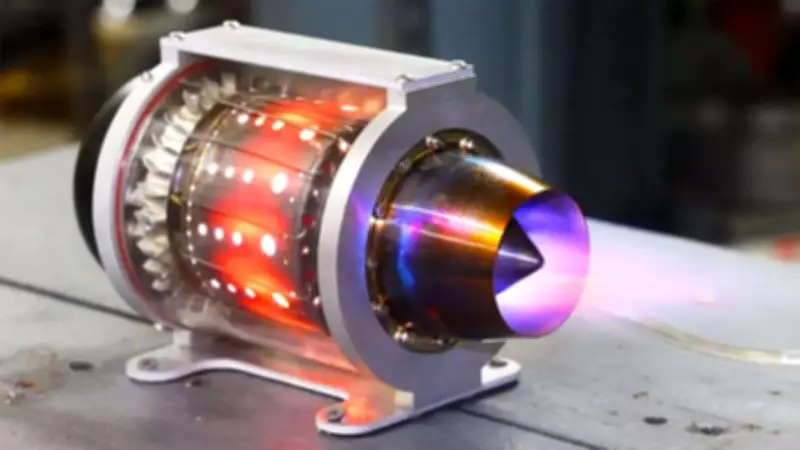
As modern warfare rapidly shifts towards drones, loitering munitions, and autonomous strike systems, the Defence Research and Development Organisation's (DRDO) Research Centre Imarat (RCI) has issued an Expression of Interest (EOI) seeking compact, combat-proven turbojet engines for aerospace applications. This move strongly signals that India may be accelerating its jet-powered drone and cruise missile programs amid growing concerns over gaps in indigenous unmanned warfare capabilities.
Engine Specifications and Operational Requirements
The engine specifications indicate a highly survivable, all-weather unmanned combat platform capable of operating across India's diverse and extreme battle environments. Key requirements include:
- High-Altitude Operations: The requirement for operations at altitudes above 9.5 km (30,000 feet) suggests the platform is expected to function in high-altitude conditions near the Line of Actual Control (LAC) with China, where thin air severely affects engine performance.
- Extreme Temperature Range: The ability to function in temperatures ranging from below -30°C to above 40°C points toward deployment flexibility across terrains such as Ladakh, Siachen, and the Thar desert.
- High-Subsonic Speed: The operational speed of up to Mach 0.9 (1,100 km/h) places the system in the category of high-subsonic strike platforms, fast enough to reduce enemy reaction time while remaining significantly cheaper than supersonic cruise missiles.
- Compact Size and Weight: The compact size and sub-25 kg weight requirement indicate DRDO is prioritizing smaller, harder-to-detect systems that can be mass-produced.
DRDO has also asked vendors to provide all necessary accessories and support systems required for ground testing and integration of the engine.

Urgency and Strategic Implications
By specifically asking for readily available and flight-tested engines, DRDO appears to be attempting to shorten development timelines. This reflects the growing urgency within the Indian defence establishment to rapidly build indigenous drone systems. While countries like the United States, China, Turkey, and Iran have developed dedicated ecosystems for combat drones, loitering munitions, and jet-powered strike systems, India still remains dependent on certain foreign technologies in several critical areas.
India has made progress through programs such as Tapas, Archer, and multiple swarm drone projects. However, several systems are still under development, and turbojet engine technology remains limited. Jet engines are one of the toughest technologies to master.
Potential Applications
The specifications strongly indicate that India intends to use these engines in long-range kamikaze drones, loitering munitions, or subsonic cruise missiles. As modern conflicts increasingly highlight the battlefield dominance of drones and loitering munitions, DRDO's decision to seek ready-made, flight-proven turbojet engines points to the growing urgency. The move reflects a shift towards faster capability induction to match the pace of the rapidly evolving global military landscape.