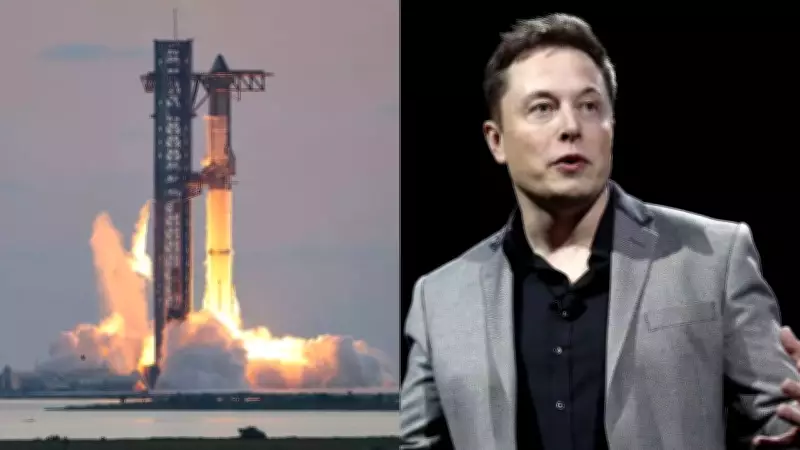
Elon Musk's vast technological empire may soon be consolidated under a single corporate umbrella, potentially creating a trillion-dollar "super-conglomerate" that would bring together his most powerful assets, according to a recent report. Citing regulatory filings, news agency Reuters has revealed that SpaceX is actively discussing a merger with Musk's artificial intelligence startup, xAI, ahead of a rumored Initial Public Offering (IPO) later this year.
Creating a Unified Corporate Giant
This strategic move would essentially combine Musk's most significant technological ventures under one corporate roof. The proposed merger would bring together SpaceX, the pioneering space exploration company; Starlink, the revolutionary satellite internet constellation; X, the influential social media platform formerly known as Twitter; and xAI, the innovative creator of the Grok chatbot. This consolidation represents a monumental shift in how Musk's diverse technological enterprises might be structured and managed moving forward.
The Strategic Rationale Behind the Merger
The report indicates that for SpaceX, the primary motivation for merging with xAI stems from the escalating artificial intelligence arms race. SpaceX has previously signaled intentions to launch data centers into orbit, and by integrating xAI's sophisticated software directly with Starlink's advanced hardware infrastructure, Musk could potentially create a globally accessible, space-based AI network. This orbital AI system would be physically shielded from terrestrial disruptions, offering unprecedented resilience and global coverage.

Alternative Proposals and Investor Perspectives
Meanwhile, Bloomberg reports that some investors are advocating for an alternative approach: a merger between Tesla and xAI instead. This alternative configuration would ensure that xAI's groundbreaking "Full Self-Driving" (FSD) technology and advanced robotics capabilities are optimally utilized within Tesla's electric vehicle and humanoid robot (Optimus) programs. The debate between these two potential merger paths highlights the strategic importance investors place on how Musk's AI assets should be integrated with his other ventures.
Gene Munster, managing partner at Deepwater Asset Management, offered insight into Musk's strategic thinking, stating, "I think it's highly likely that xAI ends up with one of the two parties. What's important for Elon is to have a massive vision that's way out there that he's early on." This perspective underscores Musk's characteristic approach of pursuing ambitious, forward-looking technological integration.
Addressing Concerns About Corporate Fragmentation
Dennis Dick, chief market strategist at Stock Trader Network, highlighted concerns about Musk's current corporate structure, noting, "Musk has too many separate companies. A major risk thesis for Tesla is that Musk is spreading himself out too much. As a Tesla shareholder, I applaud further consolidation." This sentiment reflects growing investor anxiety about the potential dilution of focus and resources across Musk's numerous ventures and the perceived benefits of creating a more unified corporate entity.
Recent Corporate Developments
The report further reveals that two new entities were established in Nevada on January 21, with regulatory filings listing SpaceX and its Chief Financial Officer, Bret Johnsen, as managing members. These corporate filings provide tangible evidence of the ongoing structural changes within Musk's business empire and suggest that concrete steps are being taken toward potential consolidation.
The potential merger between SpaceX and xAI represents more than just corporate restructuring—it signals a fundamental shift in how space technology and artificial intelligence might converge to create unprecedented capabilities. By bringing together orbital infrastructure with advanced AI systems, Musk appears to be positioning his companies at the forefront of what could become the next major technological frontier: space-based computing and intelligence networks that transcend terrestrial limitations.