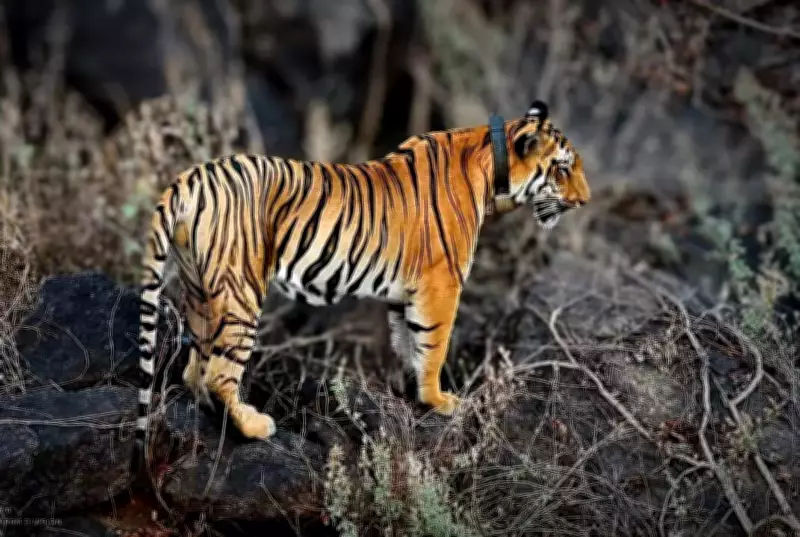
A single tiger has kept people across the erstwhile combined East Godavari district on edge for the past four months. Captured once, rehabilitated, and released back into the wild, the elusive big cat has continued its unpredictable journey through forests and village fringes.
Current Movements and Concerns
The tiger, now moving through villages in Devipatnam mandal of Polavaram district, has once again become a source of concern after killing tens of cattle. Authorities have temporarily closed the route leading to the Goddess Gandi Pochamma temple, affecting tourist access to Papikondalu. According to forest officials, its recent movements have been traced to Patha Nagulapalli and D Ravilanka villages.
Livestock Attacks and Impact on Communities
The tiger has continued to target livestock. It killed 13 cattle on June 2, just days after another incident in Polavaram district in which nine cattle were killed. The repeated attacks have affected the daily lives of tribal communities in the region. During the summer months, tribal families traditionally venture deep into forests to collect minor forest produce. However, the tiger’s fear has forced many to remain close to their hamlets. Villagers have also been guarding cattle sheds through the night to prevent further attacks.

Unusual Origin and Behavior
What makes this tiger unusual is that it is not a resident of the Eastern Ghats landscape. Forest officials believe it entered Andhra Pradesh through Telangana and may have originally dispersed from the broader Maharashtra tiger landscape, possibly from the Tadoba region. Officials describe it as a young male, around three to three-and-a-half years old, currently in the dispersal phase of its life. Young male tigers often travel hundreds of kilometres in search of territory, prey, and mating opportunities before settling in a permanent home range.
Initial Appearance and Capture
The tiger first attracted public attention in late January and early February, when it began appearing in villages across the erstwhile combined East Godavari district. It repeatedly entered agricultural fields and human habitations, killing livestock and causing panic among residents. Following a week-long operation in February, forest officials tranquillised and captured it near Kurmapuram in Konaseema district. A state-level expert committee later recommended releasing the animal into Papikonda National Park in the Rampachodavaram division. Before its release, officials fitted the tiger with a GPS-enabled satellite radio collar, making it the first tiger in Andhra Pradesh to be scientifically monitored in this manner after rehabilitation.
Post-Release Movements
Authorities believed that the extensive forests, adequate prey base, and relatively low human disturbance would allow the tiger to establish a territory naturally in Papikonda. However, the plan did not unfold as expected. Within weeks, the tiger moved beyond the core area. By early March, GPS signals showed it moving through the Yeleru Reservoir region before entering the Rajavommangi forest range. A video captured in Papikondalu during the same period showed the radio-collared tiger rolling in the grass after feeding, indicating that it remained physically healthy.
Instead of settling within Papikonda National Park, the tiger continued moving across multiple forest divisions. By April, it had travelled through East Godavari, Kakinada, Alluri Sitharama Raju, and Polavaram regions. These movements strengthened the view among wildlife experts that the tiger was still searching for a suitable territory. Although no attacks on humans have been reported, repeated livestock kills have kept forest authorities on alert.
Expert Intervention and Future Plans
Principal chief conservator of forests PV Chalapathi Rao said a specialised team from Pune had assisted in the earlier capture of the tiger in Konaseema district in February. “A team from Bengaluru has now been brought in to capture the animal. They are using advanced technology, including thermal drones and sensors, and are closely monitoring its movements. We will capture the tiger soon. People do not need to panic,” Rao said.