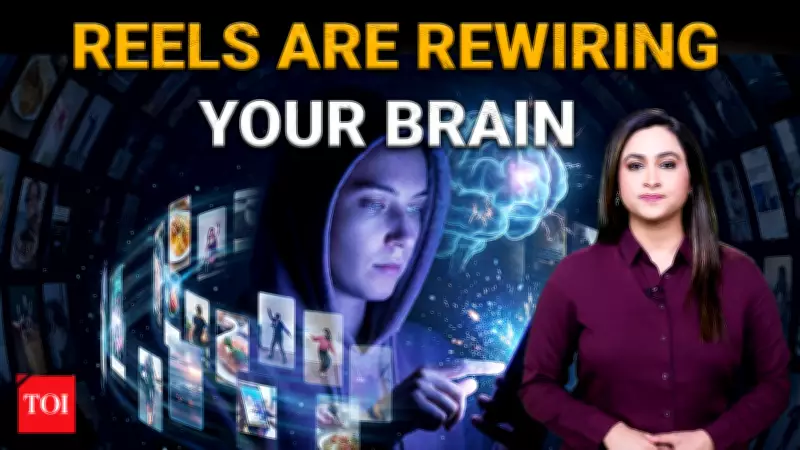
How Endless Reels Are Rewiring Your Brain and Destroying Your Focus
Scrolling through endless reels for hours might seem like a harmless pastime, but emerging neuroscience is uncovering a deeply troubling impact on the human brain. Recent studies indicate that heavy consumption of short-form videos, such as those found on platforms like Instagram Reels and YouTube Shorts, may be weakening the prefrontal cortex. This critical brain region is responsible for essential functions like focus, decision-making, and self-control.
The Neuroscience Behind the Scrolling Habit
Researchers have observed that the constant, rapid-fire nature of short-form content can lead to significant changes in brain activity. The prefrontal cortex, which acts as the command center for attention and impulse regulation, appears to be particularly vulnerable. When individuals engage in prolonged scrolling sessions, this area may become less active, making it harder to concentrate on tasks that require sustained mental effort.
This rewiring effect is not just a minor concern; it has profound implications for daily life, affecting productivity, learning, and overall cognitive health. With billions of users worldwide watching these reels every day, scientists are now raising a serious question: is infinite scrolling quietly shrinking our attention spans?

The Global Impact on Attention Spans
The widespread adoption of short-form video platforms has created a global experiment in human behavior. As more people spend hours each day consuming bite-sized content, there is growing evidence that attention spans are diminishing. This trend poses challenges for education, work environments, and personal relationships, where deep focus is increasingly rare.
Experts warn that without intervention, this could lead to a society where sustained concentration becomes a lost skill. The addictive design of these platforms, which uses algorithms to keep users engaged, exacerbates the problem by encouraging endless consumption.
Potential Solutions and Future Research
To combat the negative effects, some recommendations include:
- Setting time limits on social media usage to reduce exposure to short-form videos.
- Engaging in activities that promote focus, such as reading or meditation.
- Encouraging digital literacy to help users understand the impact of their online habits.
Further research is needed to fully understand the long-term consequences and develop effective strategies to mitigate brain rewiring. As technology continues to evolve, balancing innovation with cognitive health will be crucial for future generations.