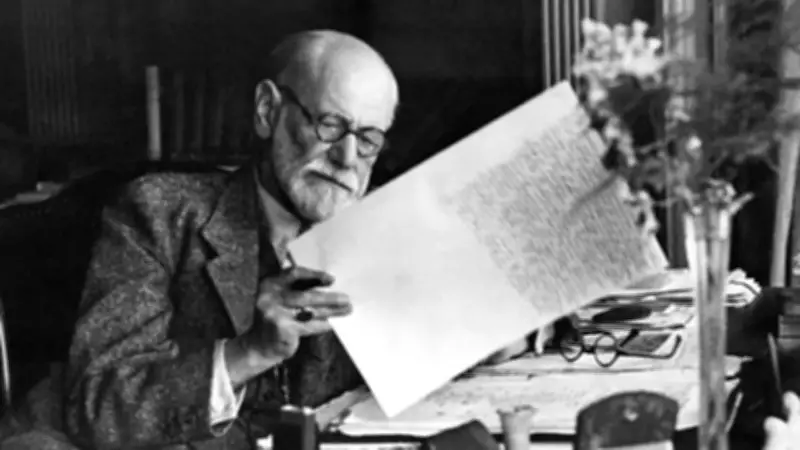
Sigmund Freud's quote, "The virtuous man contents himself with dreaming that which the wicked man does in actual life," frequently appears in online feeds, quote pages, and commentary columns, often stripped of broader context. Its brevity and unsettling nature make it travel well, lacking a clean moral instruction and offering only an unfinished comparison. Typically presented as a reflection on virtue and behavior, it fits more comfortably in psychological discussion than moral storytelling. Freud's work is often linked to hidden desires and unconscious thought, leading readers to connect this statement with those themes. However, the quote itself does not provide a fixed conclusion. It highlights a gap between imagination and action, prompting readers to consider what separates the two in real human behavior.
Meaning Behind Freud's Quote
The meaning resides in a space that is neither fully moral nor fully psychological. It suggests that virtuous individuals are not necessarily free from difficult or intense thoughts; rather, those thoughts remain internal, experienced but not acted upon. The so-called wicked person is defined by action, where similar internal impulses manifest in the real world. This interpretation shifts focus from labels to process. What matters is not only the content of the mind but what survives the internal filtering before behavior occurs. This filtering is shaped by fear of consequences, personal boundaries, social rules, and timing. Freud's framing, as commonly understood, occupies this messy space where thought is still forming and has not yet settled into action or restraint. There is also a quieter implication: imagination serves as a holding area for impulses that do not cross into behavior, presented as neither good nor bad but as part of how the mind manages conflicting ideas.
Inner Life and Behavior on Different Tracks
Human behavior does not follow a straight path from thought to action. It tends to shift, pause, redirect, and sometimes stop completely. A thought can appear and disappear without leaving any trace in behavior, or it may linger and be processed internally before fading. Freud's psychological perspective often focused on this uneven movement within the mind. The quote reflects a separation between internal experience and external visibility. People can harbor thoughts that never become actions, and those thoughts do not always define their real-world behavior. This gap is ordinary, part of mental life. Most decisions are not instant reflections of thought but results of internal negotiation that remains largely hidden. The quote sits in that space where behavior is merely the final stage of a longer internal process.

Imagination as Internal Processing Space
Imagination plays a quieter role in dealing with internal impulses. It allows thoughts to exist without becoming real actions. Freud's broader ideas often treated imagination and dreaming as part of normal psychological processing. In everyday life, imagination appears in small ways: a reaction plays out mentally before being spoken, or a scenario is replayed without intention to act. These moments are brief and often forgotten but are part of how the mind handles pressure, curiosity, or conflict. Thus, "dreaming" in the quote refers not only to sleep but to a wider internal space where thoughts can exist safely without consequences. This space becomes important when certain impulses cannot or should not turn into action.
Moral Labels Lose Clarity Under Psychological View
When viewed through a psychological lens, moral categories become less stable. The distinction between a virtuous person and a wicked person blurs, as both have internal experiences. The difference lies in what happens next. Freud's work avoided simple moral sorting, focusing instead on variation in internal processing. People differ in how they manage impulses, not necessarily in whether those impulses exist. Some thoughts are contained, some redirected, and some become action. This range makes behavior more situational than fixed. While moral judgment remains, it is complicated: behavior is visible and accountable but may not represent the full internal picture. The quote sits in that tension without resolving it.

Freud's Wider Idea of Unconscious Influence
Freud's theory posits that not all mental activity is conscious. The unconscious mind contains material that shapes reactions, emotions, and decisions indirectly. In this context, the quote can be read as pointing to shared internal material across individuals, even if behavior differs. It suggests that internal life is broader than outward action, making behavior appear less like a single decision and more like the outcome of multiple internal pressures. Thoughts, memories, emotional responses, and learned patterns all contribute to how an action forms or does not form.
Modern Life and the Split Between Private Thought and Public Self
In modern settings, the difference between inner experience and outward expression is evident. People present themselves in controlled ways in professional environments, social interactions, and digital spaces. What is shown is often filtered and adjusted, while internal thought remains less structured, shifting quickly and not following public rules. This creates a gap between appearance and private experience. Freud's observation fits this reality, as it does not assume that external behavior fully reflects internal life. Instead, internal processes are always larger than what is seen. Modern life makes this separation more visible in everyday situations.
Misreading the Quote as Simple Moral Judgment
The quote is often treated as a straightforward moral comparison, but that reading is limited. Freud's approach does not reduce people to fixed moral categories; it focuses on internal variation. Another common misunderstanding is treating imagination as intention. In psychological terms, imagining something does not automatically imply a desire to act. Mental activity can be experimental, symbolic, or temporary without any connection to behavior. It is also important not to read the quote as a denial of responsibility. Actions still matter because they affect others in real ways. The quote is about what exists before action, not about removing consequences from action itself.
Other Famous Quotes by Sigmund Freud
- "Unexpressed emotions do not die. They are buried alive and come forth later in different ways."
- "Dreams are often the royal road to the unconscious."
- "We are never so defenseless against suffering as when we love."
- "Most people do not really want freedom because freedom involves responsibility."
- "Looking back, struggles often appear as some of the most formative periods of life."
This article is brought to you by the TOI Science Desk, a team of journalists dedicated to exploring the world of discovery and bringing captivating news, features, and articles from science to readers. They aim to demystify science, making it accessible and engaging for all backgrounds, and are committed to crafting knowledge with precision and passion.