

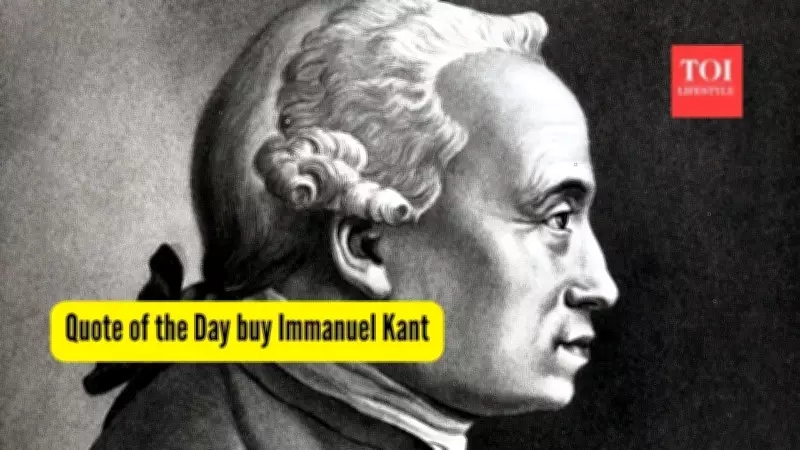
Immanuel Kant was one of the most influential thinkers in Western philosophy. Born on April 22, 1724, in Konigsberg, Prussia (now Kaliningrad, Russia), he spent nearly his entire life in the same city. Despite his lack of travel, his ideas traveled far, reshaping philosophy, ethics, politics, and modern thought. Kant is often credited with synthesizing rationalist and empiricist traditions to create a new framework for understanding morality and knowledge.
Early Life and Education
Kant came from a modest, deeply religious family. This background instilled in him a lifelong focus on duty, morality, and self-discipline. He studied at the University of Konigsberg, where he developed interests in philosophy, metaphysics, mathematics, and natural sciences. Before gaining fame, Kant worked as a teacher and tutor for many years. During this period, he wrote about science and space, including early ideas about the formation of the solar system, later known as nebular theories.
Critique of Pure Reason and Transcendental Idealism
Kant's most significant contributions came later in life, especially after the publication of his groundbreaking work, Critique of Pure Reason (1781). In this book, he addressed a fundamental question: How do individuals acquire knowledge? Kant argued that while experience is a source of knowledge, not all knowledge comes from experience alone. He proposed that the mind actively shapes our perception of reality. Instead of passively receiving information, our minds organize experiences using innate concepts like space, time, and causality. This revolutionary approach became known as transcendental idealism.

Kant distinguished between the phenomenal world (the world as we perceive it through our senses and mental categories) and the noumenal world (the world as it truly is, independent of perception). He asserted that we can understand phenomena but cannot directly access noumena. This idea profoundly influenced later philosophers.
Moral Philosophy and the Categorical Imperative
Kant is equally famous for his moral philosophy, particularly outlined in his 1785 book Groundwork of the Metaphysics of Morals. He argued that morality should not be based on feelings, personal desires, or consequences. Instead, morality is grounded in duty and reason. People act morally when they do the right thing for the right reasons, not because it benefits them.
His most famous moral principle is the categorical imperative. One formulation states: "Act only according to that maxim whereby you can at the same time will that it should become a universal law." In other words, before acting, consider whether you would want everyone else to act in the same way. If the action would harm others or undermine trust, it is wrong. For example, if everyone lied when convenient, trust would disappear, making lying self-defeating.
Another formulation emphasizes treating people as ends in themselves, never merely as means to an end. This means respecting the inherent dignity and worth of every individual. People should not be used solely for profit, pleasure, or advancement. This idea has profoundly shaped modern concepts of human rights, justice, and equality.
Political Philosophy and Aesthetics
In political philosophy, Kant advocated for freedom, republicanism, and international peace. In his 1795 essay Perpetual Peace, he proposed that nations should establish a federation to prevent war through laws. This work is considered an early philosophical foundation for organizations like the United Nations and modern international law.
Kant also wrote about aesthetics in his 1790 book Critique of Judgment. He explored the nature of beauty, taste, and the emotional impact of art. He argued that beauty is both universal and subjective; when we call something beautiful, we expect others to share our feeling, even though beauty cannot be objectively measured.

Personal Life and Legacy
Kant was known for his disciplined lifestyle. He woke up early, taught classes, wrote, took a walk at the same time each day, and dined with friends. Residents of Konigsberg could reportedly set their clocks by his afternoon stroll. He never married and lived a quiet but social life, frequently discussing his ideas with others.
Kant's influence on later philosophy is immense. Thinkers such as Georg Wilhelm Friedrich Hegel, Arthur Schopenhauer, Friedrich Nietzsche, and John Rawls built upon or reacted to his ideas. His work also impacted religion, politics, psychology, and law. Although some have criticized his concepts and his writing is often dense, his importance is universally acknowledged. He transformed philosophy by shifting the focus from what we know to how we know it, and he revolutionized ethics by grounding morality in logic and universal principles rather than emotions or outcomes.
Immanuel Kant died on February 12, 1804, in Konigsberg. His last words were reportedly, "It is good." He remains one of the most pivotal figures in Western thought. His ideas continue to shape discussions on freedom, duty, knowledge, and human dignity. Studying philosophy is nearly impossible without engaging with Kant's work. More than two centuries after his death, his ideas remain challenging and relevant.
Quote of the Day: Kant on Happiness
One of Kant's most famous quotes is: "Rules for happiness: something to do, someone to love, something to hope for." This simple yet profound saying offers a timeless guide to a fulfilling life.
The first part, "something to do", emphasizes the importance of purpose and meaningful activity. Humans are not meant to remain idle. Having tasks, goals, responsibilities, or creative pursuits gives life meaning and a sense of usefulness. This doesn't necessarily mean a job or making money; it could be studying, caring for children, gardening, writing, volunteering, learning a new skill, or creating something valuable. The key is to engage actively. People who wake up with a purpose often feel happier than those who are comfortable but lack direction. Purpose fills life with meaning and prevents emptiness and boredom.
The second part, "someone to love", highlights the human need for connection. We are social beings. Even the most independent person requires love, trust, and relationships. Love can be directed toward friends, family, children, romantic partners, or even a sense of compassion for all people. Loving someone shifts focus away from oneself, fostering connection and reducing selfishness. Shared joy multiplies happiness. Achieving success alone can feel hollow, but sharing it with loved ones brings deep satisfaction. This part of the quote reminds us that happiness requires meaningful relationships.
The third part, "something to hope for", may be the most essential. Hope gives life meaning and direction. Even comfort feels empty without hope. Hope helps people endure hardship, pain, doubt, and failure. It could be hope for recovery, personal growth, justice, success, peace, reconciliation, or simply better days ahead. Hope doesn't require certainty; it only requires the belief that tomorrow might be better. Someone with hope can persevere through difficult times because they have a reason to live. Hope is a form of emotional resilience.
This quote is powerful because it connects the past, present, and future. Each day offers "something to do" in the present. "Someone to love" keeps us connected to others. "Something to hope for" propels us toward tomorrow. Together, they provide a clear vision of happiness: a day filled with meaning, a heart filled with love, and a horizon filled with hope.
The quote quietly challenges common assumptions about happiness. Many believe that acquiring possessions, achieving status, or experiencing constant pleasure leads to happiness. Kant suggests that lasting happiness is simpler and deeper: it is found in meaningful work, loving relationships, and a positive outlook. These are accessible to people from all walks of life.
Ultimately, the quote reminds us that how we live our lives matters more than what we own. With love, purpose, and hope, even the most ordinary days can be happy and meaningful.
About the Author
TOI Lifestyle Desk is a dynamic team of dedicated journalists who, with unwavering passion and commitment, sift through the pulse of the nation to curate a vibrant tapestry of lifestyle news for The Times of India readers. At the TOI Lifestyle Desk, we go beyond the obvious, delving into the extraordinary. Consider us your lifestyle companion, providing a daily dose of inspiration and information. Whether you're seeking the latest fashion trends, travel escapades, culinary delights, or wellness tips, the TOI Lifestyle Desk is your one-stop destination for an enriching lifestyle experience.





