Indian-Origin High School Student Triumphs in National Data Science Competition with AI-Powered Agricultural Research
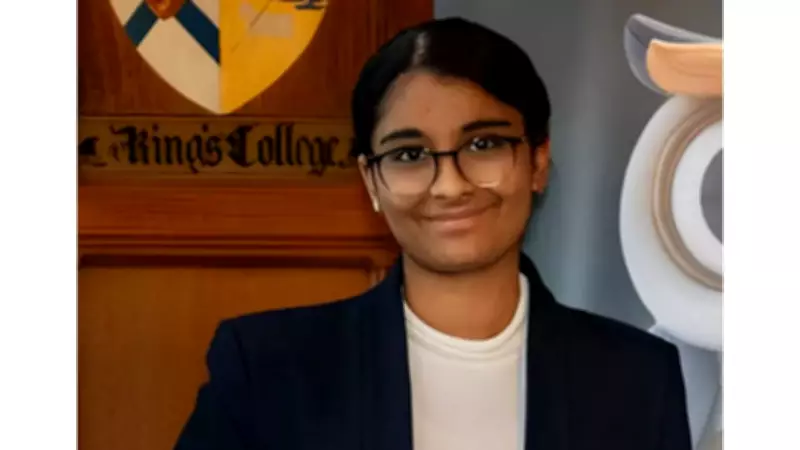
An Indian-origin high school student in Canada has achieved national acclaim after securing first place in a prestigious data science competition. Gurnoor Kaur, a Grade 11 student at Central Peel Secondary School in Ontario, won the National High School Big Data Challenge organized by STEM Fellowship. Her groundbreaking project utilized artificial intelligence and big data analytics to predict climate-driven wheat pathogen outbreaks across North America, demonstrating how advanced computational methods can address critical global issues related to food security, climate change, and sustainable agriculture.
Innovative AI Model Predicts Crop Disease Spread
Kaur's research focused on analyzing how environmental conditions influence the proliferation of pathogens that threaten wheat crops. Wheat diseases typically flourish under specific climatic factors, including elevated humidity, warmer temperatures, and particular rainfall patterns. By leveraging extensive open datasets, Kaur examined climate records alongside historical data on crop disease outbreaks. She then applied artificial intelligence models to identify patterns within this data, enabling forecasts of where and when wheat pathogens might emerge. This predictive modelling offers valuable insights for farmers and agricultural agencies, allowing them to pinpoint high-risk periods and regions before infections become widespread. The ability to anticipate outbreaks facilitates earlier monitoring, targeted treatment, and more efficient disease management within farming systems.
Linking Climate Change to Agricultural Disease Risks
A central objective of Kaur's study was to investigate how shifting climate conditions could impact agricultural disease patterns. Scientists have increasingly warned that alterations in temperature and precipitation levels may create more conducive environments for plant pathogens. By integrating climate variables into her predictive models, Kaur's work aimed to understand how warming trends and anomalous weather patterns might modify the geographic distribution of wheat diseases. Insights derived from such research are crucial for helping researchers and policymakers prepare for potential agricultural disruptions caused by climate change, thereby enhancing resilience in food production systems.

National Competition Highlights Student Excellence in Data Science
The National High School Big Data Challenge is a four-month experiential research program that empowers students to conduct independent projects using open datasets and data science tools. Participants develop their studies over several months and present their findings through research posters and concise thesis-style presentations. Kaur showcased her work at the program's Eastern Conference, hosted at the University of Toronto. In recognition of her exceptional application of artificial intelligence to a real-world problem, she was awarded a $1,200 Scale AI prize, underscoring the practical significance of her research.
A Young Leader Advancing STEAM Education
Beyond her competition success, Kaur is actively engaged in promoting science and technology education among her peers. She currently serves as president of the STEAM Collective at Central Peel Secondary School, where she encourages students, particularly young women, to pursue opportunities in science, technology, engineering, arts, and mathematics. Her academic accomplishments extend well beyond data science competitions. Kaur has previously earned first place in the NSS Gerard K. O'Neil Space Settlement Contest and presented her work at the International Space Development Conference. Additionally, she has contributed science articles to the Global STEM Youth Journal and worked as an artificial intelligence apprentice with the Creative Destruction Lab.
With this latest achievement, Kaur's research exemplifies how young scientists are increasingly harnessing artificial intelligence and data science to tackle pressing global challenges in agriculture and environmental sustainability. Her work not only highlights the potential of innovative technologies but also inspires future generations to engage in STEM fields, driving progress toward a more secure and sustainable future.