Wikipedia Founder Confronts AI's Credibility Challenge in Delhi Summit
Artificial Intelligence is rapidly transforming how information is created and disseminated globally, but this unprecedented speed and scale do not automatically translate into credibility. Jimmy Wales, the visionary co-founder of Wikipedia, who revolutionized knowledge access by harnessing collective wisdom to surpass traditional encyclopedias like Britannica, now finds his creation at the heart of a crucial debate about trust in the AI era, including recent criticisms from tech mogul Elon Musk regarding alleged bias.
The Double-Edged Sword of Artificial Intelligence
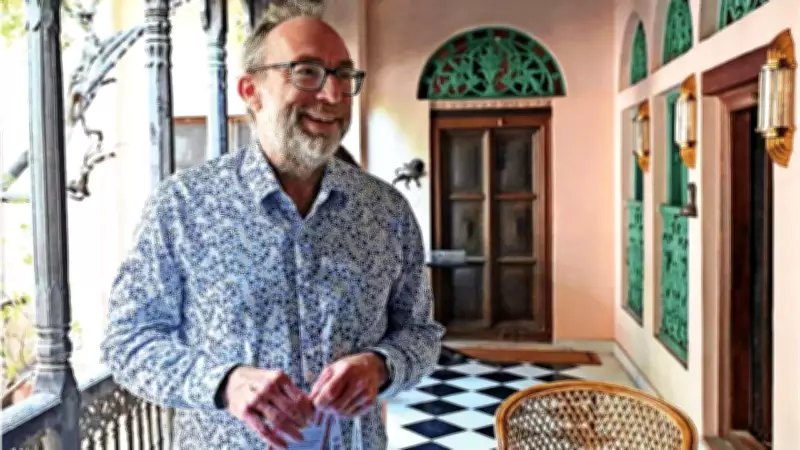
In an exclusive conversation with Rohit Saran and Saikat Dasgupta during the AI Impact Summit in Delhi, Wales reflected deeply on both the remarkable opportunities and significant risks presented by artificial intelligence. He emphasized that maintaining neutrality is absolutely non-negotiable, and that trust has become more critical than ever in our digital ecosystem.
"Throughout history, humanity has consistently balanced between the promise of tomorrow and its potential perils when envisioning the future," Wales observed. "Socrates died concerned that writing would destroy the pursuit of knowledge. Today, we face similar apprehensions about AI. The reality, as always, lies somewhere between extreme optimism and doomsday predictions."

He drew parallels with historical technological anxieties, noting how celebrated American composer John Philip Sousa feared recorded music would eliminate singing, yet people continue to sing passionately today. Similarly, chess has grown more popular worldwide despite computers surpassing human champions. "AI technology is both incredibly new and remarkably accessible," Wales explained. "Asking a computer questions and receiving answers is astonishing, yet we must acknowledge its current flaws. While some speculate about job destruction or universal wealth, the truth will likely emerge gradually as the technology evolves."
Commoditizing Intelligence and Human Moderation
While the internet transformed information into a commodity, Wales questioned whether AI might similarly commoditize intelligence. "As a programmer who frequently uses large language models, I find them tremendously helpful and enjoyable," he shared. "However, they frequently invent information and hallucinate. My primary interest lies in exploring how this technology can support human communities."
He provided concrete examples of AI's potential utility for Wikipedia, such as summarizing lengthy discussions or identifying gaps between articles and their sources. "Consider researching a Bollywood film that lacks global recognition," Wales suggested. "If I cannot read Hindi, AI could assist with basic facts. However, the human element remains irreplaceable for cultural context and nuanced understanding."
Addressing whether large language models threaten Wikipedia's future, Wales firmly defended human-curated knowledge. "Machine translation might achieve grammatical accuracy, but understanding what readers need explained about cultural contexts requires human judgment," he asserted. "For instance, describing cricket star Virat Kohli to a global audience requires contextual explanation that AI cannot provide."
The Copyright Conundrum and Local Journalism Crisis
Wales anticipates significant legal battles over copyright as AI systems increasingly utilize original sources. "We must avoid overreach in copyright law," he cautioned. "The fundamental principle that facts cannot be copyrighted must be preserved. Otherwise, scientific publishers might demand payment for factual usage, which would devastate platforms like Wikipedia."
He highlighted a deeper societal issue: the collapse of local journalism predating AI's rise. "Growing up in Huntsville, Alabama, I delivered newspapers that documented community events," Wales recalled. "Today, researching recent local elections reveals sparse coverage because journalism's first draft of history is disappearing. This makes Wikipedia's second draft immensely challenging to compile."

While uncertain about solutions, Wales suggested AI might help small news teams enhance productivity. "The information ecosystem's transformation brings both positive and negative consequences that require careful navigation," he noted.
Wikipedia's Community and Neutrality Imperative
Regarding Wikipedia's internal debates between deletionists and inclusionists, Wales identified as an "eventualist" who believes the community generally reaches correct conclusions over time. "What matters most is maintaining an active, thoughtful community engaged in constructive dialogue rather than angry confrontations," he emphasized.
Discussing India's Wikipedia community, Wales found it similar to global counterparts, comprising dedicated volunteers rather than professionals. "During recent visits to Kerala, I met passionate editors including couples who involve their children," he shared. "While smaller language versions may have less rigorous content due to fewer contributors, I haven't observed specific issues with Indian pages."
Responding to bias accusations, Wales defended Wikipedia's transparency. "When Elon Musk claims Wikipedia reflects mainstream propaganda, I respond that we mirror what reliable sources document," he stated. "We cannot champion fringe positions against scientific consensus, though we properly represent legitimate debates. Human biases exist, which makes our commitment to neutrality absolutely essential."
He stressed that tone neutrality significantly impacts credibility, citing how British newspapers' partisan coverage of electric vehicles reduces trust even among sympathetic readers. "As Amartya Sen noted, ten Indians hold twelve opinions—this human diversity makes neutral presentation crucial for maintaining trust," Wales concluded.
Lessons from WikiTribune and Future Directions
Reflecting on his discontinued WikiTribune project, Wales explained it explored journalist-community collaboration but faced commercial pressures. "To succeed financially, we needed clickbait headlines that compromised integrity," he revealed. "This experience clarified that journalism's challenges stem from broader ecosystem dynamics where algorithms prioritize engagement over accuracy."
Ultimately, Wales remains committed to human-curated knowledge as AI advances. "While technology offers incredible tools, the human capacity for judgment, cultural understanding, and ethical deliberation remains indispensable for building trustworthy information systems," he affirmed.