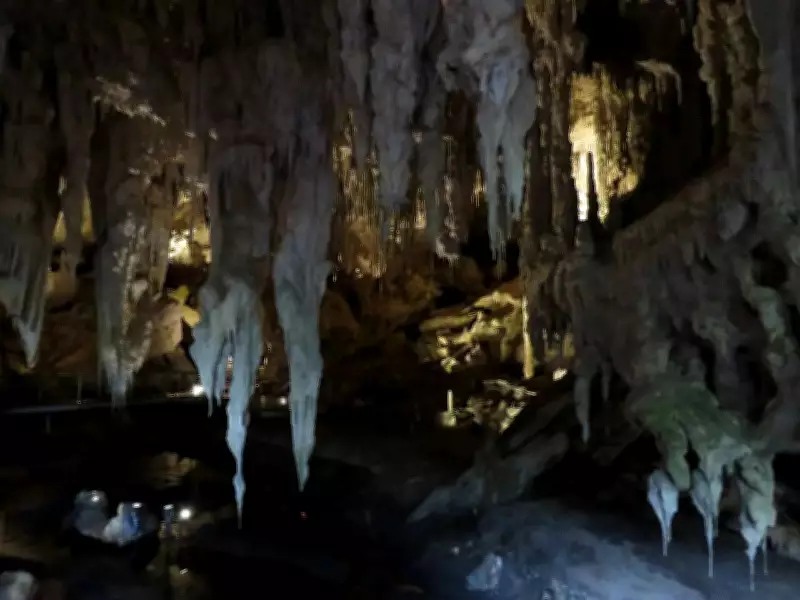
Deep within the limestone formations of southwestern Western Australia lies a cave that feels frozen in time. Mammoth Cave, despite its name evoking prehistoric giants, has lived up to its reputation for over a century. However, with the new millennium, something curious began to unfold within its chambers.
Ancient Time Capsule
Mammoth Cave holds a page of history detailing ancient huntsmen and their prey. The cave became a time capsule where gigantic marsupials, including kangaroos and unique species, met their end through natural traps. These findings, brought to light by scientists, trace thousands of years of Australia's geological history. With advanced methods, researchers uncover increasingly fascinating insights about past creatures.
The Arboreal Kangaroo Mystery
What makes Mammoth Cave scientifically intriguing is the unusual species found inside. Kangaroos are typically associated with open plains, but evidence suggests a different story. A study in Royal Society Open Science confirms the existence of an arboreal kangaroo. Western Australia's Mammoth Cave reveals ancient secrets, including evidence of arboreal kangaroos and long-beaked echidnas, indicating a past humid climate and rich ecosystem.

Apart from typical inhabitants, the cave housed bizarre creatures. Scientists discovered traces of long-beaked echidnas, usually linked to New Guinea's mountainous regions. According to findings in ZooKeys, these creatures in Western Australia prove the region's former richness and humid climate, different from today. These fossils help reconstruct an ecosystem with thick forests and mega animals.
New Episode in Early Human History
Mammoth Cave has long been known for a kangaroo leg bone with butchery marks, supporting theories of ancient hunting. However, advanced microscopic analysis clarified the case. The latest findings, explored in research about Australia's First Peoples in Royal Society Open Science, suggest a more sophisticated relationship. Instead of just hunters, the First Peoples may have been the world's first palaeontologists. The cut marks on some bones were made after fossilization, indicating people were collecting and possibly trading these fossils as items of social or spiritual value.
Mammoth Cave transforms from an abattoir into a source of narratives. The cave suggests ancient humans, like us, were fascinated by massive bones. The Zygomaturus might have been used for mystical or utilitarian purposes, carrying history with them. Ultimately, it reminds us that our interest in ancient animals was inherent at the dawn of humanity.
Today, Mammoth Cave remains a symbol and an ancient home to many remains. It reminds us that the earth beneath our feet is far from silent. Whether examining bones of a tree-hopping kangaroo or a sacred ancient tooth, the secrets of the Western Australian underworld continue to surface.