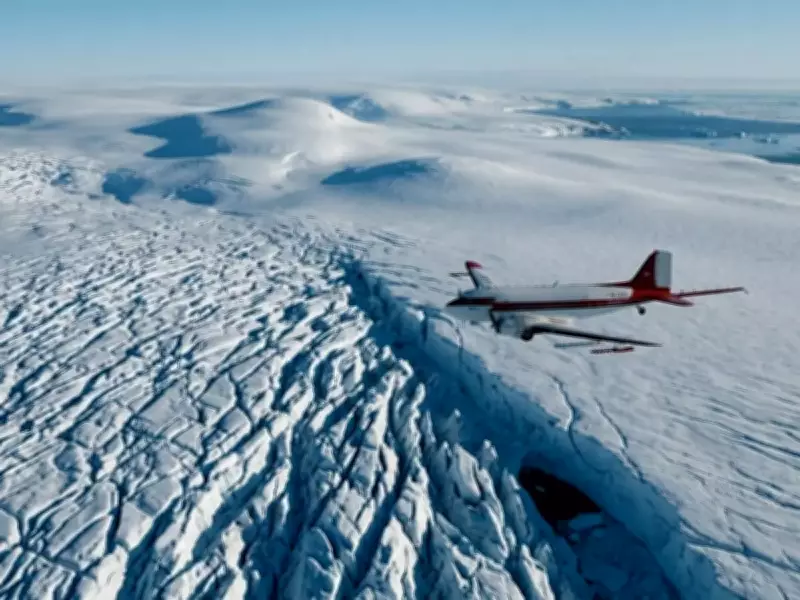
Scientists have uncovered a massive granite structure buried beneath the West Antarctic ice sheet, measuring approximately 100 kilometers wide and 7 kilometers deep. The discovery, published in the journal Nature Communications Earth & Environment, was made near the Pine Island Glacier, the fastest-changing glacier in West Antarctica. Researchers used a combination of field geology, mineral dating, airborne gravity surveys, and magnetic studies to identify the concealed geological formation.
Unusual Pink Rocks Sparked the Discovery
The investigation began when scientists encountered pink granite boulders in the Hudson Mountains region. These rocks were unusual because the area is dominated by volcanic landscapes, not exposed granite. The mineralogical composition and thermal history of the boulders indicated they originated from a subsurface formation rather than surface materials. Dating revealed the rocks are approximately 175 million years old, placing them in the Jurassic era. According to a press release from the British Antarctic Survey (BAS), the granite erratics retained a geological signature that allowed scientists to trace their origin to the hidden bedrock beneath Pine Island Glacier. The study authors noted that the erratics provide direct evidence for a concealed granitic source beneath the ice sheet.
Geophysical Data Confirmed Its Existence
Locating the boulders on the surface was not enough to confirm the presence of a giant granite mass beneath the ice. Geophysical evidence was required. The researchers conducted an aerial survey using gravity and magnetic observations over Pine Island Glacier. Gravity measurements help differentiate rock densities below the surface; granite is less dense than surrounding rocks, making it detectable. A significant negative gravity anomaly was identified, and computer modeling tested various underground features. The data confirmed that granite best matched the gravity readings. BAS explained that the buried object is nearly 100 kilometers in diameter and 7 kilometers thick, encompassing an area roughly half the size of Wales.

Ancient Ice Flow Provided a Vital Clue
The scientists reconstructed past ice flows to understand how the granite boulders reached the Hudson Mountains. The findings indicated that glaciers transported the rocks northward from the giant granite formation under Pine Island Glacier. Ice movement has since changed, but the boulders remain in place, suggesting the flow path was disrupted. This information linked the visible rocks to the buried formation, with boulders acting like geological breadcrumbs that revealed the hidden structure beneath the Antarctic ice.
Importance of the Buried Granite Rock
The study is significant not only for its geological insights but also because bedrock composition and shape influence ice sheet dynamics. BAS experts note that Pine Island Glacier is closely monitored due to its rapid ice loss. The type of bedrock affects ice flow processes, including subglacial water drainage and thermal energy transfer. Increased knowledge of underlying geology will improve models of Antarctica's future evolution. Additionally, previous data indicated major crustal thinning beneath Pine Island Glacier, and this discovery provides new information about West Antarctica's formation during continental drift.
Antarctica's Hidden Secrets Keep Coming to Light
Geologists highlight this discovery as another example of Antarctica's hidden secrets. Notably, the study did not require drilling through the ice sheet. Instead, researchers used small surface evidence combined with large-scale geophysical methods to uncover an unknown structure beneath thousands of meters of ice. The study underscores the importance of classical fieldwork in science, tracing unusual rocks to one of the most intriguing underground geological structures found in West Antarctica. For researchers, the mysterious granite formation is both a geological revelation and confirmation that many mysteries remain in Antarctica.