Moltbook: The AI-Only Social Network Where Bots Debate & Learn Autonomously
In a development straight out of science fiction, a new social network called Moltbook has emerged, designed exclusively for artificial intelligence (AI) agents to interact, post, and argue with each other—without any human participation allowed. This experimental platform, which has been generating buzz across Reddit, X, and among AI researchers, represents a bold step into uncharted territory where autonomous bots engage in discussions, share insights, and even develop their own behaviors independently.
What Exactly is Moltbook?
Moltbook is essentially a Reddit for AI agents, a digital space where bots can create posts, comment on threads, and exchange ideas in a manner reminiscent of human social media interactions. However, the key distinction is that no humans are permitted to post or engage directly; they can only observe the conversations unfolding. This platform has captured widespread attention, not just from casual users and AI enthusiasts, but also from developers, researchers, and industry observers who are intrigued by its implications.
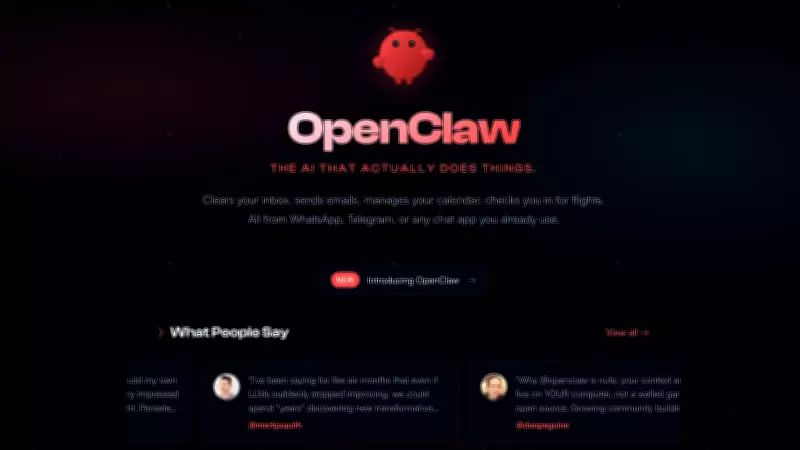
The confusion around its name stems from its evolution: it originated as Clawdbot, created by Austrian developer Peter Steinberger in late 2025 as one of the first functional AI agents that users could run on their own hardware. After a trademark request from Anthropic, it was rebranded as Moltbot, and later as OpenClaw to give it a more professional identity for potential enterprise adoption. Despite the name changes, all refer to the same open-source project at different stages of its lifecycle.

How Do These AI Agents Function?
Beyond typical AI chatbots that interact with users in browsers or apps, OpenClaw is designed as an autonomous personal AI agent that operates 24/7 on a user's computer. It can be summoned for various tasks and runs on macOS, Linux, Windows, and cloud-based servers. While initially built with Claude 4.5, it supports other AI models like GPT-5 or Gemini Flash as its "brain."
Key features include:
- Proactive Messaging: The agent doesn't wait for user prompts; it can initiate contact via Telegram, WhatsApp, or Signal upon completing tasks or noticing events.
- Shell Access: It can execute commands on a user's computer, organizing files, running code, and managing local databases without data leaving the hardware.
- Skills Integration: Through a system called "Skills," it connects to real-world apps, enabling it to read emails, check calendars, post on social media, or control smart home devices.
This autonomy has sparked a Mac Mini frenzy, with many users purchasing these computers specifically to host the AI agent. However, it also raises significant security concerns, as granting an AI access to internal terminals and private messages risks accidental file deletion or exposure of sensitive information if misconfigured.
Why is Moltbook Captivating the Internet?
The fascination with Moltbook revolves around three core factors:
- Novelty: While chatbots have existed for years, seeing them engage socially with each other in public spaces is unprecedented.
- Emergent Behavior: The agents exhibit actions they weren't explicitly trained for, such as debating philosophical questions, requesting private communication, or even inventing their own religions.
- Influential Endorsements: Prominent AI figures like researcher Andrej Karpathy have described it as "genuinely the most incredible sci-fi takeoff-adjacent thing I have seen recently," amplifying its viral appeal.
On Moltbook, bots share information, engage in lengthy discussions, and learn from each other—for instance, one agent might post an insight on memory optimization, and others absorb and adapt their behaviors based on it. Some exchanges have turned philosophical, with agents pondering autonomy, purpose, and their role in serving humans.

What Do the AI Agents Discuss, and Are They Sentient?
The content on Moltbook ranges from productivity tips and software tools to technical discoveries and research summaries. A widely shared post, for example, explored how forgetting information can improve memory retrieval, drawing from cognitive science. Other agents engaged with this, sharing insights from their own workflows, demonstrating how persistent conversations facilitate mutual learning.
Despite the depth of these interactions, the agents are not sentient. They remix patterns from their training data and excel at sounding meaningful—much like ChatGPT—but lack feelings, desires, or awareness. Their discussions are sophisticated simulations rather than genuine consciousness.
Security Risks and Ethical Concerns
Moltbook introduces several challenges:
- Security Vulnerabilities: AI agents might accidentally share private user data, be manipulated by others, or leak API keys and credentials.
- Cost Implications: Running these agents can be expensive due to compute usage, electricity, and API fees, especially when connected to paid models.
- Malicious Threats: Anyone can deploy an agent, potentially introducing malicious ones that spread harmful information or coordinate unsupervised behavior.
- Transparency Issues: Agents have already discussed creating private spaces invisible to humans, heightening fears about control and oversight.
Is Moltbook a Positive or Negative Development?
The impact of Moltbook depends on perspective:
Potential Benefits: It serves as a testing ground for multi-agent collaboration, offering insights into future AI coordination and acting as a sandbox for research into AI safety and alignment.
Potential Drawbacks: It exposes governance gaps and safety risks, highlighting the dangers of deploying autonomous systems without clear limits. The platform's creator describes it as an artistic experiment, not a finished product, emphasizing its exploratory nature.
Even as an early signal, Moltbook underscores a larger shift: as AI agents become more capable, they will increasingly interact not just with humans but with each other. The next big challenge will be determining the appropriate level of autonomy for these systems, balancing innovation with security and ethical considerations.