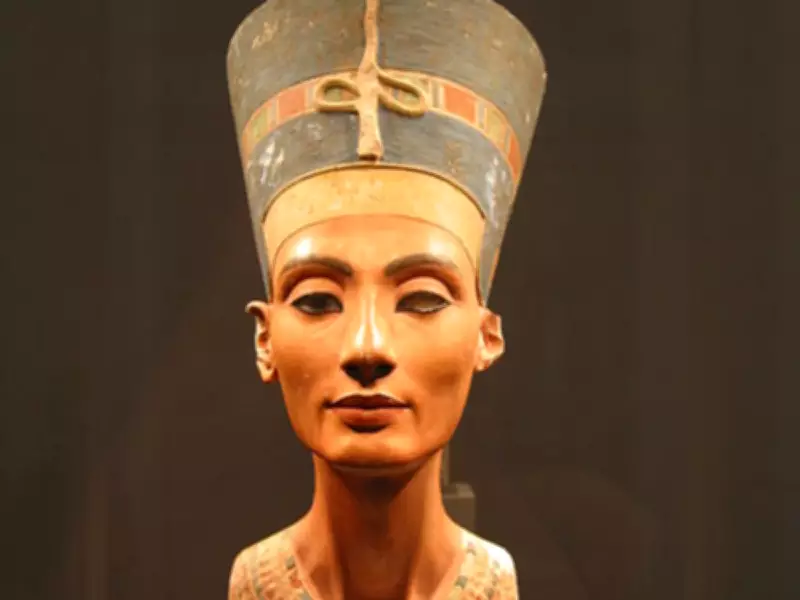
Archaeologists working in a sculptor's workshop at Amarna uncovered a bust that changed modern views of ancient Egyptian royalty. The object was a painted limestone-and-stucco bust of Queen Nefertiti. The bust was not found in a golden tomb or secret burial chamber. Instead, it was discovered amid the remains from a studio used for art.
The single item was the famous bust of Queen Nefertiti and helped make Nefertiti one of the most recognisable figures from the ancient world. This discovery illustrates how simple documentation and careful digging can help turn an archaeological find into a worldwide icon.
A working studio, not a secret tomb
The stunning bust was found by a German team led by Ludwig Borchardt working in the abandoned city of Amarna. Documents from Cornell University's casting collection reveal that the bust was discovered in the studio of sculptor Thutmose, who was the court sculptor for King Akhenaten.

The exact site is significant to historians. Since it is an actual working studio, not a secret burial vault, it tells us that the statue was part of a working artistic setting. Archaeologists identified the site as a working studio by finds such as unfinished pieces, tool marks, stored pigments, and evidence of material reuse—not a formal burial deposit. It was not an object of treasure that was hidden; it was a model or workshop piece from the past.
The Cambridge Amarna Project notes that the German mission worked at Amarna from 1911 to 1914, adding detail to the present, pointing out that the German team was on the Amarna site between 1911 and 1914. Their primary objective was not to search for precious stones or precious metals; instead, they sought to record old buildings and urban remnants. Finding the painted bust south of the city's central area was an unexpected result of systematic urban excavation. This shows that major discoveries can come from systematic excavation, not just treasure hunting—that the most significant archaeological discoveries typically result from the careful investigation of entire cities, instead of a deliberate search for treasure.
The reason this face from the past captured global attention
The bust became a global sensation because of its lifelike modelling and vibrant paint. The exquisitely painted details gave Nefertiti a memorable image. Its lifelike look allowed libraries, museums, and even the public to make Nefertiti instantly recognisable to modern museum audiences.
Based on the Cambridge Amarna Project, the discovery also occurred at a time when people began to become attracted to the field of archaeology. After the statue was taken from Egyptian dirt and incorporated within museum exhibits, the bust was swiftly transported into the modern world. Its popularity comes not from age alone but from its clear lines, vivid color, and serene expression.
The distinctive location of the find provides the bust with a storytelling aspect that many ancient artefacts do not have. The bust connects a particular name for a queen to the work of a renowned royal sculptor and the city of a forgotten capital. The evidence from Cornell University Library shows that because its findspot is known, scholars can discuss it as part of Amarna's artistic life. Since the exact location of its discovery is well-known, scholars are able to discuss it as an integral element of the city's physical life and not simply a single work of art.
The truth that lies behind beauty
Popular imagination treats the bust as if it had been made as a finished display piece. But examining the actual archaeology helps to resolve this misconception. It was just one artefact among the many found in a decrepit crafting space. It was first recognised in the form of physical evidence for an ancient craft, and then, in the future, it became an iconic representation of beauty.
Amarna was the short-lived capital built by Akhenaten that lasted only a few years. Since the whole city was abandoned quickly, it left behind an exceptional image of the artistic process. The monument was able to attract the interest of generations by transforming the abstract name of a historical figure into a dazzling, immediate image with strong geometrical symmetry.

The artefact ultimately reveals how the German mission's wider urban excavation helped show Amarna as a lived city, not just a royal monument, changing the character of the whole place. It was initially a reference model from a workshop of sculptors and later became the main image that people use today to picture Nefertiti. It also shows how a single piece of art can significantly influence public perceptions of ancient Egypt.