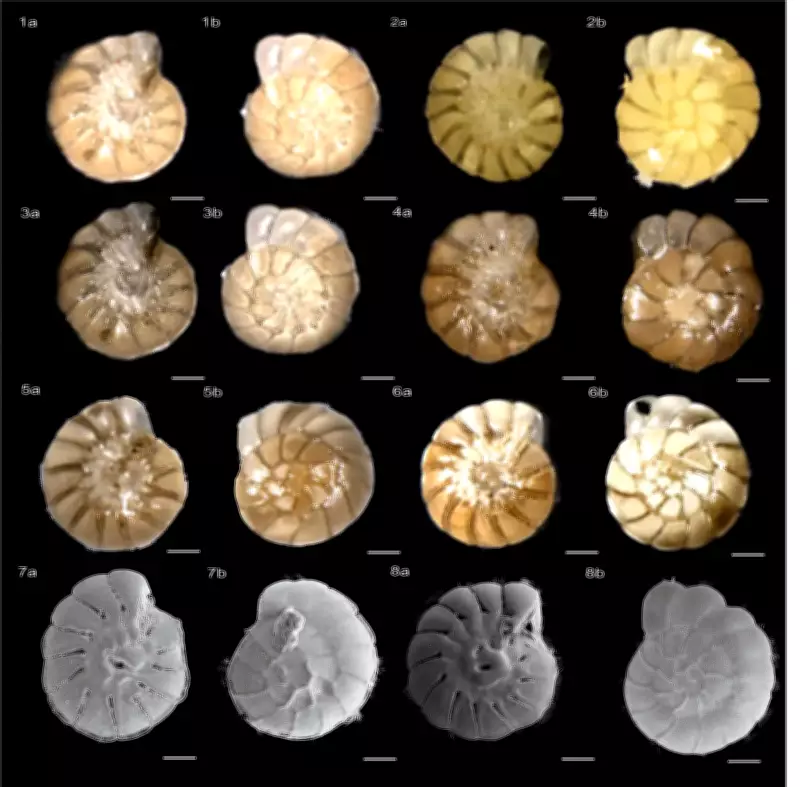
Researchers from the Agharkar Research Institute (ARI) in Pune have discovered three new species of tiny sea organisms living in estuaries along the Indian coast. These organisms, called foraminifera or forams, are among the smallest living things in the ocean. Each one consists of only a single cell, but it builds a beautiful shell around itself using calcium carbonate, the same material found in limestone and marble.
Forams can be seen only through a microscope. They have lived on Earth for more than 500 million years. When they die, their shells settle on the seabed and become part of ocean sediments. Scientists study these shells to learn about Earth's past climate, oceans and environment.
The study, led by Tushar Kaushik and his team at ARI's biodiversity and palaeontology group, combined traditional microscopy with modern DNA analysis to examine samples collected from 22 coastal locations between 2021 and 2025. Researchers found that many organisms long believed to belong to already known species were actually distinct species that were misidentified for decades.

Kaushik said, "Foraminifera may be tiny, but they are among the most important organisms for studying the history of our oceans. When we began using DNA-based techniques, we realised that Indian coastal waters were hiding much more diversity than anyone had suspected."
Foraminifera have existed for more than 500 million years. Their fossilised shells are found in ocean sediments around the world and provide valuable information about ancient climates and environmental conditions. Scientists also use them to monitor pollution and changes in marine ecosystems.
The research focused on a common group of foraminifera known as Ammonia, which is found in estuaries, mudflats and coastal waters worldwide. Organisms of this group often look very similar under a microscope, scientists have struggled for more than a century to identify them correctly.
Using genetic analysis, the ARI team identified four distinct lineages in Indian waters. One was the already known species Ammonia veneta, while the remaining three turned out to be species previously unknown to science.
Among them is Ammonia arabica, first identified from Rajapuri Creek in Maharashtra. Measuring just 0.2 to 0.3 millimetres across, it is believed to be one of the smallest members of the group and is mainly found along India's western coast.
Another newly identified species, Ammonia nigami, was discovered in the tidal flats of Chandipur in Odisha. Named after renowned Indian foraminiferal researcher Rajiv Nigam, the species is found only in the northern Bay of Bengal and has not been recorded on the west coast despite extensive surveys.
The third species, Ammonia saraswatii, named after Pratul Kumar Saraswati of IIT Bombay, remained hidden in scientific collections for years because it closely resembled other known species. The discoveries were made possible through years of fieldwork and laboratory analysis.
"When I was collecting samples from coastal mud in Odisha and Goa, I never imagined I was holding organisms unknown to science," said Vaishnavi Dixit, a PhD scholar at ARI and part of the research team. "When the DNA results came in, we realised we had uncovered species that remained unnoticed for decades," she added.