

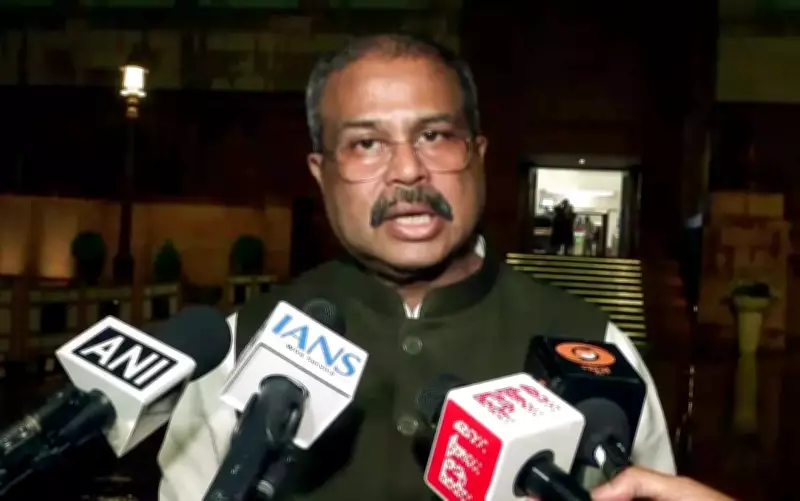
Union Education Minister Dharmendra Pradhan has outlined the next phase of reforms for the National Testing Agency (NTA), emphasizing the creation of a "stress-free exam" environment and the development of globally benchmarked standard operating procedures (SOPs) for conducting "zero error exams."
Stress-Free Exams as Top Priority
Speaking to the Times of India, Pradhan stated that achieving a stress-free examination is the biggest challenge before the NTA. "This is the biggest challenge before the NTA, and we are working towards a globally benchmarked system," he said. The minister highlighted that the agency currently conducts tests for over one crore candidates annually and must learn from past experiences to address gaps and strengthen systems.
Learning from Experience
Pradhan emphasized the need for continuous improvement. "With over one crore candidates appearing in NTA exams, we must continuously learn from experience, address gaps, and strengthen systems to deliver fair, transparent and reliable assessments," he added. The reforms are guided by expert recommendations aimed at building a robust, technology-driven, and accountable testing ecosystem.

High-Level Committee Recommendations
The next phase of reforms follows the recommendations of a high-level committee chaired by former ISRO chief K Radhakrishnan. The committee was constituted in June 2024 after multiple disruptions in national-level entrance exams. It submitted a set of recommendations focusing on strengthening exam security, institutional restructuring, and improving transparency in evaluation and grievance redressal.
Standardizing Exam Protocols
The Ministry of Education has also moved to standardize exam protocols across different formats. This initiative aims to ensure consistency and fairness in all examinations conducted by the NTA.
Manash Pratim Gohain, a seasoned journalist with over two decades at The Times of India, reported on these developments. His work covers education policy, politics, and governance, including the National Education Policy 2020 and accreditation reforms.






