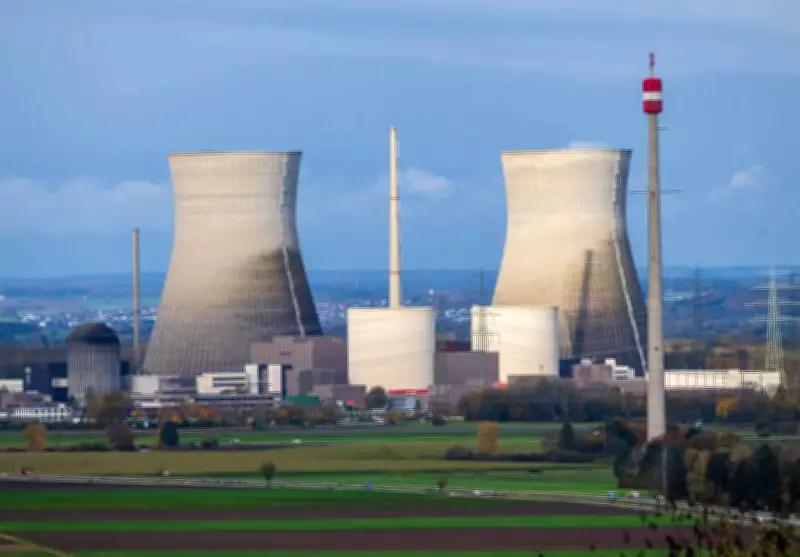
Despite past fears from Chernobyl and Fukushima, nuclear energy is re-emerging as a reliable, clean power source. France's reliance showcases low emissions, while Germany's shutdown increased fossil fuel use. Modern reactors boast enhanced safety features, and global expansion is underway with new designs like SMRs promising efficiency and a smaller environmental footprint.
Nuclear Energy: A Reliable and Clean Power Source
Nuclear energy stands as one of the most reliable and cleanest power sources, yet for many, it evokes the horrors of Chernobyl and Japan's more recent Fukushima disaster. As the world seeks cleaner energy options, apprehensions about nuclear power persist.
Germany's Nuclear Shutdown and Its Consequences
Consider Germany's shutdown of its nuclear plants, prompted partly by Fukushima. This closure has forced reliance on fossil fuel plants, expanding the nation's carbon footprint, according to a paper from the Heinz College of Policy at the University of Pittsburgh and a Guardian report from the UK.

France's Success with Nuclear Power
France boasts one of the cleanest energy mixes per unit of power produced. This is thanks to its heavy reliance on nuclear power, which generates nearly two-thirds of its electricity, according to the International Energy Agency (IEA). Despite lacking regions ideal for harnessing nature's power for electricity, France achieves some of the lowest carbon emissions per unit of electricity generated. It produces just 0.052 kgCO₂/kWh, compared to India's 0.632 kgCO₂/kWh and the global average of 0.380 kgCO₂/kWh, according to Carbon Footprint, a UK-based emissions management organization.
Growing Interest in Nuclear Power
Many countries are increasingly looking at nuclear power as it is a source of electricity with a low carbon footprint. As power requirements are growing, the requirement to source this power from non-polluting sources is also becoming an important consideration, especially in light of our climate commitments. Nuclear steps in as it is a non-polluting source that can provide base load electricity, as other sources such as solar and wind are not able to provide power consistently.
Dr Manpreet Sethi, Distinguished Fellow at the Centre for Aerospace Power and Strategic Studies, emphasizes this point.
Fear of Nuclear Power
The world's introduction to nuclear power came through the destruction of the towns of Hiroshima and Nagasaki during the last days of the Second World War in August 1945, although radiation was a well studied field and famed scientist Marie Curie and her husband Pierre won the Nobel prize in Physics in 1903 for their joint study of radioactivity. Marie Curie also won the Nobel in 1911 for the discovery of Radium and Polonium.
Soon after the Second World War, there was a nuclear arms race between the USA and the USSR. Nuclear annihilation through Mutually Assured Destruction was a strategy that was worked upon by both sides of the Iron Curtain. At the same time both sides were actively trying to devise methods to improve both the weapons and the platforms that would deliver these weapons, increasing the wariness against nuclear weapons in the general public.
Major efforts to reduce nuclear tensions took place in the 1980s. The leadership of both sides held a series of meetings through the 1980s to reduce nuclear tensions. These meetings held through 1985 to 1988 and led to the establishment of the Nuclear Risk Reduction Centers in Moscow and Washington DC.
The Terror of the Peaceful Atom
The biggest nuclear incident took place four decades ago close to where the Dnieper River crosses into Ukraine, the Chernobyl nuclear power plant exploded. Radiation from the gaping wound of the powerplant spread across Eastern Europe and the spike was felt across Europe, in fact the Soviet Union opened up about the incident two days after the incident after radiation was detected in Sweden, as reported by Swedish Radio.
The incident has led to a 30-km exclusion zone around the Chernobyl nuclear power plant site due to the unsafe level of nuclear radiation. Well over a lakh people were replaced due to the incident.

Recently, in 2011, the accident caused at the Fukushima Daiichi Nuclear Power Plant in Ōkuma, Fukushima by the Tōhoku earthquake and tsunami triggered another emergency. The emergency was caused due to the failure to cool down the reactor, leading to a radiation leak in the area. 1,64,000 people were initially evacuated from the area. Not a single resident of the town has received any radiation related medical issues that are attributed to the nuclear accident at Fukushima, according to a UN report. Although six individuals at the plant have suffered from cancer or leukemia due to the incident as per the Japan Times.
Atomic Energy Becoming Safer
Modern nuclear reactors are designed with different layers of safety mechanisms that make catastrophic failure extremely unlikely. Modern designs use a negative reactivity coefficient, this means that they are designed to slow chain reaction or shut it down automatically if fuel temperatures rise, thus preventing runaway reactions. On the other hand, scram mechanisms provide immediate shutdown capability, often triggered by sensors without any human intervention during events such as earthquakes, according to the International Energy Forum.
Another mechanism called containment adds three barriers, these are, fuel cladding, the pressure vessel, and the reinforced containment building, all engineered to withstand extreme conditions. Even if all barriers failed, emergency preparedness plans minimize risks to humans. Today, reactors generate more than half of carbon-free electricity in regions such as the U.S. and Europe. Advanced designs further enhance safety with fuels like TRISO pebbles, which endure temperatures beyond reactor limits, and molten salt reactors that can automatically drain liquid fuel to halt reactions. These innovations make nuclear power one of the safest and most reliable energy sources, according to the US Nuclear Regulatory Commission.
In nearly 70 years of civil nuclear power, spanning 20,000 reactor-years across 36 countries, only three major accidents have occurred, causing fewer than 30 radiation-related deaths. Advanced reactor designs now promise even greater safety, with self-regulating features that prevent overheating, as per IAEA.
Cdr Sudhir Kumar (Retd), nuclear power plants operations & management expert, notes: "Lessons learnt from Three Mile Island, Chernobyl and Fukushima Daiichi taught global nuclear industry & scientists to design reactors with inherent safety features with consistent improvements in technology comprised of ever evolving innovation in-respect of systems, sub-system, fuel matrix, coolant systems, fail-safe control mechanisms and containment to a level very near to impossibility."
Return of Nuclear Power
Global nuclear power is entering a major expansion phase. China plans to build 150 reactors in 15 years, targeting 200 GW capacity by 2035 under its 14th Five-Year Plan. At COP29 in 2024, 31 countries pledged to triple global nuclear generation by 2050, supported by 140 industry firms and 14 financial institutions. Investment surged at a 14% CAGR between 2020–2024 after years of stagnation. Currently, 61 reactors are under construction in 15 countries, nearly half in China, with 85 planned and 359 proposed worldwide. Small modular reactors, producing 20–300 MW, promise cheaper, standardized builds and lower lifetime electricity costs than traditional reactors. Goldman Sachs estimates SMRs could deliver power below $100/MWh versus $125/MWh for conventional plants. However, large-scale deployment remains years away, so near-term growth will rely on extending reactor lifespans, restarting idle units, and commissioning new traditional plants. By 2040, global nuclear capacity is projected to rise by about 200 GW.
Nuclear energy is also efficient in the sense that it requires the smallest land footprints among power sources, with a 1,000‑megawatt plant needing only 3.3 square km. Upcoming small modular and microreactors will shrink this footprint even further. Unlike fossil fuels, nuclear plants avoid vast transport infrastructure since uranium fuel is extremely dense. A single pellet of nuclear fuel has equivalent energy of a ton of coal, 120 gallons of oil, or 17,000 cubic feet of natural gas, according to US Department of Energy.
India too is expanding its nuclear power generation capacity. India's current capacity is around 8 Giga Watt (GW), but plans to increase it to 22 GW by 2032. New Delhi plans to have an installed nuclear power capacity of up to 100 GW by 2047.