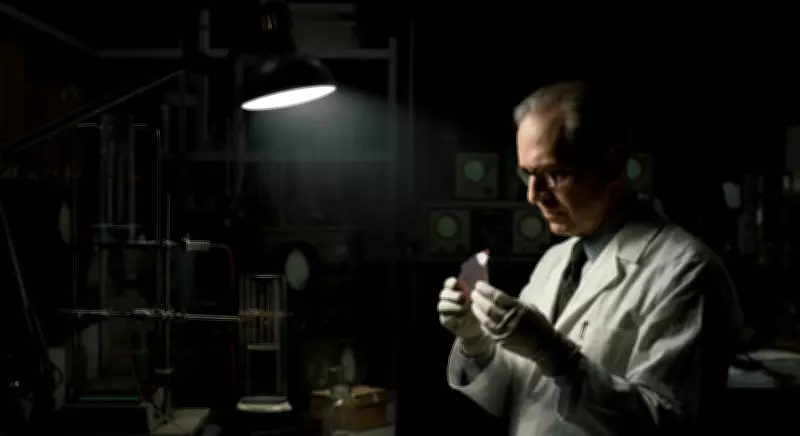
In 1940, while conducting experiments at Bell Laboratories, Russell Ohl made a serendipitous discovery that would become the cornerstone of modern electronics and solar energy. While testing a broken silicon slab, Ohl observed an unusual response to electric current. This led to the identification of the p-n junction, a critical interface between two regions of a semiconductor with different electrical properties.
The Accidental Discovery
Ohl was performing routine tests on silicon crystals under intense lighting when he noticed that the crack in the crystal caused the current to behave differently. This anomaly revealed a transition area between two regions with varying electrical characteristics, later named the p-n junction. The discovery was published in Nature, highlighting its significance in semiconductor research.
Why the P-N Junction Matters
The p-n junction allows control over electric current flow in devices, enabling the creation of diodes, transistors, and photodetectors. Solar cells, for instance, use semiconductor junctions to convert sunlight into electricity. Silicon remains the primary material for solar cells today, and the principles discovered by Ohl underpin their operation.

From Laboratory to Solar Cells
Bell Telephone Laboratories later developed the first practical solar cells for satellites, building on Ohl's work. The understanding of semiconductor junctions allowed scientists to efficiently convert light into electrical energy. Silicon quickly evolved from a scientific curiosity to an essential engineering material.
The Role of the Flawed Sample
The crack in the silicon crystal was instrumental in revealing the p-n junction. Scientists note that anomalies can lead to breakthroughs, but Ohl's recognition of the peculiar current behavior and subsequent research turned a lucky break into a major discovery.
Relevance Today
The p-n junction remains fundamental to modern semiconductor devices. Solar cells, photodiodes, and other optoelectronic designs rely on this principle. The discovery made by Ohl in 1940 continues to impact computing and renewable energy generation. As a result of this experiment, an electrical boundary was found that serves as the basis for computers and solar power, a principle still in use a century later.
About the Author
The TOI Science Desk is a team of journalists dedicated to covering the latest in science, from genetic engineering to space exploration, making complex topics accessible to all readers.