Farm plastic does not look like a place where solutions hide. It appears as garbage strips of mulch film left behind after harvest, breaking down into smaller and smaller pieces. However, researchers in China decided to check the soil underneath anyway, wondering if anything living there had figured out how to use all that plastic as food. What they found was Bacillus PE4, a bacterium that does not just nibble at polyethylene; it actually tears it apart.
Starting with nothing to eat except plastic, five different bacterial strains survived the test, all from the same genus, Bacillus. But one stood out. After 30 days sitting alone with polyethylene film, PE4 had chopped down nearly 5% of the plastic's weight. That is not much until you realize the same film would sit in soil for centuries, untouched. Then the team pushed harder.
A Stubborn Pollutant Nobody Could Solve
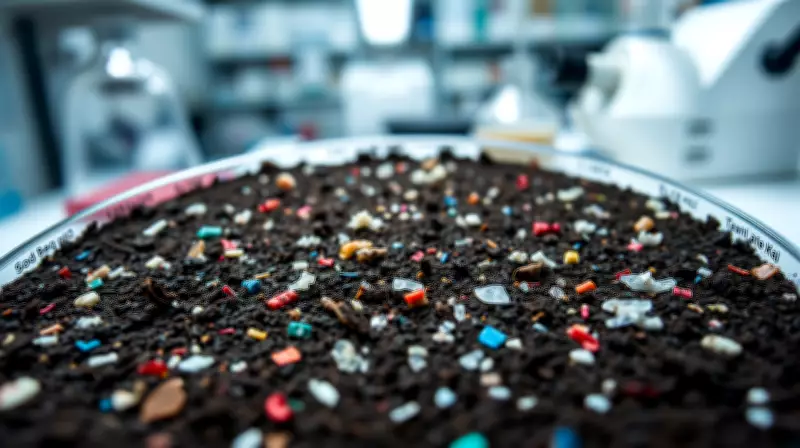
Let us be honest: polyethylene is nearly impossible to break down. It is in grocery bags, packaging, and basically everywhere. About a third of all plastic made globally is this stuff, and manufacturers literally designed it to never rot. That was the point. Long carbon chains with almost zero weak points for nature to grab onto. It stays on shelves forever, which is great for business and terrible for the planet. Farm plastic gets left behind in the soil and breaks into smaller pieces year after year. Eventually, it turns into microplastics, tiny fragments that drift through soil, water, and crops. A recent study tracked plastic debris spreading well beyond the fields where farmers laid it down. The pieces do not stay put. They travel, accumulate, and stick around for decades.

Digging into Soil Nobody Thought to Check
A team at Hangzhou Normal University in eastern China had a different idea. Maybe, they thought, bacteria living right next to decades of buried plastic had adapted to use it as food. Bacteria evolve fast when they are under pressure, and farm soil has been supplying that pressure for years. They collected soil from fields in Zhejiang province where farmers had been using plastic mulch for ages. They mixed those samples with shredded polyethylene. Then they offered the bacteria nothing else to eat. Whatever survived would have to eat plastic or starve. Five strains made it through. All belonged to Bacillus, common soil bacteria already known for breaking down tough organic stuff. But one, PE4, stood out immediately.
The Bacterium That Actually Works
After 30 days alone with thin plastic films, Bacillus PE4 had lost nearly 5% of its weight. That sounds small. Then you think about it for a second. The same plastic lasts centuries in the ground without help. In 100 days, when the researchers optimized the conditions, PE4 managed 28% degradation. That is not nibbling anymore; it is actually dismantling it. The team looked at the plastic under a powerful microscope. The smooth, glossy surface was covered in cavities and cracks. The bacterium had set up shop and gone to work. No heat, no light, no chemical attack, just bacteria doing the damage. The research, published in Microbiology Spectrum, showed that PE4 was no accident. It was solving a real problem, in real conditions that humans could replicate.
Tuning the Settings for Better Results
Once they had something that worked, the researchers got serious about optimization. They tested different pH levels, different bacterial populations, and heat pretreatment on the plastic itself. Every variable got adjusted. The sweet spot turned out to be slightly alkaline conditions, a 4% starting dose of bacteria, and heat pretreatment. Together, those three changes took degradation from about 5% per month up to roughly 28% over 100 days. That is the difference between a curiosity and something actually useful. This was not just a lab trick. These were conditions a wastewater plant or composting facility could actually recreate.

How the Bacteria Actually Eats Plastic
The chemistry told the story. As PE4 attacked the plastic, two specific enzymes ramped up the same kind that evolved to crack through tough carbon-based material in wood. That makes sense. Polyethylene's stubborn backbone is chemically similar to wood fibres. The same enzymatic toolkit transfers from one to the other. Older research on related Bacillus strains had hinted at this pathway. This study sharpened the picture. When enzyme activity went up, the damage to the film went up too. The system works because nature, it turns out, already had the tools. The bacterium just repurposed them.
Why This Matters Now
Until this research, side-by-side comparisons of how the same microbe handles plastic in different forms, solid film versus loose powder, were basically nonexistent. This closes that gap. A bacterium that works on thick film could attack large plastic waste. One that works on powder could be paired with shredding to handle microplastics already mixed into farm soil. Bacillus PE4 looks promising for both jobs. What the team does not claim is a finished solution. A 28% breakdown over 100 days under optimized conditions is not ready to spread on a field tomorrow. But it gives researchers a new starting strain and a clearer picture of which enzymes to engineer for faster degradation. The hunt for plastic-eating microbes has mostly focused on landfills, the guts of plastic-eating insects, or deep ocean sediment. Ordinary farm soil was not a leading suspect. This discovery changes that. Sometimes the answer is just sitting there in the dirt, waiting for someone to ask the right question.