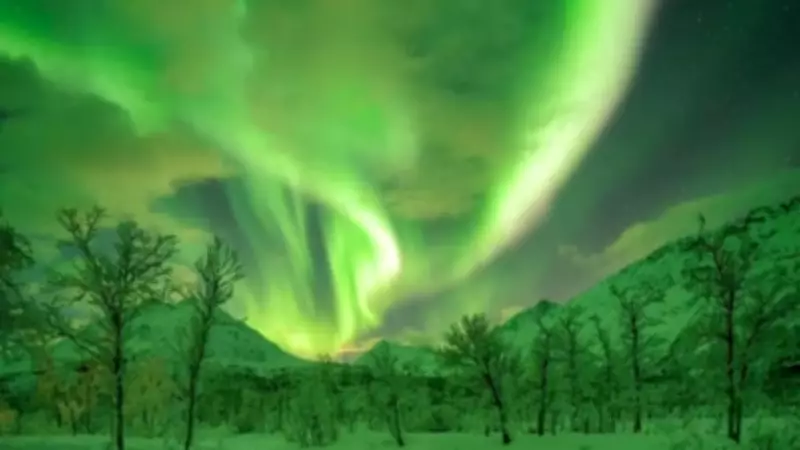
A massive solar explosion is set to strike Earth on Monday, prompting NASA to issue a high alert. The event, caused by a powerful solar flare, could trigger geomagnetic storms and make auroras visible in unusual locations, including parts of India.
What Happened?
On June 5, the Sun unleashed a strong solar flare, classified as an X-class event, the most intense category. This eruption sent a cloud of charged particles, known as a coronal mass ejection (CME), hurtling toward Earth at speeds exceeding 1,500 kilometers per second. NASA's Solar Dynamics Observatory captured the blast, which originated from sunspot region AR 3712.
Expected Impact on Earth
The CME is predicted to arrive on Monday, June 7, 2026. When it interacts with Earth's magnetosphere, it can cause geomagnetic storms, potentially disrupting satellite communications, GPS signals, and power grids. However, the storm is expected to be moderate, rated G2 on the five-point scale, with possible G3 levels at high latitudes.

Auroras in India?
One of the most exciting prospects is the possibility of auroras being visible in India. Typically confined to polar regions, auroras may be seen as far south as northern India, including Ladakh, Himachal Pradesh, and Uttarakhand, if skies are clear. This rare phenomenon occurs when charged particles from the Sun excite atoms in Earth's atmosphere, creating colorful light displays.
NASA's Alert
NASA's Space Weather Prediction Center has issued a high alert for Monday. Experts advise satellite operators and power grid managers to take precautions. For the public, the event offers a unique opportunity to witness the northern lights in unexpected places.
How to View Auroras
- Find a dark location away from city lights.
- Look toward the northern horizon after sunset.
- Use a camera with long exposure for better visibility.
- Check local weather forecasts for clear skies.
This solar event underscores the Sun's activity as it approaches the peak of its 11-year cycle, known as solar maximum. More flares and CMEs are expected in the coming months.