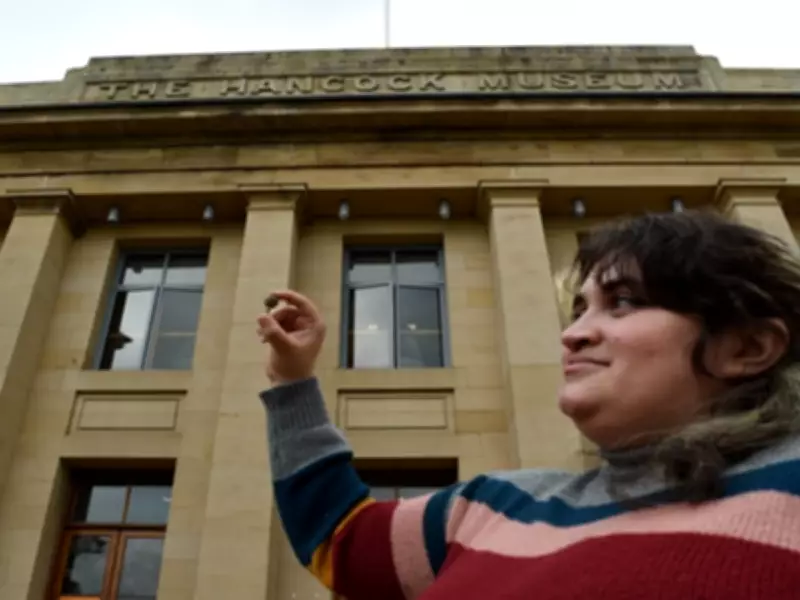
For most archaeology students, the first excavation involves learning to study soil and observe subtle variations in color and texture while working for long periods, searching for potentially relevant artifacts. However, for Yara Souza, a student at Newcastle University, her experience took an incredible turn within the first 90 minutes.
A Rare Discovery in Northumberland
Yara Souza, an archaeology student from Orlando, Florida, made the rare discovery of a gold artifact from early medieval times during her fieldwork in Redesdale, Northumberland. According to Newcastle University, the object dates to the 9th century and was found near Dere Street, a major Roman road that remained in use long after the Roman Empire's decline. The finding garnered immediate interest, as such discoveries are considered rare, especially for a student during their first excavation experience.
Discovery Within Minutes
Souza joined the team after missing another archaeological operation due to illness. She uncovered the artifact in less than two hours of work. "I couldn't believe I'd found something so quickly into my first ever excavation," Souza said in a statement. She described the moment as "quite overwhelming" and said it was exciting to discover something that had not been seen for more than a thousand years.

The artifact is roughly four centimeters long and features a decorative element at its end. Specialists consider it to belong to the early medieval period and suggest it dates to 800–1000 AD. Importantly, archaeologists are not certain about the artifact's use and are examining it carefully.
Why Archaeologists Are Interested
Precious metals like gold held symbolic significance for medieval people, often implying high status and political power. However, not everything made of such material is necessarily a sign of wealth and power. Context plays a crucial role in archaeology—soil, the site, associated artifacts, and settlements all impact interpretation. For Souza, context is now more significant than ever. The discovery was made near Dere Street, a road connecting York and Edinburgh used in Roman times but remaining functional much later. This suggests that "high status people were using the road" for longer than Roman Britain existed, according to reports. It is possible that the objects were buried intentionally.
The Significance of Northumberland
Northumberland is already considered one of the most historically significant archaeological landscapes in the British Isles, featuring Roman forts and early medieval communities. Scientific work at Vindolanda and other sites has demonstrated how richly the landscape holds archaeological evidence over long timeframes. Souza's discovery occurred in an area already known for a previous gold find by metal detectorist Alan Gray in 2021. The recent excavation was partially conducted to study the context of that earlier discovery, and scientists now believe the two items may be related.
A Reminder of How Archaeology Works
This story highlights the contrast between the small size of the object and the large questions it raises. Archaeologists often reconstruct the past from fragments rather than grand monuments. A small object can reveal clues about trade, mobility, religion, or social hierarchy. For now, specialists are avoiding dramatic conclusions about Souza's discovery. The artifact requires further analysis, and its importance depends heavily on context and comparison with other finds. However, this finding illustrates a key feature of archaeology: even the smallest pieces can unlock profound insights into history.