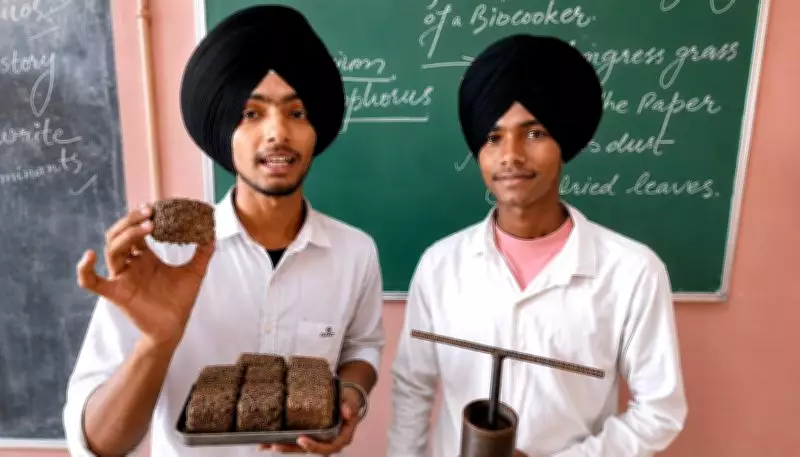
In a remarkable achievement, students from a government school in Amritsar have transformed agricultural waste into an eco-friendly fuel, earning them a prestigious national award. The innovative project, which addresses the critical issue of stubble burning, has been recognized for its potential to mitigate environmental pollution while providing a sustainable energy source.
The Innovation
The students developed a compact machine that converts paddy straw and other farm residues into briquettes, which can be used as a substitute for coal and wood. This process not only reduces the harmful smoke from burning fields but also offers farmers an additional income stream. The project was part of a science exhibition where it caught the attention of judges and environmentalists.
Impact on Environment
Stubble burning in Punjab and Haryana is a major contributor to air pollution in North India, especially during the harvest season. By turning waste into fuel, the students have presented a viable solution that can curb this practice. The briquettes burn more efficiently than raw biomass, emitting fewer pollutants.

Recognition and Support
The team was honored at a national-level competition, receiving a trophy and a cash prize. Their achievement has inspired other schools to explore similar green initiatives. Local authorities have also expressed interest in scaling up the project with government funding.
Future Plans
The students aim to refine their machine to handle larger quantities of waste and make it accessible to farmers across the region. They are also exploring partnerships with NGOs and agricultural universities to enhance the technology.
This story is a testament to the power of grassroots innovation in addressing pressing environmental challenges. It highlights how young minds can contribute to a cleaner, greener future.