In May of 2000, a Tennessee road-widening project unexpectedly opened a window into deep time for road workers. As the crew widened State Route 75, their tools cut through unusual dark clay. The dark substance was not just ordinary soil; it was far from that. The dark layer of dirt revealed itself as a seal on top of one of nature's secrets. It was nothing less than the cover of an enormous geological vault that had been buried underground since ancient times. This new knowledge stopped all road work in its tracks and allowed insight into an ecosystem lost to the passage of millions of years.
A Surprise from the Earth
According to East Tennessee State University, the Gray Fossil Site was discovered by accident. All the construction workers were planning to do was to widen the road. But as the workers stumbled across the unusual layers of dirt containing fossils, they got more than they bargained for. According to the official records maintained by the Tennessee Department of Environment and Conservation, details regarding the magnitude of the find have been established. This particular site was first recognized by a geologist working for the department named Larry Bolt. It turned out that the deposit found contained hundreds of thousands of fossils that covered an area at least 220 meters in extent, down to depths of up to 36 meters.
The Perfect Fossil Trap
The unique black and grey clay layer provides a reason for the excellent state of preservation of the fossils discovered. Researchers from East Tennessee State University believe that the place where this discovery took place used to be an ecosystem of a pond covered with forests. Nature shows that quiet bodies of water and sediment layers like clay are perfect places for preserving fossils. As explained by the United States Geological Survey, the formation of such a site could only take place in karst terrain landscape, which consists of numerous underground cavities where surface water sinks down. Through many millennia of evolution, many sinkholes around the Gray area could have joined together to form one large basin. This would become an effective passive pit where plant matter and animal bones would collect without being exposed to any surface weathering.

Red Pandas and Ancient Rhinos
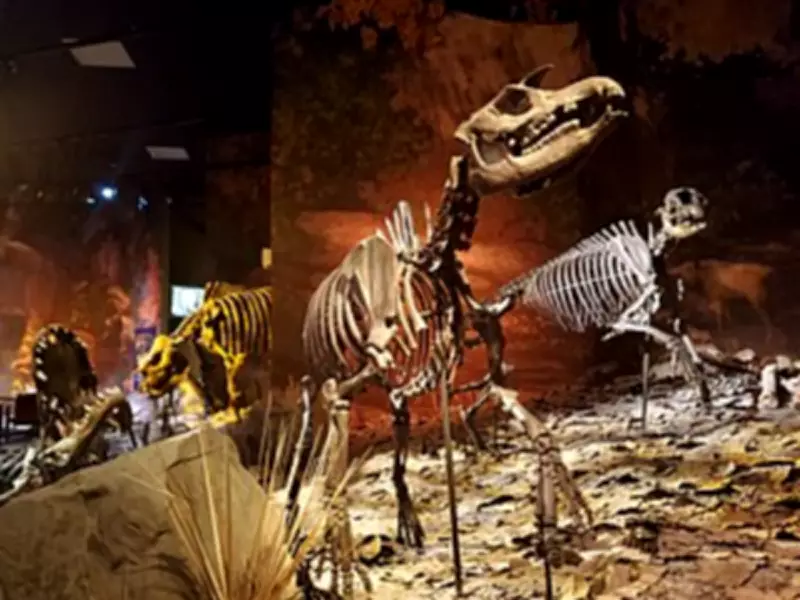
Fossils found by scientists paint a fascinating picture of ancient times. According to a peer-reviewed article from the journal PeerJ, the site used to host an abundance of plant matter, including oaks, hickories, and climbing plants. The plant fossils show clear links to tropical and subtropical environments, meaning that Tennessee used to be much warmer and wetter back then. As per the latest information provided by East Tennessee State University, there must have been many animal species roaming this forest. Scientists working at the site have found bones of rhinoceroses, elephants, and even extinct relatives of the modern red panda. No records of such ancient mammal species existed for this particular region before this excavation started.
Timeline Reassessment
The scientific significance of the find will only increase with advancements in technology. Originally considered to be 4.5 to 5 million years old, the latest tests have moved this timeline forward even further. A paper written for the US Geological Survey and conducted using the most sophisticated nuclide dating analysis on the lowest strata suggests a burial age of late Miocene. The results indicate that the formation process was active starting around 6.6 million years ago. What started as an inconvenience to road construction turned into a decades-long scientific investigation. The accidental find has provided palaeontologists with an opportunity to document an era of Appalachian prehistory long since gone. In this regard, the clay deposit that delayed the highway now represents one of the most important paleontological sites for late Miocene–early Pliocene Appalachian ecosystems.