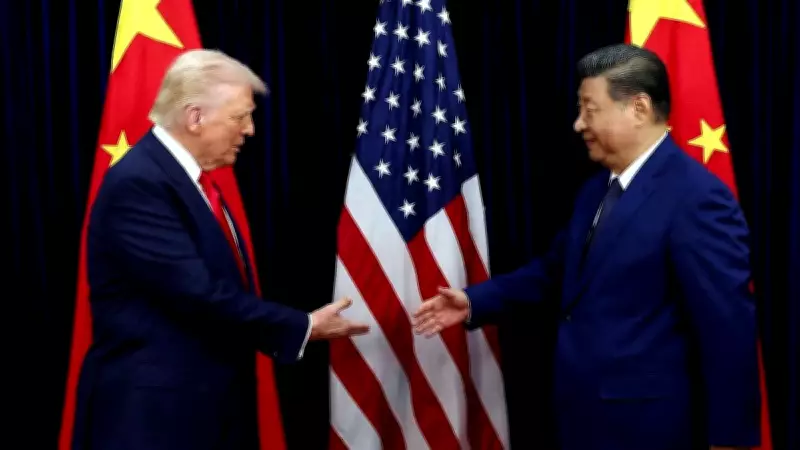
Tech rivalry and deepening distrust are dampening expectations for a major US-China artificial intelligence push during President Donald Trump's visit to Beijing, as the two superpowers vie for dominance in a field some experts compare to a Cold War-style nuclear arms race.
Escalating Competition
The contest between the United States and China in artificial intelligence has intensified in recent months, with both nations investing heavily in research, development, and deployment of AI technologies. Analysts warn that the rivalry could lead to a fragmented global tech landscape, hindering collaboration on critical issues such as AI safety and ethical standards.
Trump's visit, initially seen as an opportunity to reset relations and explore joint initiatives, is now overshadowed by mutual suspicion. US officials have expressed concerns over China's military applications of AI, while Chinese leaders criticize American export controls and sanctions targeting Chinese tech firms.

Cold War Parallels
Several observers have drawn parallels to the nuclear arms race of the Cold War era, where technological superiority was a key battleground. "We are witnessing an AI arms race, with each side fearing the other will gain a decisive advantage," said a technology policy analyst. "Unlike nuclear weapons, however, AI is pervasive and dual-use, making cooperation both more urgent and more difficult."
The stakes are high: AI is expected to transform industries from healthcare to defense, and the country that leads in AI could shape global standards and economic growth for decades.
Summit Expectations
Despite the tensions, Trump's agenda includes meetings with Chinese President Xi Jinping and tech executives. However, sources indicate that substantive agreements on AI are unlikely. Instead, discussions may focus on establishing guardrails to prevent escalation, such as hotlines for AI incidents or joint research on AI safety.
Both nations have reasons to avoid a full-blown tech war. The US relies on Chinese supply chains for components, while China depends on American software and chips. Yet, nationalist rhetoric and security concerns are pushing them apart.
The outcome of the summit could set the tone for US-China relations for years to come. If trust cannot be rebuilt, the world may see a divided AI ecosystem—one that stifles innovation and raises the risk of unintended consequences.