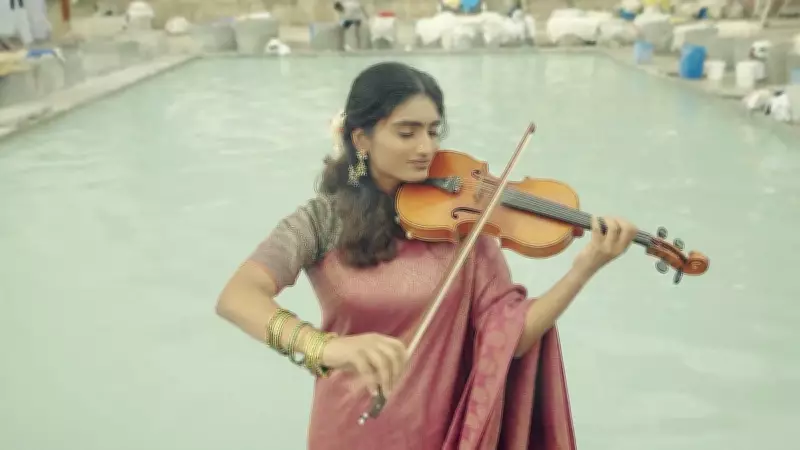
In the heart of Bengaluru, a city known for its dynamic cultural landscape, a new wave of musical innovation is emerging. Artists are blending Western sensibilities with the intricate rhythms and melodies of Karnatik music, creating a fusion that resonates with audiences both locally and globally. This unique amalgamation is not just a trend but a profound exploration of how two seemingly distinct musical traditions can coexist and enrich each other.
The Roots of Fusion
Karnatik music, one of the oldest classical music traditions in India, is characterized by its complex vocalizations and intricate rhythmic patterns. Western classical music, on the other hand, brings harmony, orchestration, and a different structural approach. The fusion of these two worlds is not new, but contemporary artists in Bengaluru are taking it to new heights. They are experimenting with instruments, scales, and compositions that honor both traditions while creating something entirely fresh.
Key Artists and Their Work
One of the prominent figures in this movement is musician and composer Anil Srinivasan, who has been at the forefront of integrating Karnatik elements into Western classical frameworks. His work often features the piano, an instrument not traditionally associated with Karnatik music, yet he seamlessly weaves in ragas and talas. Another artist, the violinist L. Shankar, has collaborated with Western orchestras, bringing the soul of Karnatik music to global audiences.

The Role of Bengaluru
Bengaluru, with its diverse population and cosmopolitan outlook, provides the perfect breeding ground for such experimentation. The city hosts numerous music festivals and events that encourage cross-cultural collaborations. Venues like the Chowdiah Memorial Hall and the Bangalore International Centre have become hubs for these fusion performances, attracting audiences who appreciate both the classical rigor and the innovative spirit.
Impact on the Music Scene
This fusion is not only expanding the boundaries of both musical forms but also attracting a younger audience. Traditional Karnatik music, often perceived as esoteric, is gaining new listeners through these contemporary adaptations. Similarly, Western classical music enthusiasts are discovering the richness of Indian ragas. This cross-pollination is fostering a deeper understanding and appreciation of diverse musical traditions.
Challenges and Criticisms
Despite its popularity, the fusion faces criticism from purists who argue that it dilutes the purity of both traditions. However, proponents believe that music is a living art form that must evolve. They emphasize that the essence of Karnatik music lies in its emotional depth and mathematical precision, which can be preserved even when blended with Western elements.
Future Directions
The future of this fusion looks promising, with more artists exploring digital collaborations and using technology to compose and perform. Online platforms are enabling musicians to collaborate across continents, further enriching the fusion. As Bengaluru continues to be a melting pot of cultures, the Western-Karnatik fusion is likely to evolve, inspiring new generations of musicians and listeners alike.