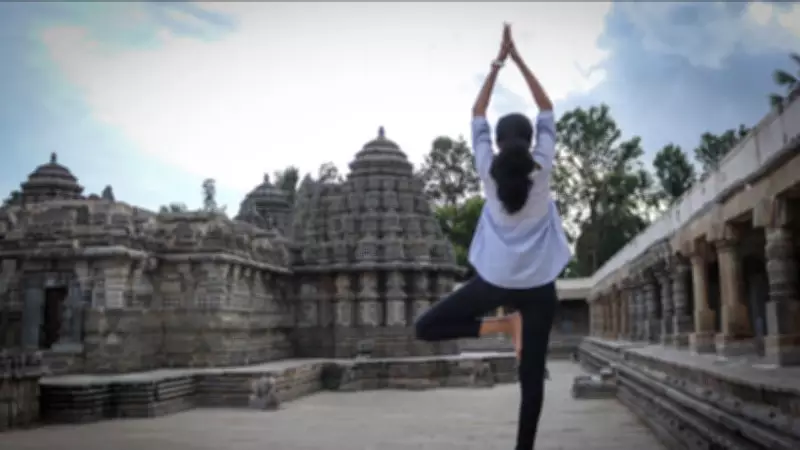
On June 21 each year, millions across 193 countries practice yoga to mark International Yoga Day, a 5,000-year-old tradition recognized by the United Nations. Yet global wellness coach Mickey Mehta warns that treating it as merely a fitness event misses its essence. "The future does not belong to Artificial Intelligence alone," he says. "The future belongs to Awakened Human Intelligence. And that awakening is Yoga."
Yoga as the Antidote to an Inhuman World
Mehta argues that in an age of algorithms, what separates humans from machines is compassion, intuition, empathy, wonder, and awe—capacities cultivated through yoga, not downloaded. He points to a paradox: despite unprecedented access to yoga content, apps, studios, and influencers, the world is more dysregulated, overstimulated, and disconnected than ever.
His concept of Yogagiri—pitched as the opposite of Dadagiri (bullying and brute force)—proposes a shift from ego to evolved being, from fragmentation to integration. Central to this is Urja, the subtle life force yoga was designed to cultivate. "Strength is perishable while Urja perpetuates life," Mehta says. His broader framework, PhysYog, integrates breath, biomechanics, and awareness with modern movement science and physiotherapy. He also advocates Curative Creative Nutrition, viewing food as consciousness and information, not just calories.

The Mismatch Nobody Talks About
Sidhharrth S Kumaar, founder of NumroVani, observes that many people abandon yoga convinced it isn't for them—but the problem is usually a mismatch between the person and the practice. "A highly restless mind may struggle with long periods of stillness. Someone going through emotional turbulence will need a different approach than a person seeking discipline or focus. Yet, many people are introduced to yoga through a standardized format and expected to experience the same results," he says.
Kumaar draws on behavioral insights from astrology and psychology to understand individual temperaments, and sees AI as a tool to personalize yoga at scale. "Yoga begins not when we leave life behind," he says, "but when we learn to be fully present in it." Yoga is not an escape from reality but the practice of not flinching from it.
Awareness First, Everything Else Follows
Author and yoga teacher Ira Trivedi emphasizes that yoga inculcates awareness of body, breath, mind, and emotions. "By practicing yoga, we can truly become better human beings," she says. Awareness—not flexibility, strength, or stress reduction—is the core capacity yoga builds. In a world that fragments attention, the ability to notice what's happening inside before it becomes action or reaction is rare and valuable.
This International Yoga Day, the invitation is to question whether the practice fits the person. If yoga only makes you fitter, you're using a scalpel to cut bread. If it feels like an escape rather than a way to live more fully, the practice may need adjusting, not abandoning. The tool was built for something far more precise—the question is whether we're willing to find the version that works for us.