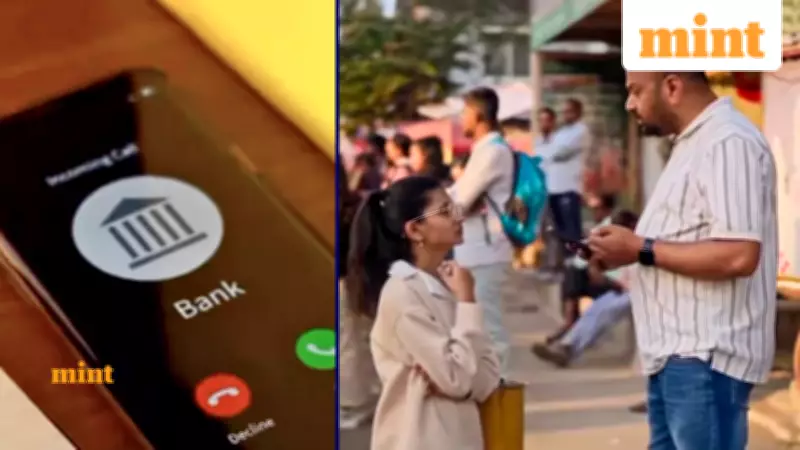
A concerning social media warning has emerged from Bengaluru, alerting residents about a sophisticated phone scam that could compromise personal security and financial information. The viral post, shared by Bengaluru Post, features a 60-second awareness video with the cautionary message: "Ok Bengaluru, meanwhile, this may be happening in town. So better be cautious than being sorry later."
The Modus Operandi: How the Scam Unfolds
The video demonstrates a street-level scam where a woman approaches a man pretending to have an emergency and requests to use his mobile phone. Instead of making a genuine call, she secretly dials a specific code on the device. This code, unknown to the phone's owner, activates "call forwarding" to another number controlled by scammers.
The Dangerous Consequences of Call Forwarding
Once call forwarding is enabled, every incoming call and message intended for the victim gets redirected to the scammer's number. This includes critical bank OTPs (One-Time Passwords), WhatsApp verification codes, Telegram authentication messages, and other sensitive financial communications. The scammer effectively intercepts all verification channels, potentially gaining access to bank accounts, digital wallets, and personal data.

Cyber Education Group Sounds the Alarm
The awareness video was created by The Fincredibles, a cyber education group dedicated to financial literacy and security. According to their warning: "This scam is spreading across India. Scammers pretend to be couriers, delivery agents, or even normal people asking for help. They ask you to dial a code. The moment you dial that code, it turns on call forwarding."
The group further explains the comprehensive risk: "Every OTP verification call, WhatsApp call, Telegram verification code and every other bank verification call goes directly to the scammer."
Protective Measures and Official Reporting Channels
The video provides crucial protective advice for Bengaluru residents and citizens across India. To disable call forwarding if accidentally activated, users should dial ##002#. More importantly, the warning emphasizes: "Never dial any code starting from 21, 61 and 67 from any stranger."
If someone falls victim to this scam, immediate reporting is essential. The video directs victims to contact the national cybercrime helpline at 1930 or file a report through the official portal at cybercrime.gov.in.
Viral Impact and Public Response
The warning video has gained significant traction on social media platforms, particularly on Twitter (now X), where it has amassed over 2 lakh views. This widespread attention coincides with increased public interest in scam-related topics, as Google India data shows a noticeable spike in searches for 'Scam' between January 27 and January 28.
Social Media Reactions and Alternative Approaches
The viral post has generated diverse reactions from social media users, with many sharing practical alternatives to handing over phones:
- "Next time just ask them for the number and dial it and turn on the speaker… without handing over the phone, you still end up helping them," suggested one user.
- "If we get a genuine request, we won't know. One option is to ask the person for the number and dial yourself. I did this recently when a young girl asked me if she could use my phone," shared another.
Some users reported personal experiences with similar attempts:
- "Two attempts were made while I was in Chennai... Once in Adyar bus stand in front of Kotak Bank... and once in Central ... both female .. both - corrupt mobile, need to call --- deny both time!!"
The discussion also included broader commentary about urban safety responsibilities:

- "Yes, only the citizens should do all the work. Avoid scams, avoid falling in ditches, avoid traffic jams, avoid landslides, avoid criminals ! Govt and babus are only for drawing salaries! Wonderful!" came a sarcastic response.
- "Migrants just come to Bengaluru to do a scam," commented another user, highlighting how the issue has sparked wider social discussions.
- "Carelessness leads to accidents. Be it a bachelor who loses it by handing over the phone, or a married person who loses it without even giving it," noted a philosophical perspective on personal responsibility.
Context of Rising Digital Scams in Urban India
This warning comes amidst increasing reports of sophisticated scams targeting Indian cities. Recent incidents include the Bengaluru auto scam where drivers posed as Uber to cheat elderly passengers, and a Mumbai comedian nearly falling for an E-Challan scam through a fake government website. Another notable case involved a teenager exploiting e-commerce loopholes to profit ₹5 crore through fake refunds.
The Bengaluru call forwarding scam represents a particularly insidious threat because it exploits people's willingness to help others in apparent emergencies while leveraging technical features many users don't fully understand. As digital transactions become increasingly central to urban life in India, such scams pose significant risks to financial security and personal data protection.
Cyber security experts emphasize that awareness remains the first line of defense. Understanding how call forwarding works, recognizing suspicious requests for phone access, and knowing how to disable unauthorized forwarding settings can help Bengaluru residents protect themselves from this emerging threat.