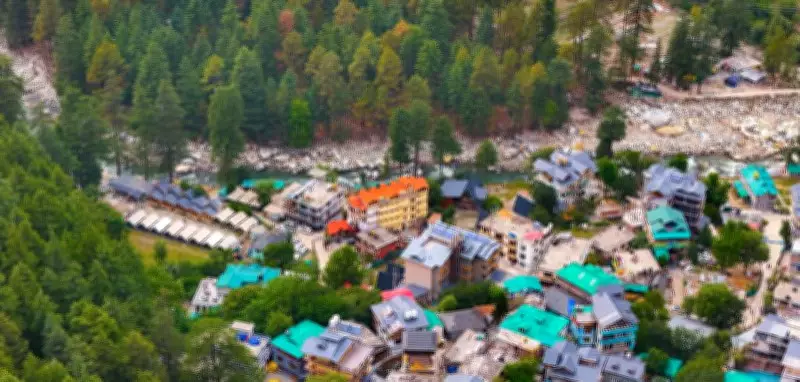
The Parvati valley in Kullu, Himachal Pradesh, has transformed into India's most misunderstood address — part pilgrimage, part party, part crime scene. On some evenings, the sound of bass-heavy music reaches you before the river does, echoing through forest clearings lit in neon colours where DJ consoles now sit where shepherds once rested.
Kasol's evolution from a quiet Himalayan village to a rave destination took decades. By the mid-1990s, as Goa beach parties attracted regulatory attention, the scene shifted northward to under-policed Kasol. The village now hosts thousands of tourists in peak season, including Israeli backpackers who began arriving in the 1990s, bringing falafel recipes and Hebrew signboards.
Youth and Altitude Problems
For many young visitors, Kasol serves as an emotional processing centre. A 23-year-old Israeli backpacker said, "I came to Kasol to feel nothing for a while. Back home, everything is loud. Here, even the silence feels like something." A local from Kullu, speaking anonymously, noted: "Pehle log shanti dhoondhne aate the. Ab log khud se bhaagne aate hain. Farq bahut hai." (Earlier people came seeking peace. Now people come to escape themselves. There's a big difference.)

The valley attracts post-army Israelis, burnout techies from Bengaluru, semi-employed creatives, and students undecided on their majors. The area absorbs what the plains produce: exhaustion, confusion, and disposable income.
Rave vs. Trance: The Drug Economy
In current moral panic, "rave" and "trance" are used interchangeably, but they differ. A rave is any large gathering around amplified electronic music in forests or orchards. Trance is the music genre poured into that container. Goa trance migrated to the mountains and mutated into forest psy, dark psy, and hi-tech subgenres.
Twenty minutes from Kasol sits Malana, a village claiming sovereignty and famous for Malana Cream — hand-rolled charas from a prized cannabis strain. Depending on quality, Malana Cream can fetch several thousand rupees per 10 grams. Local lore claims residents descend from Alexander the Great's soldiers who wandered off during retreat.
Charas was banned under the NDPS Act in 1986, but the Kullu-Parvati region continued production as a cottage industry. The menu expanded to include opioids and synthetic pills. A local youth explained the economics: "Why should I spend a season guiding tourists up treacherous trails when a single night's work on the supply side promises more?"
Missing Persons: The Valley That 'Eats' Guests
Since 1991, at least 19 foreigners have been officially recorded missing in Kullu district, most in the Parvati valley. Several Indian tourists remain untraced. Journalist Harley Rustad's book 'Lost in the Valley of Death' popularised the sobriquet "India's Bermuda Triangle for backpackers."
The pattern is consistent: a spirited backpacker, a final sighting at a village teashop, an anguished family. Causes include steep unstable slopes, dangerous rivers, half-marked trails, and occasional criminal elements operating behind terms like "healing retreat" and "off-grid experience."
Fiction Foreshadowed Reality
In 2004, Tigmanshu Dhulia's film 'Charas: A Joint Effort' depicted foreigners outnumbering locals, cannabis as the main cash crop, and international mafias in the Himalayas — dismissed as "too filmi" at the time. Writer Karan Madhok, in his book 'Ananda' on cannabis culture, notes India imported rave aesthetics — neon, psytrance, forest psychedelic — without harm-reduction services, addiction conversations, or medical support.
Dazura's Last Set
A few days before the report, a multi-day rave took place in Kasol's forests. Among performers was Daria, a 29-year-old Russian DJ known as DashAlien and Dazura. Days later, she was found dead in her homestay in Manikaran valley. Post-mortem indicated excessive narcotics consumption. Two FIRs have been registered. On the psytrance circuit, such incidents barely disrupt the touring schedule.

High Court Intervenes
The Himachal Pradesh High Court took suo motu cognisance of media reports on large-scale rave activity in Kasol. The District Commissioner and Superintendent of Police were directed to file personal affidavits — a judicial move signalling the court doubts the administration's reassurances. The court asked who gave permissions, who checked for narcotics, who benefits, and why the state appears to know so little about such loud gatherings.
Kasol remains a mirror with good lighting: if you come seeking escape, it shows how far you will go to avoid your own life. The hills need a different high — one from clean air, hard climbing, cold water, and work that does not end in chargesheets. Until then, Kasol will stay what it has become: a place where the mountains serve as an alibi for what we insist on doing to ourselves.