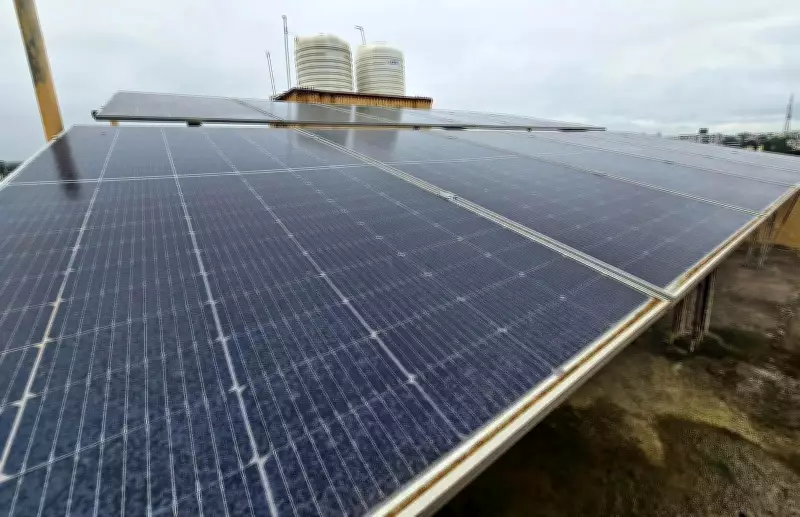
New Delhi: Delhi's rooftop solar expansion has gained significant momentum, with more than 24,000 consumers now generating electricity on their rooftops, contributing up to 420 MW-peak to the city's power grid, according to the latest figures from the Delhi government.
Accelerated Adoption in FY 2025-26
Rooftop solar adoption accelerated sharply during the 2025-26 financial year, driven by subsidies under the central government's PM Surya Ghar: Muft Bijli Yojana, incentives under the Delhi solar policy, and rising consumer awareness about long-term savings from solar projects.
According to government officials, BSES, which supplies electricity to south, west, east, and central Delhi, has energized more than 13,600 rooftop solar net-metering connections with a cumulative capacity of nearly 258.5 MWp. Tata Power-DDL, serving north and northwest Delhi, has completed 10,466 rooftop solar installations with an installed capacity of 160.3 MWp. Together, the discoms have connected over 24,000 rooftop solar systems with a combined capacity of 420 MWp, making Delhi one of the leading urban rooftop solar markets in the country.

Record Growth in Installations
The biggest growth came during FY 2025-26, with more than 9,900 rooftop solar systems added. BSES added a record 4,585 rooftop solar connections with 53.9 MWp capacity, while Tata Power-DDL saw an all-time high addition of 5,378 installations and 55.75 MWp capacity. An official stated that the central scheme was one of the biggest drivers behind this expansion. In BSES areas, over 4,100 systems were installed under the scheme, including around 2,600 in 2025-26 alone. Tata Power-DDL reported 4,375 similar installations.
Significant Savings for Consumers
BSES consumers with rooftop solar systems are collectively saving nearly Rs 197 crore every year on their electricity bills, according to officials. Commercial establishments account for the largest share of savings at around Rs 84 crore annually, followed by residential consumers at Rs 55 crore and educational institutions at Rs 33 crore.
For households, the savings can be particularly significant. A 5 kW rooftop solar system can reduce electricity bills by more than Rs 3,500 per month, helping families save over Rs 40,000 annually. With subsidies available under PM Surya Ghar and the Delhi solar policy, most consumers are able to recover their investment in three to four years, after which the savings continue for the remaining life of the system.
How Rooftop Solar Works
These rooftop systems reduce a consumer's need to buy power from the grid. During daylight hours, solar panels meet a significant portion of a home's or business's electricity demand, directly lowering billed consumption. Any surplus electricity can be exported to the grid through net metering, earning credits that are adjusted against future bills. Consumers also benefit from generation-based incentives available under the solar policy, while subsidies substantially reduce the upfront installation cost.
Together, lower grid consumption, net-metering credits, policy incentives, and long-term solar generation make rooftop solar one of the most cost-effective energy investments for consumers.