

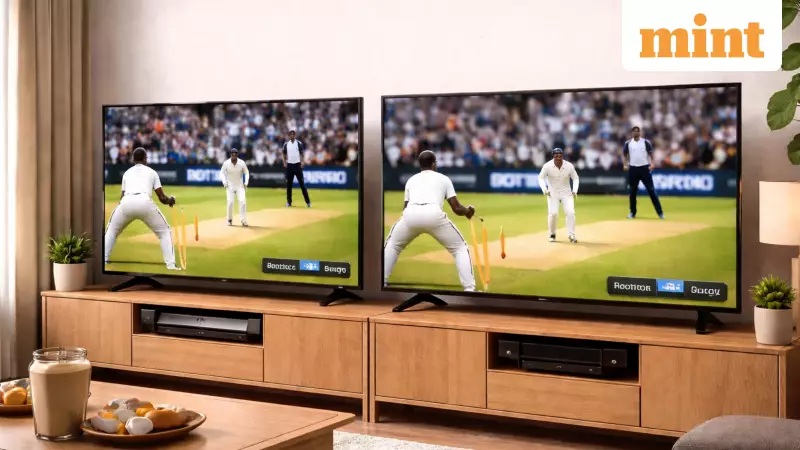
For many Indian consumers, buying a new television feels like a race to get the highest resolution. The assumption is simple: 4K is better than Full HD. However, the reality of daily viewing in Indian households often paints a very different picture. A closer look reveals that the extra investment in a 4K panel might not translate to a visibly superior experience for most families.
The Hidden Flaws of Budget 4K TVs
The core issue isn't the 4K resolution itself, but the hardware that often accompanies it in affordable segments. Entry-level 4K TVs frequently combine high pixel counts with underpowered processors, limited peak brightness, and slow smart TV interfaces. This becomes painfully obvious when you consider typical Indian viewing patterns: standard HD cable and DTH channels, YouTube videos, live cricket streams on Hotstar, and occasional movies on OTT platforms.
When you watch this everyday content, the advantages of having four times the pixels of Full HD diminish rapidly. In fact, the TV's processor has to work harder to upscale lower-resolution content to fit the 4K panel, which can lead to a worse picture.

Why a Good Full HD TV Feels More Reliable
Established brands like LG, Samsung, and Toshiba offer robust Full HD models that excel where it matters for daily use. These sets focus on fundamentals: stable motion handling for fast-paced cricket matches, decent viewing angles for family gatherings, and responsive menus. Since most broadcast and streaming content is still mastered in HD or lower, a Full HD TV displays it natively. This means no aggressive upscaling is required, resulting in a cleaner, more natural image with fewer visual artifacts.
Budget 4K sets, in contrast, can struggle with this upscaling. You might notice fuzziness around edges, over-sharpened faces in serials, or flickering in news tickers and sports scores. For cricket fans, where motion is continuous and fast, a Full HD TV can provide a smoother and more consistent viewing experience.
Making the Right Choice for Your Home
This doesn't mean 4K is never the right choice. If you are a dedicated viewer who consistently streams true 4K content from Netflix, Amazon Prime Video, or YouTube Premium, and you sit close enough to a large screen (typically 43 inches or above), a good mid-range 4K TV will show a clear advantage. These better models come with the processing power, brightness, and color accuracy to make 4K content shine.
However, for the majority whose diet consists of regular TV channels, YouTube, and sports, and who may have fluctuating internet speeds, paying a premium for 4K resolution is often an unnecessary expense. A well-made Full HD TV doesn't feel like a downgrade; it feels like a sensible, reliable appliance that works perfectly for your actual needs.
The key takeaway for Indian buyers is this: base your purchase decision on what you actually watch, not just the specifications on the box. Assess your content sources, viewing distance, and room conditions before assuming that a higher number automatically means a better experience.






