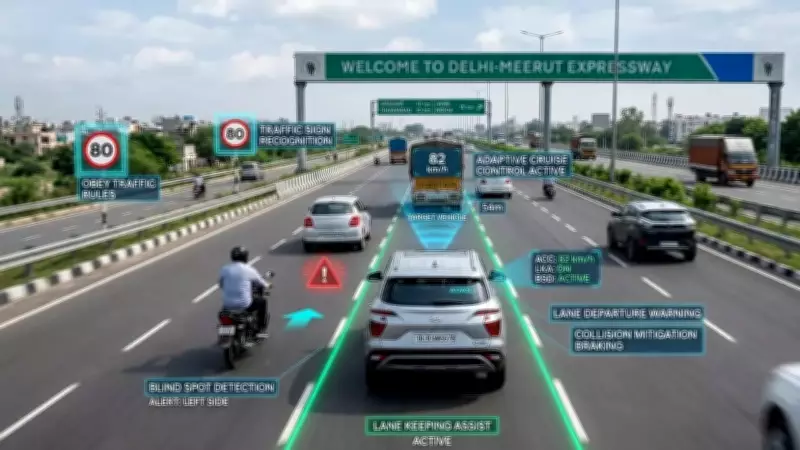
ADAS in India: The Rise of Digital Co-Drivers in Mainstream Cars
Over recent years, a new term has entered the lexicon of Indian car buyers exploring higher variants: ADAS. Once the exclusive domain of luxury vehicles, Advanced Driver Assistance Systems are now making their way into more affordable, mainstream models. Brands such as Mahindra with the XUV700, Hyundai with the Creta, Kia with the Seltos, and Maruti Suzuki with the Grand Vitara offer these technologies in select trims. Manufacturers tout ADAS as a significant safety enhancement, yet many consumers remain curious: What exactly does it do, and will it genuinely assist on India's notoriously chaotic roads?
Understanding ADAS: Your Car's Electronic Guardian
ADAS, or Advanced Driver Assistance Systems, refers to a suite of electronic technologies designed to support the driver while the vehicle is in motion. Utilizing an array of cameras, radar sensors, and other detectors, the system continuously monitors the car's surroundings. When it identifies a potential hazard, ADAS can either alert the driver or intervene temporarily to mitigate risk. Think of it as a vigilant digital co-pilot, always on watch.
It is crucial to clarify that ADAS does not equate to autonomous driving. The driver must remain fully attentive and in control at all times. Therefore, comprehending how these systems function is essential before opting to pay a premium for them.

Key ADAS Features Available in the Indian Market
Most vehicles sold in India today incorporate Level 1 or Level 2 ADAS, meaning the systems can assist with specific functions like braking, acceleration, or steering but cannot operate the car independently. Common features include:
- Automatic Emergency Braking (AEB): Applies brakes automatically to prevent or reduce collision impact.
- Adaptive Cruise Control (ACC): Maintains a set speed and distance from the vehicle ahead.
- Lane Departure Warning and Lane Keep Assist: Alerts if the car drifts from its lane and can gently steer it back.
- Blind Spot Monitoring: Warns of vehicles in adjacent lanes that may not be visible in mirrors.
- High Beam Assist: Automatically switches between high and low beams based on traffic.
- Driver Attention Warning: Detects signs of fatigue and prompts the driver to take a break.
Assessing ADAS Utility on Indian Roads: Promise Versus Reality
On paper, ADAS capabilities sound impressive. In practice, their effectiveness heavily depends on driving conditions. Many systems rely on clearly visible lane markings and predictable traffic patterns—elements often lacking on Indian roads. Faded or absent lane lines, erratic driver behavior, sudden pedestrian crossings, and stray animals on highways can confuse sensors.
Lane-based features exemplify this challenge. They perform optimally when lane markings are distinct. On many Indian city roads, where lines are faint or ignored, systems like lane keep assist may behave unpredictably, potentially feeling intrusive as drivers navigate around potholes or obstacles.
ADAS Features That Shine in Indian Conditions
Despite these hurdles, certain ADAS functions prove highly beneficial in India. Automatic Emergency Braking stands out as particularly practical. In stop-and-go urban traffic, where sudden braking is common, AEB can help reduce collision severity or avoid accidents altogether by reacting faster than a human might.
Blind spot monitoring is another valuable tool, especially on highways where motorcycles and smaller vehicles can appear unexpectedly. It provides crucial alerts before lane changes. Rear cross-traffic alert aids when reversing from tight parking spots in crowded areas like malls, a common headache for drivers. Additionally, driver attention warning enhances safety during long highway journeys by detecting fatigue and suggesting breaks.
Optimal Environments for ADAS Performance
ADAS systems excel in structured settings. Highways and expressways, with their well-marked lanes and consistent traffic flow, are ideal for features like adaptive cruise control and lane centering. Here, ADAS can genuinely enhance convenience and safety.

Conversely, in chaotic city traffic—characterized by constant lane-cutting and variable speeds—adaptive cruise control may feel less useful, and lane keeping assist might seem overly corrective. For prospective buyers, considering primary driving patterns is key. Highway commuters may find ADAS a worthwhile investment, while city dwellers might prioritize features like AEB over lane-based aids.
As ADAS becomes more prevalent, understanding its strengths and limitations on India's unique roadscape is vital for making informed purchasing decisions and maximizing safety benefits.