

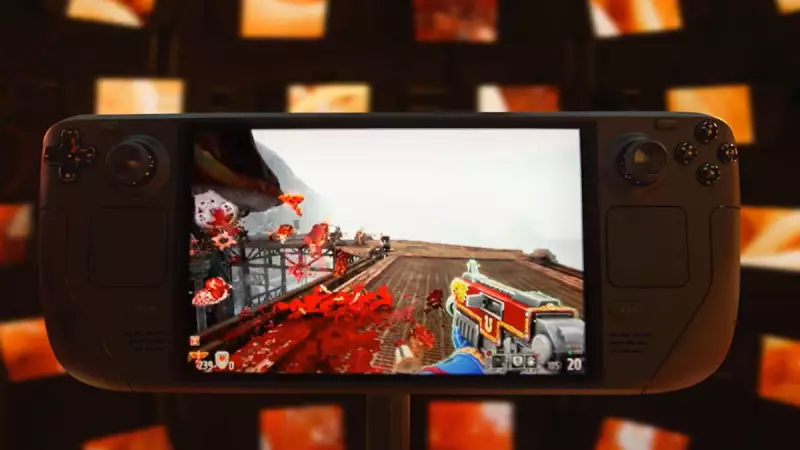
The Consumer Electronics Show (CES) 2026, held in Las Vegas, has once again served as the definitive crystal ball for technology trends, and this year, the spotlight shone brightly on the explosive evolution of handheld gaming PCs. The event made it clear that the market, ignited by the success of the Steam Deck, is rapidly maturing and diversifying, moving far beyond a single dominant player.
Beyond the Deck: A Market Flooded with Innovation
The landscape at CES 2026 was a testament to how crowded and competitive the handheld PC space has become. While Valve's Steam Deck pioneered the modern category, companies like ASUS (with its ROG Ally), Lenovo (Legion Go), and MSI have firmly established themselves. The show floor was buzzing with next-generation prototypes and announcements from these key players and new entrants, all vying for a piece of the growing portable gaming pie.
A major theme was the relentless pursuit of more powerful and efficient hardware. Both AMD and Intel unveiled their latest APUs (Accelerated Processing Units) designed specifically for this form factor. The new chips promise significant generational leaps in both graphics performance and power efficiency, aiming to deliver smoother frame rates at higher resolutions while potentially improving battery life—a perennial pain point for users.

The Rise of AI and Modular Design
Perhaps the most forward-looking trend highlighted at CES 2026 was the deep integration of Artificial Intelligence. Manufacturers are now embedding dedicated AI processors (NPUs) into these devices. This isn't just for show; the applications are becoming tangible. AI is being leveraged for real-time performance optimization, dynamically adjusting power and thermal limits based on the game being played. It's also enhancing features like upscaling for better image quality without taxing the main GPU and enabling advanced noise cancellation for crystal-clear communication during multiplayer sessions.
Another exciting development is the move towards modularity and customization. Inspired by the framework of gaming laptops and desktop PCs, some concept devices showcased user-upgradeable components. Imagine being able to swap out your device's RAM, storage, or even battery with relative ease. This approach directly addresses consumer concerns about future-proofing and repairability, potentially extending the lifespan of these premium gadgets.
Software and Ecosystem: The New Battleground
The hardware arms race is only half the story. CES 2026 underscored that the real differentiator for future success will be software and ecosystem integration. While SteamOS offers a polished, console-like experience, other players are pushing their own software layers and storefronts. The competition is heating up to provide the most seamless user interface, the best compatibility layers for older games, and the most attractive subscription or cloud gaming tie-ins.
Furthermore, the lines between handheld PCs and other device categories are blurring. Several prototypes demonstrated enhanced docking capabilities, transforming the handheld into a full-fledged desktop replacement when connected to an external monitor, keyboard, and mouse. This "one device for all scenarios" philosophy is becoming a key selling point.
The overarching message from CES 2026 is one of vibrant, healthy competition and rapid innovation. The handheld gaming PC is no longer a niche product but a mainstream segment driving some of the most exciting developments in consumer tech. For gamers, this means more choice, better performance, and innovative features tailored to portable play. The future of gaming is not just at home or on a phone; it's firmly in the hands of the user, more powerful and versatile than ever before.






