

For years, OLED gaming monitors have dazzled users with their incredible contrast and speed, but they've struggled with a common desktop annoyance: fuzzy text. A significant shift announced at CES 2026 promises to change that. Major panel makers LG Display and Samsung Display are now championing OLED displays with a vertical RGB stripe subpixel layout, a move specifically designed to sharpen text and reduce colour fringing for everyday PC use.
The Text Clarity Problem in OLED Monitors
The core issue lies in how desktop operating systems, particularly Windows, render text. They rely on subpixel rendering techniques like ClearType, which are optimized for traditional RGB stripe layouts. However, many current OLED monitors use different subpixel structures, such as WRGB or unique QD-OLED layouts. This mismatch causes coloured halos around letters and soft edges, making reading documents, emails, or code a less than perfect experience.
This has created an unspoken compromise for users: accept the text quirks for the unparalleled gaming visuals. The industry's push for RGB stripe signals that this compromise is no longer acceptable for a market where a single monitor is often used for both work and play.

How the New RGB Stripe Layout Works
The solution is a fundamental change at the pixel level. Both LG Display and Samsung Display are pivoting to vertical RGB stripe layouts in their next-generation monitor panels. Samsung Display is branding its QD-OLED version as "V Stripe." This layout aligns with the subpixel patterns that desktop font rendering expects, leading to cleaner text edges and less distracting colour fringing.
The improvement will be most noticeable in everyday applications. For a real test, experts suggest looking at close-up shots of small fonts at 100% scaling, browser interfaces, or code editor windows, rather than just cinematic game footage.
Real-World Impact and Upcoming Models
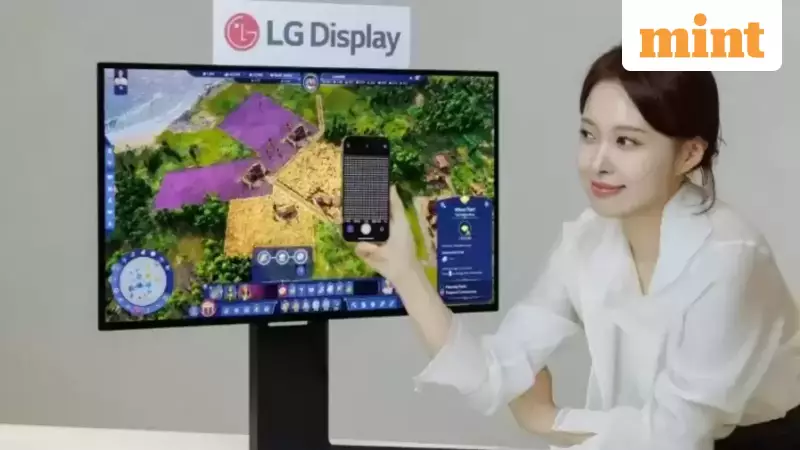
This technology is moving beyond prototypes into production. Samsung Display has confirmed plans for mass supply of a 34-inch ultrawide QD-OLED panel with the new layout. Meanwhile, LG Display has highlighted a 27-inch 4K OLED panel featuring RGB stripe, explicitly marketing it as a readability enhancement.
The benefit varies by screen size and resolution. On a high-density 27-inch 4K display, RGB stripe polishes an already good experience, reducing fringing on thin fonts. On a larger 34-inch ultrawide with a 1440p resolution, the improvement could be more dramatic, as the lower pixel density makes fringing easier to spot at a normal viewing distance.
Monitor brands are already promoting "RGB Stripe" and "V Stripe" as key selling points, acknowledging it has been a pain point for consumers. This marketing focus indicates that user feedback on text clarity has been loud and clear.
Important Considerations and Limitations
While a major step forward, the new subpixel layout is not a magic bullet. It does not eliminate the risk of screen burn-in, which remains a consideration for static user interface elements. Furthermore, the improvement may be uneven across all software, as not every application uses the standard Windows text rendering path. The clearest benefits will be seen in Windows at 100% scaling.
For shoppers in 2026, the advice is to look beyond the "OLED" label. Inquire about the subpixel layout and wait for thorough reviews that examine text rendering. If poor text clarity has held you back from buying an OLED monitor, this new wave of panels with built-in RGB stripe layouts makes waiting a sensible choice for the first time.






