

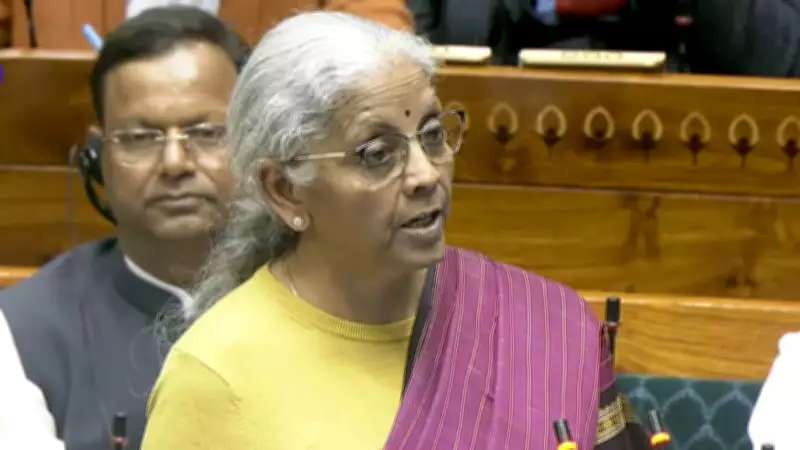
Union Finance Minister Nirmala Sitharaman on Sunday unveiled a significant push for India's technology manufacturing sector by launching the India Semiconductor Mission (ISM) 2.0. The announcement came during her parliamentary address where she outlined a comprehensive vision to transform India's position in the global semiconductor ecosystem.
Key Announcements and Duty Changes
In a move that signals strategic policy shifts, Sitharaman announced the removal of customs duty exemptions on television equipment, cameras, and other instruments imported by foreign film units or television teams for shooting films. This change will take effect from April 1, marking a departure from previous customs duty structures.
Additionally, the Finance Minister revealed that customs duty exemption on video game manufacturing parts will also be removed starting April 1. These measures appear designed to encourage domestic manufacturing while creating a more balanced import-export framework for specialized equipment.

India Semiconductor Mission 2.0: A Strategic Leap Forward
Speaking in Parliament, Sitharaman emphasized that while the initial India Semiconductor Mission 1.0 successfully expanded India's semiconductor sector capabilities, ISM 2.0 represents a more ambitious phase. The new mission aims to propel India beyond mere assembly operations and into the high-value domains of semiconductor intellectual property development and raw material production.
The Finance Minister articulated a clear roadmap for ISM 2.0 with several key objectives:
- Production of semiconductor equipment and materials within India
- Development of full-stack Indian intellectual property for semiconductors
- Strengthening of domestic and global semiconductor supply chains
- Establishment of industry-led research and training centers
- Development of advanced technology and a skilled workforce
Industry Response and Expert Perspectives
Technology companies have welcomed the government's semiconductor initiatives, recognizing their potential to transform India's manufacturing landscape. Industry leaders have provided insights on how these measures could impact various sectors.
Avneet Singh Marwah, CEO of SPPL and exclusive brand licensee for Blaupunkt, Kodak and Thomson in India, commented: "Budget 2026-27 provides a strong platform to accelerate the growth of India's semiconductor and electronics manufacturing ecosystem. If India has to become competitive globally, the focus should shift from announcement to execution. Design-linked incentives, deeper component localisation and semiconductor-linked supply chains are critical to help Indian manufacturers climb up the value chain."
Arijeet Talapatra, CEO of TECNO India, offered additional perspective: "This budget reinforces India's shift from scale to substance in electronics manufacturing. As the country deepens its semiconductor and electronics capabilities, it opens the door to large-scale, future-ready employment, especially for young engineers, technicians and skilled workers who will drive the next phase of growth."
Talapatra further elaborated on the smartphone industry's perspective: "The focus on semiconductors, advanced manufacturing and stronger supply chains gives the smartphone industry exactly what it needs to build long-term value, not just volume. At TECNO, we see Semiconductor Mission 2.0 as a long-term enabler for affordable innovation and our commitment to Make in India is for the long run. These measures create the right foundation for us to localise deeper, innovate faster, and design technology that is truly made for Indian users to lead globally."
Strategic Implications and Future Outlook
The launch of ISM 2.0 represents a significant milestone in India's journey toward technological self-reliance. By focusing on semiconductor intellectual property development and raw material production, the government aims to create a more resilient and competitive technology manufacturing ecosystem.

The removal of customs duty exemptions for specialized equipment imports suggests a calculated approach to encourage domestic production capabilities while maintaining strategic trade relationships. These policy changes, combined with the semiconductor mission's ambitious goals, could potentially reshape India's position in global technology supply chains over the coming years.
As the government implements these initiatives, industry observers will be watching closely to see how effectively these announcements translate into tangible manufacturing capabilities, job creation, and technological innovation within India's borders.





