

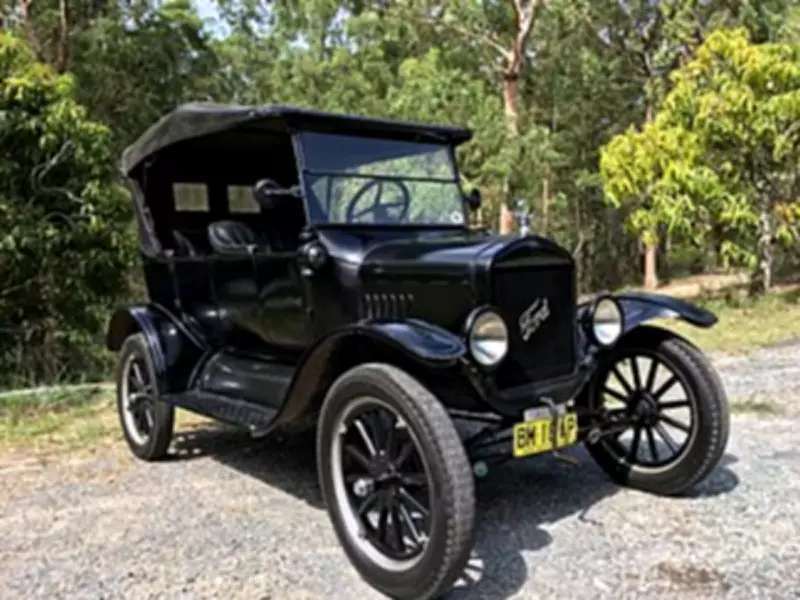
Imagine stepping into your car on a chilly morning, walking to the front, and swinging a heavy iron lever with all your might to start the engine. That was the routine first motorists endured before setting out. Starting the automobile was not only one of the most tedious parts of motoring but also the most physically perilous task. Without a reliable starting method, the task was dangerous for drivers.
Physical Dangers Associated with the Hand Crank
To start early cars, the driver had to grasp a hand crank at the front of the vehicle and turn it to engage the engine. However, if the engine backfired, the crank could fly back into the driver's face with great force. The recoil force could break drivers' wrists and cause other injuries. Thus, owning a car did not seem luxurious so much as risky. The physical demands were too great for many drivers.
As a result, cars remained a luxury rather than a practical utility for many people. According to a module developed in a course at the University of Cincinnati, the hand crank was the biggest obstacle that hindered some categories of society from using motor vehicles. This was because cranking a car required far more physical effort from a driver than using a horse and carriage.

Kettering's Innovations and Practical Commercial Product
The situation changed dramatically in 1912, when American engineer Charles F. Kettering invented an electric self-starter. There had been earlier prototypes, but they were laboratory experiments rather than practical products.
Kettering's innovation quickly gained popularity after Cadillac began installing it on its cars in 1912. In this connection, according to the history educational publication of Ohio State University, General Motors started purchasing large quantities of Kettering's self-starters and electrical equipment for their 1912 Cadillacs. This step was crucial because it moved the invention from the laboratory into the market.
The Change in Modern-Day Driving
The electric starter helped transform the automobile industry. As buyers adopted cars with electric starters, hand cranking gradually disappeared. Other car makers soon followed Cadillac's lead and adopted the invention.
The 1912 Cadillac electric starter was notable for changing public perceptions of the technology. According to University of Cincinnati archives, the innovation helped make cars accessible to a much wider public. In particular, the invention greatly reduced the need for physical strength. Women, older adults, and others who could not easily crank an engine could now drive more independently. Cars became more practical household purchases.
Conclusion
Overall, the Cadillac self-starter succeeded because it solved common problems. By reducing the risk of fractures and the strain of cranking, Charles F. Kettering made motoring easier and more convenient.






