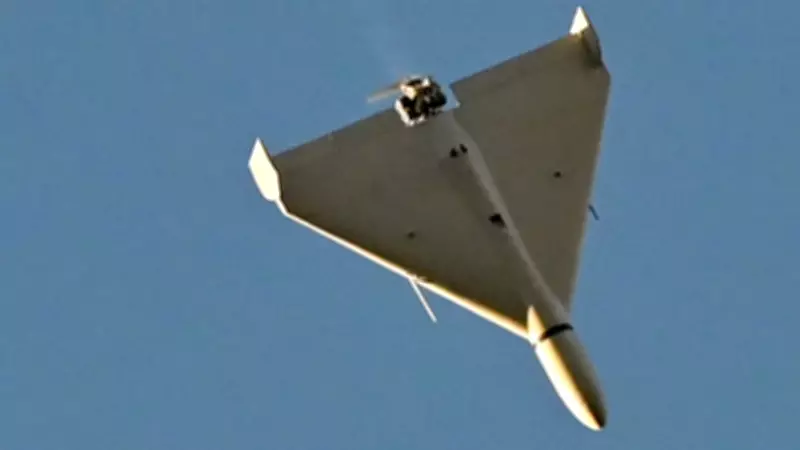
The Indian Air Force (IAF) has initiated a new program to develop indigenous long-range kamikaze drones, highlighting the increasing importance of loitering munitions and one-way attack systems in contemporary warfare. The IAF has issued a limited tender to select Indian companies for the development of One-Way Attack Unmanned Aerial Systems (OWA-UAS), according to defense officials. The project will be executed through the Air Force's 5 Base Repair Depot (BRD) at Sulur near Coimbatore, which has been designated as the nodal agency for this initiative.
Global Context and Lessons from Conflicts
This move comes at a time when militaries worldwide are rapidly expanding their drone arsenals, drawing lessons from conflicts such as the Russia-Ukraine war and the recent exchange of drone and missile strikes between Iran and Israel. In both conflicts, relatively low-cost unmanned systems have demonstrated their ability to destroy expensive military assets, overwhelm air-defense networks, and conduct long-range precision attacks.
What are Kamikaze Drones?
Kamikaze drones, also known as loitering munitions or suicide drones, are unmanned aerial systems designed to locate and destroy targets by crashing into them with an explosive payload. Unlike conventional missiles launched directly at a target, loitering munitions can remain airborne over a target area for extended periods while searching for enemy positions. Once a target is identified, the drone dives into it and detonates. This combination of surveillance and strike capability has made kamikaze drones one of the most sought-after technologies in modern warfare. Military planners increasingly view them as a cost-effective way to destroy tanks, artillery positions, command centers, radar stations, and air-defense systems without risking pilots or expensive aircraft.

IAF's Requirements and IPR Strategy
According to the tender specifications, the proposed indigenous OWA-UAS should be capable of operating at altitudes of up to 16,000 feet and function effectively in both day and night conditions. A key feature of the program is that the IAF intends to retain the Intellectual Property Rights (IPR) for the drone platform. This would allow the service to independently upgrade, modify, and customize the system according to operational requirements without depending on foreign suppliers. The drone is expected to be designed, developed, and manufactured entirely within India, with participation from domestic companies, start-ups, and defense technology firms. Officials believe retaining ownership of the technology will enable faster upgrades and reduce long-term dependence on imported systems.
Why the Air Force Wants a New Indigenous System
The IAF's interest in long-range kamikaze drones reflects a broader shift in military thinking. Traditionally, air forces relied on fighter aircraft and cruise missiles to strike targets deep inside enemy territory. However, modern loitering munitions offer several advantages. They are significantly cheaper than fighter aircraft sorties or long-range missiles. They can remain over a target area for extended periods, allowing operators to identify high-value targets before attacking. They can also be deployed in large numbers, potentially overwhelming enemy air-defense systems. The Russia-Ukraine conflict has particularly highlighted the effectiveness of long-range one-way attack drones in striking military infrastructure, logistics centers, ammunition depots, and command facilities hundreds of kilometers behind the front lines. For India, such systems could become an important component of future military operations, complementing conventional missiles and combat aircraft.
India's Growing Loitering Munition Ecosystem
The new IAF program is not starting from scratch. Over the past few years, India has developed and inducted multiple indigenous loitering munitions and kamikaze drone systems for various operational roles. These systems range from infantry-portable battlefield weapons to strategic long-range strike platforms.

Nagastra-1
One of India's most widely discussed indigenous loitering munitions is the Nagastra-1, developed by Solar Industries. Designed as a man-portable tactical system, Nagastra-1 allows frontline troops to conduct precision strikes against enemy positions without requiring artillery or air support. The system can loiter over a target area before engaging enemy troops, vehicles, or fortified positions. Its relatively small size and portability make it particularly useful for infantry operations along India's borders. The Indian Army has already placed orders for the system, marking one of the first major inductions of an indigenous loitering munition.
SkyStriker
India also operates the SkyStriker loitering munition, developed through a partnership between Alpha Design Technologies and Israel's Elbit Systems. The system is designed for tactical battlefield operations and provides precision strike capability against enemy targets. SkyStriker can remain airborne for extended periods before being directed toward a target, making it suitable for targeting artillery positions, radar systems, and command posts. The drone is capable of carrying an explosive payload while maintaining a relatively low acoustic signature, making detection more difficult.
ALS Family of Loitering Munitions
Indian start-up NewSpace Research and Technologies (NRT) has developed the Autonomous Loitering Systems (ALS) family of drones. These systems are designed around swarm technologies, enabling multiple drones to operate together while sharing information and coordinating attacks. Swarming capability is increasingly viewed as one of the future trends in drone warfare because it allows multiple low-cost systems to overwhelm enemy defenses. Several variants of the ALS platform are already being evaluated and inducted by the Indian armed forces.
India's Strategic Kamikaze Drones
Beyond tactical battlefield systems, India is also developing longer-range strategic strike drones.
Sheshnaag-150
One of the most ambitious indigenous projects is the Sheshnaag-150, developed by NewSpace Research and Technologies. The system is designed for long-range missions with a reported operational reach of around 1,000 kilometers. Unlike smaller battlefield loitering munitions, Sheshnaag is intended for deep-strike missions against strategic targets far beyond the immediate battlefield. The drone also incorporates swarm intelligence capabilities, allowing multiple systems to coordinate attacks and adapt to changing battlefield conditions. Such capabilities could significantly enhance India's ability to conduct precision strikes deep inside hostile territory.
Peacekeeper (Agniveg)
Another notable indigenous system is the Peacekeeper, also known as Agniveg, developed by SMPP. Unlike many conventional loitering munitions that rely on propeller-driven propulsion, Peacekeeper uses a jet-powered configuration. The drone is capable of speeds of up to 450 kmph and is designed to operate in contested electronic environments where jamming and electronic warfare are prevalent. Its combination of speed and survivability makes it suitable for attacking heavily defended targets.
The Bigger Push for Drone Self-Reliance
The new IAF project aligns with the government's broader vision of making India a global hub for drone manufacturing. Speaking at the National Defence Industries Conclave earlier, Defence Minister Rajnath Singh stressed that drones and counter-drone technologies would play a defining role in future conflicts. He pointed to lessons from Ukraine, West Asia, and other conflict zones, where drones have emerged as critical battlefield tools. The minister argued that true self-reliance requires domestic production not only of finished drones but also of critical components such as engines, batteries, software, and electronics. "From the drone's moulds to its software, engines, and batteries, everything must be manufactured in India," Rajnath Singh had said. According to government data, nearly 676 start-ups, MSMEs, and innovators have joined India's defense innovation ecosystem through the iDEX program since 2018, with hundreds of defense contracts already awarded.