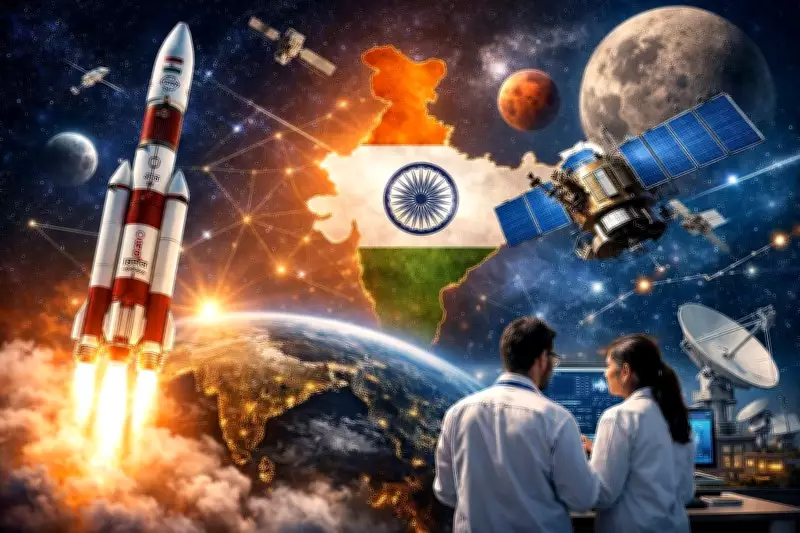
India's Space Sector Reforms: A New Era of Strategic Power and Global Leadership
India has firmly established itself as a significant player in the global space industry over recent decades, renowned for its cost-effective missions and technological prowess. The country is now embarking on a transformative journey through comprehensive space sector reforms. These strategic policy changes are designed to encourage private participation, foster innovation, and bolster India's economic and strategic standing in the rapidly evolving global space ecosystem.
Why Space Sector Reforms Became Imperative
For many years, India's space activities were predominantly managed by the government through the Indian Space Research Organisation (ISRO). While this model achieved remarkable successes, such as the Mars Orbiter Mission and Chandrayaan-3, the expanding global space economy necessitated greater involvement from private companies and startups. Observing the revolutionary impact of firms like SpaceX and Blue Origin in the United States, India recognized the urgent need to cultivate a more open and business-friendly space environment to maintain competitiveness.
Key Features of India's Space Sector Reforms
Opening the Space Sector to Private Players: A pivotal reform involves allowing private companies and startups to engage in space activities, including satellite manufacturing, launch services, and data applications. This shift has spurred the emergence of numerous Indian space startups dedicated to developing cutting-edge technologies.

Creation of Regulatory and Promotional Institutions: To streamline private sector involvement, the government established key entities such as the Indian National Space Promotion and Authorisation Centre (IN-SPACe). This agency serves as a single-window platform for authorizing and regulating private participation in space endeavors. Additionally, NewSpace India Limited (NSIL) focuses on commercializing ISRO-developed technologies and expanding India's footprint in the international space market.
Commercialization of Space Technology: The reforms promote the commercialization of satellite launches, communication services, remote sensing data, and navigation systems. India's reliable Polar Satellite Launch Vehicle has already facilitated satellite launches for multiple nations, generating revenue and strengthening diplomatic relations.
Boosting the Space Startup Ecosystem: India now hosts dozens of space startups working on innovations like small satellite launches, space analytics, and advanced propulsion systems. Government support and clear policies have attracted substantial investments, creating a vibrant ecosystem for space innovation.
Strategic Importance of the Reforms
Strengthening National Security: Space technology is crucial for surveillance, communication, navigation, and disaster management. Enhancing India's space capabilities directly contributes to national security and strategic autonomy.
Expanding India's Global Influence: With increased satellite launches and international partnerships, India is becoming a preferred launch destination for many developing countries. Its affordable launch services provide a competitive edge in the global space economy.
Economic Growth and Employment: The global space economy is projected to exceed hundreds of billions of dollars. By encouraging private participation, India can capture a larger market share while generating high-skill employment opportunities.
Supporting Technological Innovation: Space technology often drives advancements in telecommunications, climate monitoring, navigation, and artificial intelligence. These reforms ensure India remains at the forefront of technological progress.
Challenges Ahead
Despite the promising reforms, several challenges persist. These include ensuring regulatory clarity, protecting sensitive technologies, securing long-term investments, and building robust infrastructure for private companies. Moreover, India must balance commercialization with national security interests and adhere to international space laws.

India's Positioning as a Major Global Player
India's space sector reforms signify a decisive shift from a government-dominated model to a collaborative ecosystem involving public institutions and private enterprises. By opening the space sector, encouraging startups, and strengthening commercialization, India is positioning itself as a major player in the global space economy. These reforms not only enhance technological capabilities but also reinforce strategic influence in an increasingly space-driven world.
Importance for Civil Services Aspirants
For students preparing for competitive examinations like the Union Public Service Commission Civil Services Examination, topics such as space sector reforms are highly relevant. This subject is important for General Studies Paper III (Science & Technology), useful for essay papers on themes like innovation and national development, and frequently appears in Prelims MCQs on space missions and institutions. Understanding these reforms helps aspirants connect science and technology with governance, economy, and international relations.
Probable UPSC Mains questions include:
- Discuss the significance of space sector reforms in India. How do they enhance India's strategic and economic position in the global space industry?
- Evaluate the role of private sector participation in transforming India's space ecosystem. What challenges must India address to fully realize the benefits of these reforms?