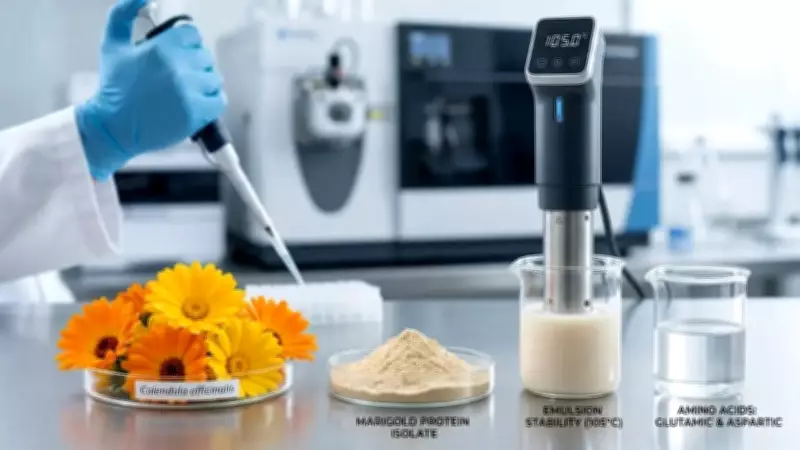
Scientists are increasingly turning to agricultural byproducts to meet the global demand for sustainable nutrition. An innovative study published in ACS Publications has revealed that pot marigold (Calendula officinalis) can serve as a robust and thermally stable protein source. While commonly grown for ornamental and medicinal purposes, marigold petals contain protein isolates that exhibit superior thermal stability compared to traditional sources like peas and chickpeas. This discovery is significant for the food industry, as approximately 40 percent of marigold biomass is currently discarded as agricultural waste. By utilizing this floral residual biomass, the industry can develop stable plant-based emulsions and high-protein additives, supporting a circular bio-economy and reducing environmental impact.
Pot Marigold: A Future Protein Source
The core of this discovery lies in the structural resilience of marigold protein. Research from the American Chemical Society (ACS) shows that proteins from Calendula officinalis can withstand higher temperatures before denaturing compared to many commercial plant proteins. This characteristic means the protein retains its functional integrity during high-heat processes such as pasteurization or baking. Consequently, it is an ideal candidate for creating plant-based products with extended shelf life.
The Secret Behind Marigold's Glutamic Acid
Research indicates that marigold protein isolates possess outstanding emulsifying properties. These proteins are rich in essential amino acids and flavor precursors like glutamic and aspartic acids, which are responsible for the umami taste, as noted in ACS Publications. Due to this unique chemical composition, these proteins can enhance nutrition and naturally intensify flavors in savory foods.

Why Upcycled Marigold Protein is the Future of Food
The United Nations Food and Agriculture Organization (FAO) emphasizes the importance of valorization, which involves transforming waste into valuable resources to secure future food supplies. Marigolds, already cultivated worldwide for their essential oils, offer an additional opportunity: using petals left after oil extraction to produce protein creates supplementary revenue streams for producers while also reducing carbon emissions associated with plant-based protein production.
Why Marigold Beats Soy and Whey in Stability
Studies show that marigold protein creates more stable oil-in-water emulsions compared to soy and whey proteins. The USDA highlights the importance of finding alternative proteins that do not compete with key food crops like soy. This is crucial for maintaining biodiversity and ensuring the food supply chain remains resilient against climate-related crop failures.