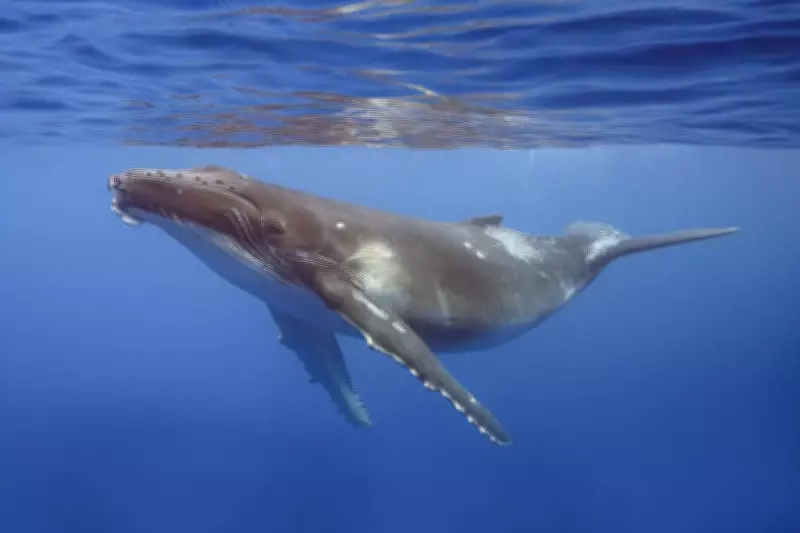
If you've been around the coastline of British Columbia lately, you have probably observed some huge figures emerging from underneath the water. From the occasional presence of transient orca whales swimming in active inlets to the gigantic grey whales showing up at nearby beaches, there is definitely an energy present in the coastal waters. Even something as simple as walking along the beach in the afternoon may become an adventure.
From Rare Sight to Common Occurrence
For a long time, seeing these massive marine mammals so close to an urban centre was considered a rare, once-in-a-lifetime stroke of luck. Most people naturally assumed that the hustle and bustle of city harbours would keep these sensitive creatures far out at sea. Yet, the recent surge in sightings is far from random. It is actually the result of a fascinating combination of natural cycles, changing environments, and major conservation milestones.
This biological change in whales has been proven by a scientific study that has been published in the Marine Mammal Science journal. It shows that there has been a change in whale usage of these migration corridors as some whale populations have found themselves seasonal habitat in these coastal corridors. It also proves the adaptability of marine animals when their conservation efforts prove successful.

All Year Round Feast for Top Predators
The main reason why these marine creatures have flooded into this area is the most basic biological necessity – food. Much of this phenomenon has a very clear seasonal basis, as baleen whale species come back to the Pacific Northwest to feed in full force after starving in their warm breeding areas during winter.
The study, led by Taryn Scarff as part of her zoology master's degree at the University of British Columbia, focused on the habits of transient killer whales. By analysing sightings data spanning from 2016 to 2023, the research team discovered that these apex predators are now present in the Salish Sea for more than two-thirds of the year on average. They are regularly moving through local straits and busy harbours simply because that is where the food is.
As stated by Scarff, the change in behaviour is because of the population growth of other species of marine mammals. "We're seeing more and more reports of transient killer whales travelling along the Vancouver shoreline," Scarff pointed out to UBC Science. She explained that the previous protection measures put in place for the local seals and sea lions have inadvertently provided the killer whales with food all year long, causing them to visit Vancouver waters for about 250 days each year.
Humpbacks Are Returning After a Century-Long Absence
Although the killer whales are attracted to the Vancouver area thanks to the plentiful prey, the arrival of the humpback whales is truly an emotionally powerful historical achievement. It has been more than a century since the early whalers pushed the humpback whales away from the region. As a result, the knowledge regarding their feeding areas may have been forgotten.
Dr Andrew Trites, a professor at the University of British Columbia's Institute for the Oceans and Fisheries, sheds light on why it took so long for these gentle giants to return. "Historically, humpbacks were common in B.C. waters, but three years of commercial whaling from 1907 to 1910 eliminated all of them from this region. There were no whales left to pass on knowledge of feeding grounds to the next generation, so it has taken roughly a century for humpbacks to rediscover parts of their former range," he said.
This gradual, generational rediscovery is a very strong indication of how deep the wounds of human exploitation can cut. After commercial whaling ended in the mid-1960s, whale populations were able to begin recovering. Today, the young generation of humpbacks visiting the coast is finally rediscovering the abundant feeding grounds that their ancestors used over a hundred years ago.

Grey Whales' Urban Visits Signal Nutritional Stress
Unfortunately, the reasons behind the appearance of other species, like grey whales, are much more concerning for environmental scientists. Unlike the celebratory return of the humpbacks, grey whales often stop in shallow urban bays out of absolute necessity. Climate change has reduced Arctic sea ice, which may be affecting the small crustaceans these whales feed on further north.
Dr Trites warns that these unusual coastal visits are frequently a sign of severe nutritional stress among migrating individuals. "As a result, some grey whales are stopping off in places like Vancouver in a desperate attempt to refuel their emaciated bodies," he shared. By contrast, some species are recovering while others are struggling to adapt to climate change.
How to Help Keep Whales Safe
To help keep whales safe, the local maritime authority has set distance rules for all water vessels. All boat owners and paddlers are obliged to keep a proper distance in order not to collide with the whales and to avoid making too much noise in the water. It is a simple way to give them the space they need.