Crypto Trader's Viral Complaint Ignites UAE Social Media Regulation Debate
A viral social media post from prominent crypto trader ElonTrades, founder of Signal Labs, has triggered intense discussion about the United Arab Emirates' evolving rules for online content. The trader, who describes himself on X as "Crypto since 2017" and known for identifying "asymmetric bets and where capital consolidates next," claimed he moved to Dubai to escape heavy regulations elsewhere, only to discover that posting online in the emirate may require official permits.
The Controversial Tweet That Started It All
Taking to his social media handle, ElonTrades tweeted, "Moved to Dubai to not be strangled by regulations and bureaucracy. Am ordered to get a license and permit to post on social media." The complaint quickly gained traction across crypto Twitter and digital-nomad forums, with many debating whether the UAE, often marketed as a tax-friendly haven for entrepreneurs, is quietly tightening control over the influencer economy and online discourse.
Behind the viral tweet lies a complex intersection of digital media regulation, geopolitical tensions, and the UAE's efforts to professionalize the rapidly expanding creator economy. The incident that triggered the ElonTrades versus UAE controversy began after the trader posted a video of a major explosion at Fairmont The Palm, a luxury hotel on Dubai's iconic Palm Jumeirah.

Geopolitical Context and Regulatory Response
The footage reportedly captured dramatic scenes during a period of heightened regional tensions following missile and drone attacks linked to the wider Iran versus US-Israel conflict affecting parts of the Gulf. The video quickly went viral, attracting over 1.7 million views on X, but the popularity of the footage may also have drawn the attention of authorities.
The trader later claimed he was placed on a public prosecutor's list for "publishing illegal content" and that his X account was subsequently blocked in the UAE. He also alleged that officials told him social-media creators in the country must obtain specific licenses before publishing certain types of content.
The claims immediately triggered widespread discussion online, with supporters arguing that such rules contradict Dubai's reputation as a free-market innovation hub. However, experts say the situation may reflect a misunderstanding of the country's new digital advertising regulations, which came into force in 2026.
Understanding the UAE's Social Media Permit System
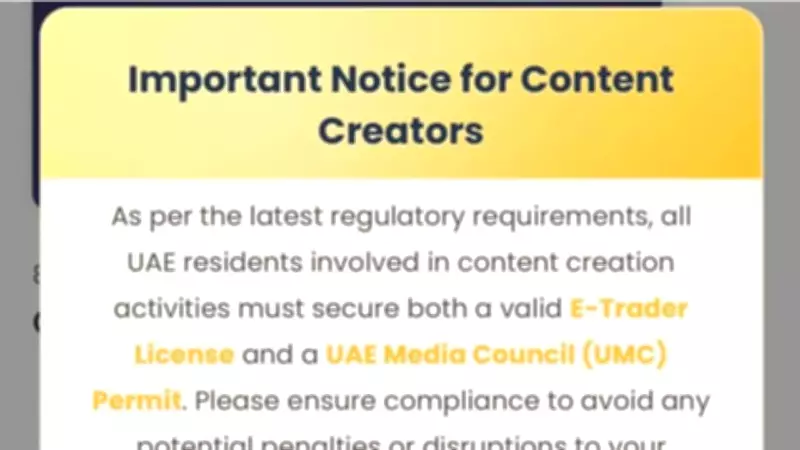
Starting February 1, 2026, the UAE introduced a mandatory Advertiser Permit for anyone publishing promotional content on social media. The permit was introduced under updated media regulations designed to regulate digital advertising and improve transparency in the influencer industry.
Under the rules:
- Anyone posting promotional or sponsored content online must obtain a permit from the UAE Media Council.
- The rule applies to residents, citizens, and even visiting creators targeting UAE audiences.
- Influencers must also hold a trade license or freelance permit to legally conduct advertising activities.
- Violations can result in fines and legal penalties.
The policy applies not just to paid brand collaborations but also to certain forms of unpaid promotions, such as gifting campaigns or affiliate marketing. Authorities say the goal is to ensure that the fast-growing digital advertising ecosystem operates with the same standards applied to traditional media.
Global Trend of Influencer Regulation
The UAE is not alone in tightening oversight of social-media content. Around the world, governments have begun introducing regulations targeting influencers, digital advertisers, and online content creators. Authorities argue that the explosive growth of social media has blurred the line between personal expression and commercial advertising.
In many cases, influencers promote products without clearly disclosing sponsorships, potentially misleading consumers. The UAE's new permit system aims to:

- Improve transparency in digital advertising.
- Protect consumers from misleading promotions.
- Ensure creators comply with national media laws.
- Formalize the influencer industry as a legitimate business sector.
Legal analysts say the policy reflects the emirates' broader strategy to regulate fast-growing digital industries without stifling economic growth.
Dubai's Billion-Dollar Influencer Economy
Dubai has become one of the world's biggest hubs for social-media influencers, digital entrepreneurs, and crypto traders. With zero personal income tax and business-friendly policies, the city has attracted thousands of creators, YouTubers, and online entrepreneurs over the past decade.
According to industry estimates, the UAE's influencer marketing sector could reach nearly $100 million by 2030, driven by tourism, luxury brands, and global advertising campaigns. However, with that rapid growth has come new challenges:
- Undisclosed advertising
- Misleading financial promotions
- Fake followers and engagement
- Unregulated financial advice
Regulators worldwide have begun scrutinizing influencers, particularly in sectors like cryptocurrency where financial risks are high.
Crypto Influencers Under Increasing Scrutiny
The controversy surrounding ElonTrades also highlights the increasing scrutiny facing crypto influencers. Over the past few years, regulators in the US, Europe, and Asia have cracked down on influencers who promote digital assets without disclosing paid sponsorships or financial interests.
In some cases, influencers have faced lawsuits or penalties for promoting projects that later collapsed. Dubai has simultaneously positioned itself as a global crypto hub, hosting blockchain companies, exchanges, and venture funds, but authorities have also emphasized that financial promotions must comply with regulatory guidelines designed to protect investors.
For crypto traders with large social-media followings, this creates a complex regulatory environment where promotional activities require careful compliance with both advertising and financial regulations.
The Free Speech Debate in the UAE
The ElonTrades controversy has also sparked a broader debate about online expression during crises. During periods of geopolitical tension, authorities in many countries tighten controls on information sharing to prevent misinformation or panic.
In the UAE, officials warned residents not to share unverified videos or rumors about missile attacks and other security incidents during the recent regional conflict. Violating such rules could potentially result in heavy fines or even imprisonment, particularly if content spreads panic or misinformation.
Critics argue that such policies risk limiting free expression, while supporters counter that they are necessary to maintain stability and prevent the spread of false information during emergencies. For Dubai, the challenge is maintaining its reputation as a global business hub while also regulating the digital economy.
The Reality Behind the Viral Tweet
While ElonTrades framed the permit requirement as excessive bureaucracy, legal experts say the regulation is not aimed at ordinary personal posts. Instead, it primarily targets commercial content and advertising activities. In most cases, individuals sharing personal experiences or opinions on social media are unlikely to need licenses.
However, creators who monetize their platforms through brand deals, affiliate marketing, or paid promotions may fall under the new rules. For professional influencers and crypto traders promoting products or services, compliance with the permit system is now essential.
The viral tweet may have started as a complaint from a frustrated crypto trader, but the reaction it sparked highlights a larger shift taking place across the global internet. As social media evolves into a multi-billion-dollar advertising ecosystem, governments are increasingly stepping in to regulate it.
From influencer licensing in Dubai to stricter disclosure rules in the US and Europe, the era of unregulated digital promotion is rapidly coming to an end. For creators, traders, and influencers, the clear message is that social media may feel like a free space, but in today's world, it is also a regulated industry requiring careful attention to compliance and transparency requirements.