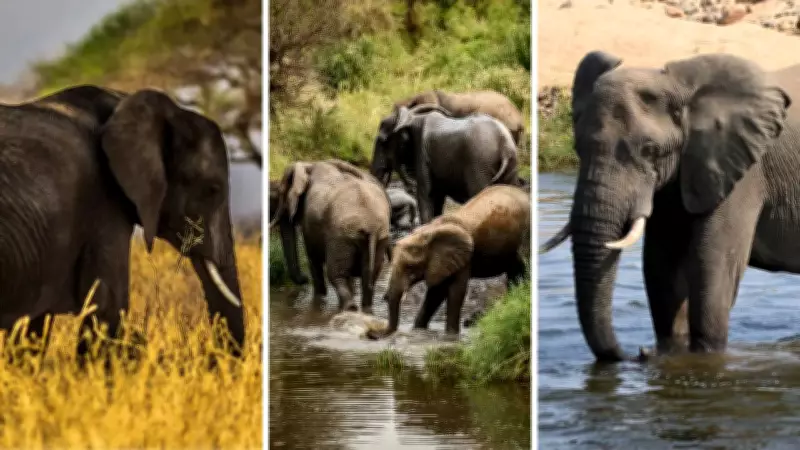
10 Surprising Elephant Facts That Sound Too Wild to Be True
Elephants are the largest animals living on land. These creatures, often called ‘ecosystem engineers,’ exhibit cognitive complexity and self-awareness comparable to primates and cetaceans. Their size is not their only impressive feature; they also possess trunks with 150,000 muscle units and complex social lives. The three species of elephants differ in ear shape and can communicate via subsonic vibrations. These gentle giants never cease to surprise scientists. Besides their physical abilities, elephants show deep emotions by forming lifelong family bonds and even mourning when a member dies. Knowing more about these amazing animals is crucial since their existence directly affects the biodiversity of the savannas and forests they inhabit.
Trunk’s Speciality
The elephant's trunk is truly amazing, packed with around 150,000 muscle units. It can do everything from picking up a tiny grain of rice to performing heavy-duty tasks like uprooting trees.
Tusk Diversity
Moving on to their tusks, these are actually modified incisors that start showing up when they're about 2 years old. Elephants use them for tasks like digging and stripping bark, and also for defence. Unfortunately, tusks make elephants targets for those involved in the illegal ivory trade.

Constant Consumption
When it comes to eating habits, elephants have to munch away for nearly 18 hours a day just to keep their huge bodies going. They need to eat hundreds of pounds of grass, fruit, and bark every single day, which adds up to about 150 kilograms of food.
Skin Sensitivity
Although their skin can be as thick as 2.5 centimetres in certain areas, it remains very sensitive. To shield themselves from the sun's harsh rays and biting bugs, and to keep cool, elephants utilise mud and dust baths as a vital 'biological sunscreen'.
Number of Species
The WWF lists three unique elephant species: the African Savanna (Bush) elephant, the African Forest elephant, and the Asian elephant. Among them, the African Forest elephants stand out because they are smaller, have straighter tusks, and live in the dense rainforests of Central and West Africa. Their tusks are straighter and point downward.
Water Storage and Drinking
Elephants are really good at staying hydrated. Their trunks can hold a lot of water - up to 8 litres at a time. They fill their trunks with water and then shoot it straight into their mouths. This way, they quench their thirst efficiently.
Calves Are Fast Learners
Elephant calves arrive in the world at a hefty 100 kilograms. In just twenty minutes, they manage to stand. The whole herd participates in their upbringing. Mothers and aunts teach them the ropes of social interaction and essential survival skills.
Distinguishing Species
You can identify the species by their ears: African Savanna elephants have the largest ears, resembling the shape of Africa, whereas Asian elephants possess smaller, rounded ears. Moreover, only some male Asian elephants develop ivory tusks that are visible.
Communication Skills
They use a range of sounds to communicate with each other. One interesting way they talk is through low-frequency rumbles known as ‘infrasound,’ which humans can't hear. These sounds travel over long distances through the ground, allowing herds that are far apart to stay connected with one another.
Incredible Memory
The saying ‘an elephant never forgets’ holds some truth. Elephants have highly developed temporal lobes, which help them remember where water holes are and recognise family members, even after many years apart.