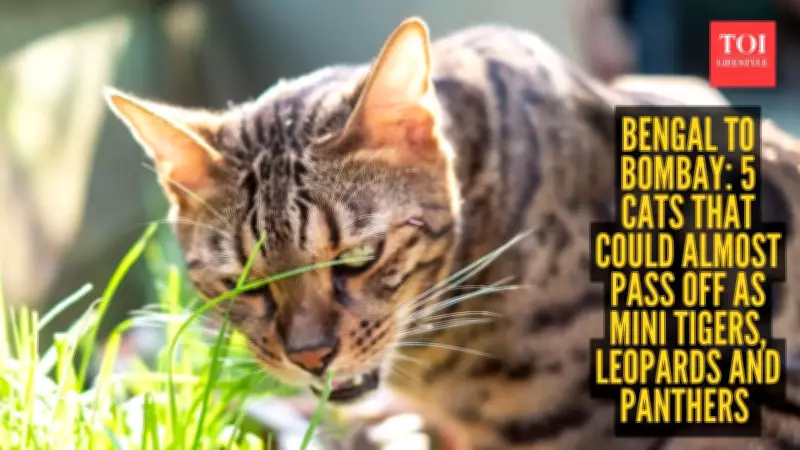
Some cats stand out not just for their cuteness but for features that evoke wild felines. Their coat patterns, sharp facial structures, or graceful movements often remind us of leopards, panthers, or tigers. These similarities are not accidental; many patterns and physical traits are naturally seen in wild cats and have been preserved in domestic breeds. Here are five cats that clearly showcase this resemblance.
Bengal
The Bengal cat does not try too hard, and that is precisely why it stands out. Its bold rosettes, reminiscent of a leopard's coat, feature high contrast and natural spacing. The body is sleek and muscular, always alert. Even when resting, the Bengal exudes an aura of awareness, refusing to blend into the background.
Savannah
The Savannah's build is its most striking feature—long legs, a tall frame, and large ears that immediately recall wild cats from open grasslands. Its coat spots strongly resemble those of a serval, but it is the posture that truly captivates. The Savannah appears upright and observant, as if constantly calculating its surroundings.

Abyssinian
At first glance, the Abyssinian may not scream wild, lacking bold spots or dramatic stripes. However, its sandy-toned coat with a ticked pattern—each strand carrying bands of color—mirrors the texture of wild cats in arid landscapes. The face is sharp and alert, with big ears and expressive eyes. Once noticed, the resemblance becomes unmistakable.
Bombay
The Bombay cat is all about presence. Its jet-black, glossy coat is devoid of patterns, complemented by striking copper or golden eyes. This simplicity evokes the image of a black panther. The Bombay exudes calm intensity, proving that patterns are not necessary to appear wild.
Egyptian Mau
The Egyptian Mau boasts naturally occurring spots that are not uniform, giving them an organic, wild appearance. Combined with bright green eyes and smooth, quick movements, the cat's look comes together effortlessly. Nothing seems forced, which makes the resemblance convincing.
Why These Cats Feel Different
The wild resemblance boils down to patterns and presence. Stripes, spots, and earthy tones serve purposes like camouflage and survival in the wild. When these elements appear on a domestic cat, they create a striking contrast—familiar yet exotic. These breeds remind us that nature's designs are both beautiful and functional.