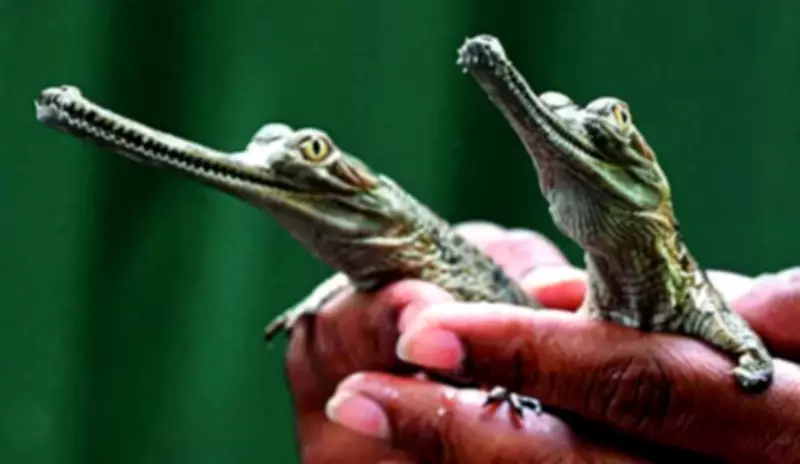
Jaipur: Nearly 50 baby gharials (Gavialis gangeticus) have hatched on the sandy banks of the Chambal river at Palighat, reflecting encouraging signs for the survival of the critically endangered reptile in the National Chambal Sanctuary (NCS).
Positive Outcome of Conservation Efforts
The hatchlings, which recently broke through their shells near the Chambal-Parvati river confluence, are being seen as a positive outcome of sustained protection and monitoring efforts undertaken by the forest department. The emergence of the hatchlings comes after months of intensive ground-level conservation work aimed at safeguarding nesting sites from predators, floods, and human disturbance.
Forest officials said the hatchlings emerged over the past few days and are under constant watch by frontline staff deployed in the area. DFO Manas Singh, who visited the nesting site, said, “Hatching already took place in two to three nests. This season, nearly 22 to 25 nests containing around 600 to 650 eggs were recorded near the Chambal-Parvati river confluence.” A staff member said the eggs, laid in early April, have now started hatching after completing an incubation period of nearly 55 to 60 days.

Increased Protection Measures
Officials said the nesting stretch witnessed unusually high activity this year, prompting authorities to step up protection measures around the fragile breeding grounds. Tourists and villagers living nearby have also been advised to avoid disturbing the area during the sensitive hatching period. Given the extremely high mortality rate among hatchlings due to predators and seasonal flooding, forest teams carried out extensive patrolling and habitat protection work to support natural breeding.
“Protecting gharial and turtle nests was a major challenge as stray dogs, jackals, feral pigs, and crows constantly threatened the eggs. Wherever possible, nesting sites were fenced using thorny bushes. At Palighat, wire mesh fencing was installed to secure the gharial nesting sites,” an official said. Forest staff also conducted regular patrols and boat surveys along the riverbanks to identify newly formed nesting sites.
Sanctuary's Ecotourism Potential
The National Chambal Sanctuary stretches across nearly 625 km of riverine habitat spread through Rajasthan, Madhya Pradesh, and Uttar Pradesh. A senior forest official said the sanctuary holds immense potential for sustainable ecotourism. “Ecotourism has vast possibilities in Rajasthan because of its extraordinary biodiversity. Wildlife enthusiasts can experience the beauty and thrill of this relatively unexplored landscape,” the official said.