Africa's Continental Split: A New Ocean Is Forming Faster Than Expected
Africa appears to be relatively stable geologically, but beneath the surface, many forces are at play, leading to the continent's break-up. Scientists now claim this process is proceeding faster than previously expected, and in millions of years, it could result in the emergence of a whole new ocean.
A recent scientific study, published in the journal Nature Communications, revealed that a key area within East Africa has entered the most important phase of this process. Researchers concluded that the Earth's crust in the given region has become much thinner, indicating an approaching continental break-up.
Location of the Continental Break-Up in Africa
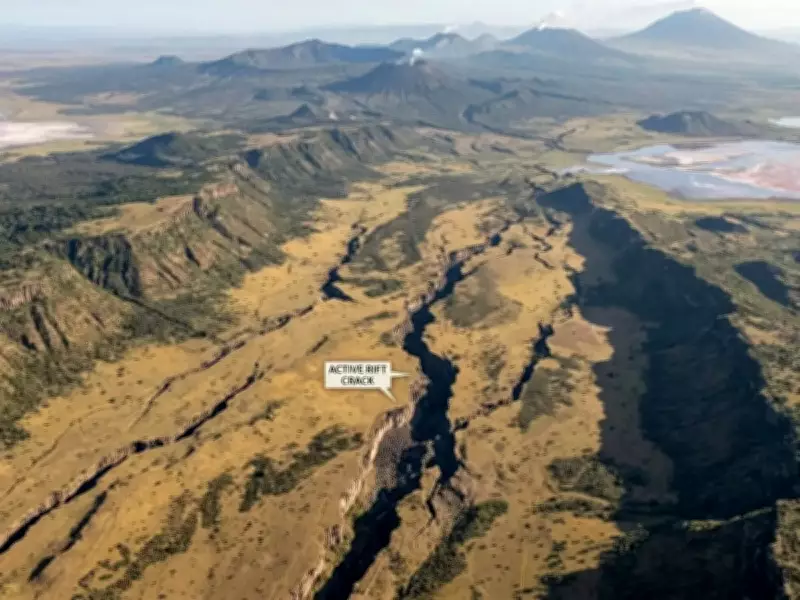
The processes described are taking place within the East African Rift System, a major geological structure stretching for miles from the Red Sea down through eastern Africa. In this area, the African tectonic plate is gradually splitting into two sections: the Nubian plate on the western side and the Somali plate on the eastern side, which is slowly separating from the former.

The scientists focused on the Turkana Rift Zone, situated in both Kenya and Ethiopia. This zone was already known to be geologically active, but new evidence reveals that its development has progressed much further than initially assumed.
Why the Split Is Happening in Africa
By analysing seismic data, the thickness of the crust in the Turkana Rift has been determined, measuring just 13 kilometres in some places. In contrast, the crust in adjacent regions may exceed 35 kilometres in thickness. This observation is crucial, as it demonstrates that the area has reached a stage known as "necking." Geoscientist Christian Rowan of Columbia University, who led the research, explained that rifting in this zone is more advanced and the crust is thinner than anyone had recognised.
It has become clear that as the crust reduces below 15 kilometres, it becomes weaker and stretches faster. Under these circumstances, it prepares for a phase called "oceanization."
How an Ocean Is Formed
Ocean genesis occurs due to crustal thinning, which allows magma to rise from beneath the crust. The cooling of this magma creates new ocean floors, while gaps are filled with water, forming seas that eventually turn into oceans. Currently, the same geological activities are observed in northeastern Africa's Afar Depression, which scientists use to study ocean formation. According to the USGS, plate tectonic movement accounts for the geological forces shaping continents and oceans over millions of years.
Human Evolution Connection from Africa's Split
These findings are relevant not only to geology but also to palaeontology. The Turkana Rift Zone in Kenya is one of the most significant regions for the search for early man, with many of the earliest hominin fossils unearthed there. The geological changes may have played a role in preserving these fossils. About four million years ago, during the necking stage of the rift, sediments started accumulating at a faster rate, providing the perfect environment for the preservation of bones and other fossils. Some scientists believe this explains the abundance of fossil remains in this region compared to others.
Understanding the "Faster Than Expected" Continent Split
Despite the process happening relatively quickly in geological terms, it is occurring slowly relative to human timescales. Forming an ocean takes millions of years, so it is not a phenomenon observable within a lifetime. Nonetheless, the importance of the discovery should not be overlooked, as it sheds light on previously unknown aspects of the process and helps better comprehend the evolution of continents.
Importance of the Discovery
This discovery allows us to observe a process usually hidden from us. Most continental break-ups occurred millions of years ago, making them impossible to study firsthand. Fortunately, the East African Rift System provides a great example of this process in action. The findings also highlight how Earth's surface is constantly changing, even if those changes are too slow to notice in everyday life.