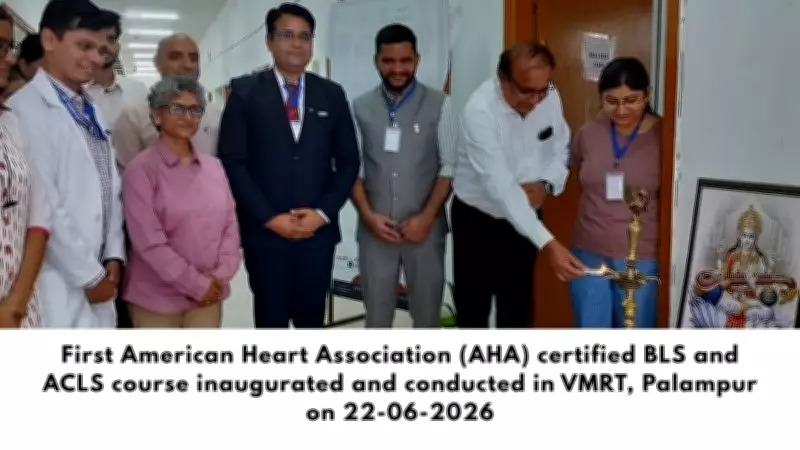
A two-day American Heart Association (AHA)-certified Basic Life Support (BLS) and Advanced Cardiovascular Life Support (ACLS) training programme was inaugurated on Thursday at Vivekanand Medical Institute (VMI) in Palampur, Himachal Pradesh. The programme is led by a team of expert faculty members from AIIMS Jodhpur, aiming to enhance emergency response capabilities among healthcare professionals.
Inauguration and Key Remarks
The training initiative was inaugurated by Unit Head Air Commodore (Dr) Vimal Rai Dubey, who underscored the critical importance of timely and accurate decision-making in emergency medicine. He told participants that the ability of healthcare professionals to respond swiftly and effectively during medical emergencies often determines patient outcomes and can be life-saving. Dr Dubey stressed that structured training in life-support techniques not only improves clinical competence but also enhances the confidence and preparedness of doctors and nursing staff in managing critical situations. He added that internationally recognised certification programmes such as BLS and ACLS play a key role in strengthening emergency healthcare systems.
Appreciation and Collaborative Efforts
Welcoming the visiting faculty from AIIMS Jodhpur, Dr Dubey appreciated their contribution in bringing advanced resuscitation training to Palampur. He also commended Dr Kuldeep Bagh for successfully completing the instructor course and taking the initiative to organise the programme at the institute. He said such efforts would help foster a culture of continuous learning and skill development among healthcare professionals. Dr Dubey further acknowledged the enthusiasm and dedication of Riya, Sonika and Dr Shaifali for promoting advanced life-support training and encouraging their colleagues to upgrade their emergency care skills.

Training Details and Participants
The two-day programme is being attended by doctors and nursing officers from VMI, along with students and faculty members of Captain Saurabh Kalia Memorial Nursing College. Participants are receiving hands-on training in cardiopulmonary resuscitation (CPR), emergency cardiac care, airway management and other critical life-saving interventions in line with globally accepted AHA guidelines. The training aims to equip healthcare providers with the skills necessary to manage cardiac arrest, stroke and other life-threatening emergencies effectively.