

It's not the typical wildlife story that captures headlines, but perhaps it deserves more attention. When we consider animals, our focus often narrows to hunting, survival, or those rare, heartwarming moments. However, there exists a lesser-discussed aspect of animal behavior that can feel unusual, somewhat uncomfortable, and at times, strangely relatable to human observers.
Understanding the Instincts Behind Animal Actions
Across various species, instances occur where animals take away, carry, or even harm babies that are not their own. From a human perspective, this may sound extreme, but in the wild, these actions are not motivated by emotions as we comprehend them. Instead, they are guided by deep-seated instincts or social strategies aimed at survival and reproduction. Once you begin to notice this phenomenon, it becomes evident that such behavior is widespread across different parts of the animal kingdom.
Langur Monkeys: Leadership and Risk
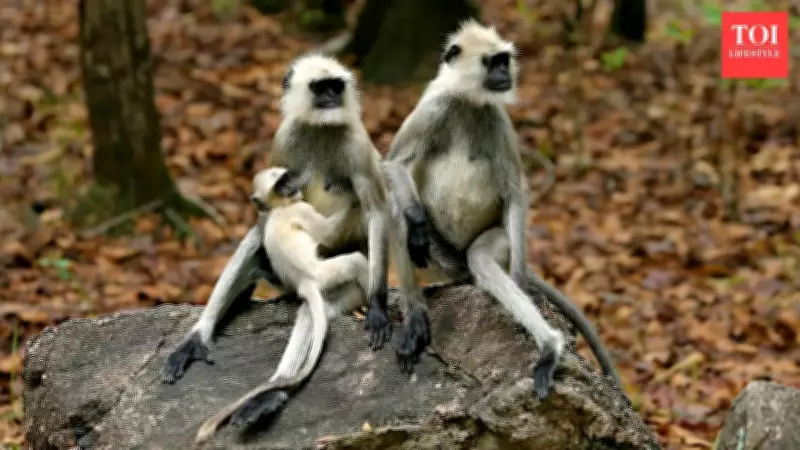
Langurs are a common sight in many regions of India, often observed sitting quietly in groups. Within these social structures, leadership plays a crucial role. When a new male takes over a group, the infants born under the previous leader face significant danger. The newcomer may carry them away or even kill them.

This behavior is not arbitrary; it serves to increase the male's chances of mating with the females and establishing a new generation, highlighting how reproductive strategies drive actions in the wild.
Capuchin Monkeys: Intelligence and Complexity
Capuchins are renowned for their intelligence and active social lives, which can lead to complicated behaviors. They have been documented carrying infants that do not belong to them, often with younger monkeys appearing to learn how to handle babies or acting out of curiosity.
However, such behavior does not always remain harmless. Particularly when it involves infants from outside their group, the situation can escalate into risk. Similar to langurs, male capuchins may also kill infants during group takeovers, again linked to reproduction and control within their social hierarchy.
Lions: Prides and Reproductive Changes
In lion prides, the arrival of a new male marks a significant turning point. One of the initial changes often impacts the cubs, especially if they were fathered by the previous male, putting them at risk.
This behavior helps bring the females back into a reproductive state sooner, providing the new male with an opportunity to pass on his genes, demonstrating how infanticide can be a strategic move in the animal world.
Dolphins: Gentleness with Surprising Behaviors
Dolphins are frequently perceived as gentle and social creatures, but their behavior around calves can sometimes be surprising. They have been observed carrying babies that are not their own, and in some cases, even calves from other species.
This does not typically stem from aggression; it is often associated with maternal instinct or curiosity. There are also rare instances where dolphins carry dead calves, including those of other mothers, illustrating the strength of these instincts.
Seals and Sea Lions: Chaos in Breeding Colonies
In large breeding colonies, conditions can become chaotic, with many pups in close proximity, and mothers relying on smell to identify their own. In such environments, mistakes are inevitable.
A mother may end up feeding or carrying a pup that isn't hers. In some cases, females that have lost their pups begin to care for others, which might resemble adoption but often starts with simple confusion due to the crowded setting.
Disclaimer: This article is for informational purposes only and is based on publicly available reports and observations of animal behavior. Terms like "kidnapping" or "abduction" are used for ease of understanding and do not reflect human emotions or intent. Such behavior is driven by instinct and survival, and may not be seen in all situations or across all animals.

