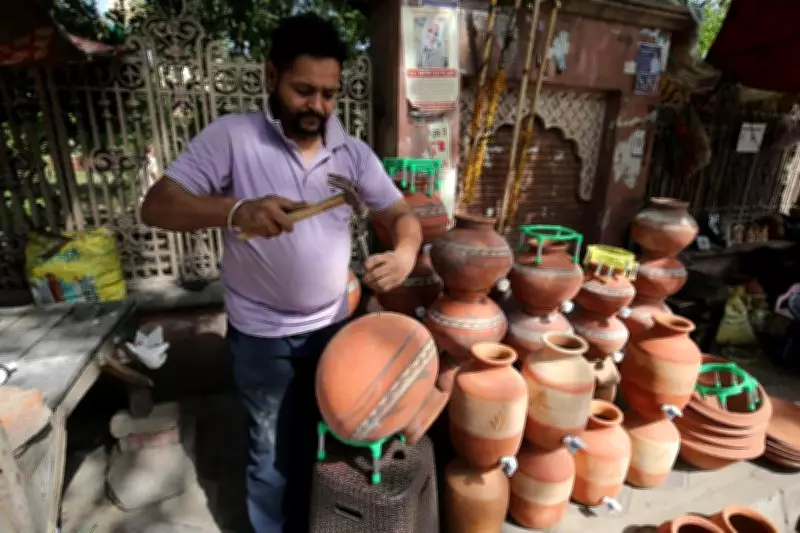
In the scorching heat of Punjab, clay pots, locally known as matkas, continue to serve as a natural cooling solution, maintaining a tradition that dates back 5,500 years. These earthen vessels, crafted by skilled potters, are a testament to the region's enduring cultural heritage.
Ancient Roots, Modern Relevance
The use of clay pots for storing and cooling water is deeply rooted in the Indus Valley Civilization, which flourished around 3500 BCE. Archaeological excavations in Punjab have unearthed pottery fragments that bear a striking resemblance to the matkas used today. This continuity highlights the sustainable practices of ancient times that remain relevant in the present.
How Clay Pots Keep Water Cool
The cooling effect of clay pots is based on the principle of evaporation. Water seeps through the porous walls of the pot and evaporates from the surface, absorbing heat and lowering the temperature of the water inside. This natural process can cool water by up to 10 degrees Celsius, providing a refreshing drink without electricity.

Cultural and Economic Significance
Clay pots are not just functional; they are also an integral part of Punjabi culture. They are used in rituals, festivals, and daily life. The potters, or kumhars, have passed down their skills through generations, sustaining a cottage industry that supports many families. However, the advent of refrigerators and plastic containers has posed challenges to this traditional craft.
Preserving a Legacy
Efforts are underway to preserve and promote the use of clay pots. NGOs and government initiatives are encouraging potters by providing training and market access. Additionally, there is a growing awareness of the environmental benefits of using clay pots over plastic or metal containers. The matka is increasingly seen as a symbol of sustainable living and a link to Punjab's rich history.
In conclusion, the humble clay pot is more than just a container; it is a living artifact that connects the people of Punjab to their 5,500-year-old heritage. By continuing to use and cherish these pots, they keep an ancient tradition alive while embracing a sustainable future.