

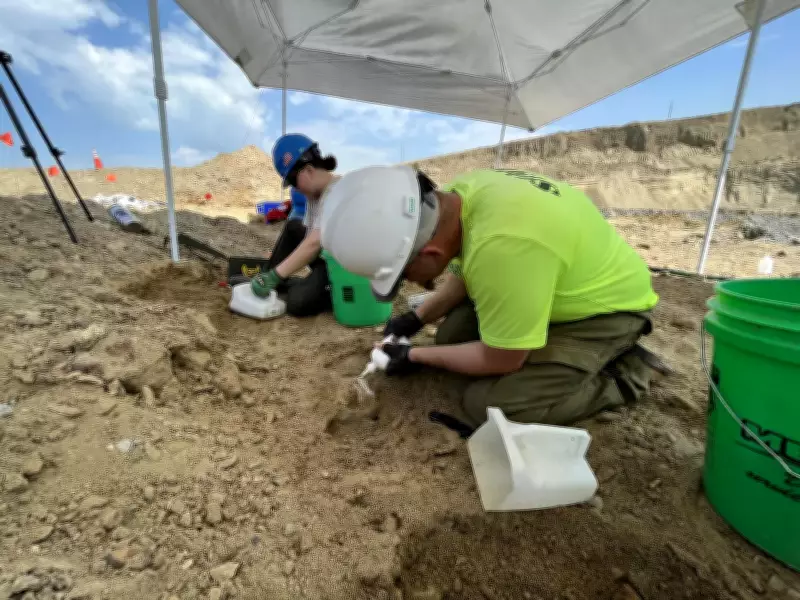
In December 2023, coal miners at the Freedom Mine near Beulah, North Dakota, made an extraordinary discovery while stripping overburden from an ancient creek bed. One miner spotted a curved, whitish object nearly seven feet long gleaming in the darkness. Recognizing its potential significance, the workers halted their heavy machinery to avoid damaging what could be a priceless treasure.
Rare Mammoth Fossil Unearthed
Scientists from the North Dakota Geological Survey quickly examined the site and confirmed that the miners had uncovered the tusk of a mammoth. Further excavation revealed over 20 additional bones, including ribs, shoulder blades, and hip bones, making this one of the most complete mammoth fossils ever found in the region. While isolated mammoth teeth and tusks are relatively common in the Midwestern states, finding multiple bones from the same animal is extremely rare.
Insights into Ice Age Life
The abundance of bones from a single specimen allows paleontologists to study the lifestyle and death of these Ice Age giants. By analyzing the pattern of bone deposition in the ancient river sediment, researchers can determine the mammoth's age and understand the environment it faced in North Dakota during the Pleistocene epoch. This specimen provides a valuable benchmark for comparing other scattered finds across the Great Plains.

Challenges in Recovery
Recovering the fossil was a delicate and time-sensitive operation. The water-logged bones had been preserved in wet soil for thousands of years, making them extremely fragile. Exposure to dry air would cause them to disintegrate. Paleontologists carefully wrapped each bone to ensure safe transport. The discovery of the tusk just in time before it would have been destroyed by mining equipment is considered a miracle.
Significance for Paleontology
This discovery adds a crucial piece to the puzzle of the Pleistocene epoch in America. During this time, North Dakota was home to megafauna such as mastodons, giant bison, and woolly mammoths. These creatures were central to the ecosystem before a combination of climate change and human activity led to their extinction. The Freedom Mine mammoth will undergo a slow, meticulous cleaning and stabilization process that could take years. Once fully prepared, the fossils will serve as a permanent educational tool for the public.
The find is a striking reminder that beneath the industrial landscapes built to power modern life, the remnants of an older, wilder world are still waiting to be discovered. The workers at the mine did not set out to make history that night, but by paying attention to a single flash of white in the dirt, they ensured that an Ice Age giant could finally tell its story.






